Anti-O’Toole campaign says new poll confirms CPC members tired of flip-flopping

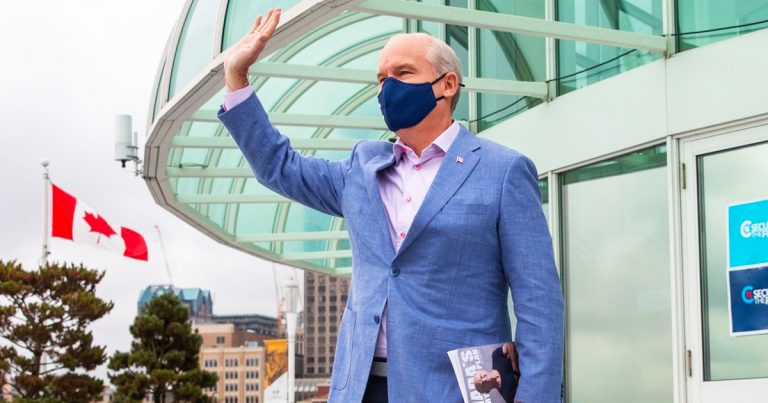
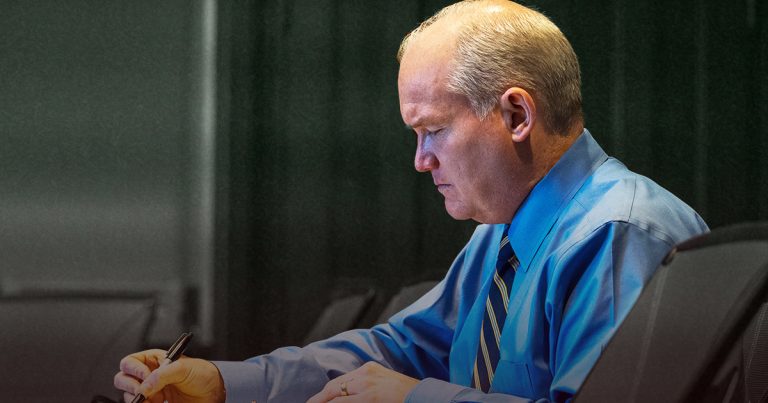
The campaign behind a push to hold an early leadership review of Conservative Party of Canada (CPC) Leader Erin O’Toole told True North that a new poll supports their intentions to let members have a say on the party’s future. 

Angus Reid Institute’s latest poll shows support for O’Toole plummeting both among Canadian voters at large and Conservatives specifically. With the Conservative base, O’Toole currently sits at a measly 59% support while other major federal leaders are enjoying over 80% approval among their supporters.

Members Vote is a grassroots Conservative group dedicated to holding O’Toole accountable for the results of the 2021 federal election. 

“We believe that the recent polling results support what we already know to be true – that members are tired of Mr. O’Toole’s constant flip-flopping,” a Members Vote spokesperson told True North. 

“After all, he does have the worst +/- of any party leader since the election. We believe our members should be permitted to have a say on whether or not they want to continue going down the path he has paved.”

Members Vote was formed after Conservative Senator Denise Batters launched a petition to require the CPC to hold a leadership review within the next six months. As it stands, O’Toole won’t face scrutiny from his party’s membership until the party’s 2023 convention. 

According to the group, the petition has accumulated “around 7,100 signatures.” Members Vote has to submit the petition to the party brass by February 13, 2021 – 90 days after its Nov. 15th launch. As per CPC constitution rules, the petition will require the support of more than 5% of the party’s membership in at least five provinces to pass. 

O’Toole booted Senator Batters out of the party caucus after she launched the petition. Soon afterwards, however, her Senate colleagues defied the CPC leader and voted to keep her in the Senate Conservative caucus.

Speaking about her expulsion, Batters told True North that “Erin O’Toole has reversed Conservative party policies without consultation or input from party members and caucus as well.” 

“It’s critical that party members be given a chance to have their voice heard. Otherwise, I’m very concerned that the party might split, and that’s what I’ve been becoming increasingly worried about over the last several weeks.”

Critics including Batters have pointed out that O’Toole flip-flopped on several key promises to his base including not implementing a carbon tax, not supporting the Liberal gun ban and denying MPs rights to free votes.

Batters was not the only CPC member to face the wrath of O’Toole and those close to him. Conservative National Council member Bert Chen was also suspended from his position for starting a similar petition and now faces a sweeping investigation by the party into his private affairs. 
COUNTDOWN: Top 5 Fake News Narratives of 2021

It’s Fake News Friday on The Candice Malcolm Show, and we’re doing something special today. 

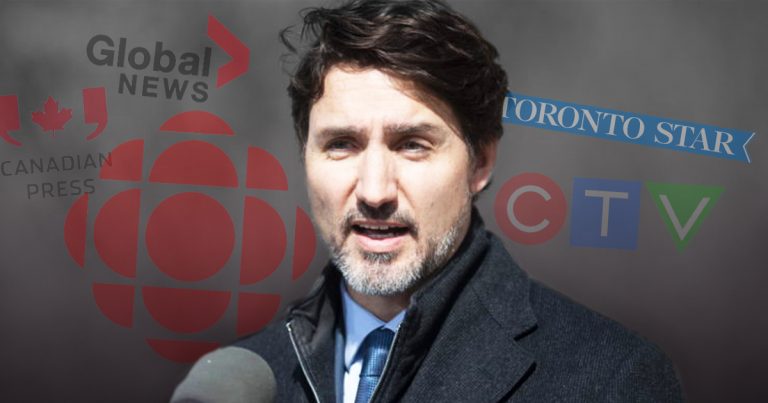
Candice and her producers have come up with a list of the top five stories that the legacy media botched, got totally wrong, or acted as political activists rather than neutral observers. 

Candice counts down the top five on the show today, and we’re leaving it to you, the True North viewer, to vote on your choice for the dubious award of Fake News Narrative of the Year Award.

VOTE HERE: www.tnc.news/FakeNews

We will announce the winner next week on the show! 

SUBSCRIBE TO THE CANDICE MALCOLM SHOW

Pastor defies new proof-of-vaccination requirement for B.C. churches

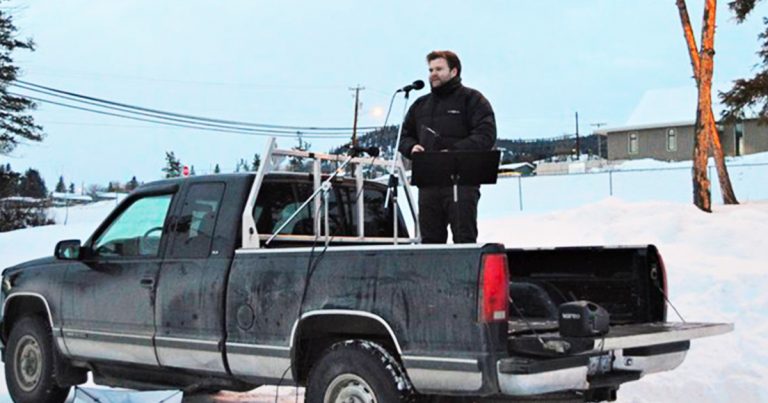
The day after Northern Health announced that churches in northern B.C. would require proof of full vaccination to hold in-person services again, a Prince George pastor has said that he will not be complying.

Andrew Simpson of the Heritage Free Presbyterian Church told True North he wasn’t surprised by the announcement and that his church will remain open to everyone.

“As a pastor, I will never ask somebody to present proof of vaccination or to reveal any medical details to attend a church service that I am presiding over,” Simpson said. “I wasn’t shocked at it but still very dismayed that the government would think they have the authority to implement something like that.”

Northern Health announced Thursday that faith-based organizations would be allowed to reopen, “as long as they are limited to 50% capacity in the place of worship and all participants over the age of 11 are vaccinated. Virtual or drive-in services can be held without a check of vaccination status.”

The largest of B.C.’s five health regions had banned in-person church services on Oct. 15 as part of the province’s “circuit breaker” measures to prevent the spread of COVID-19. These restrictions were specific to the northern region and intended to address a “surge” in COVID-19 cases that saw local hospitals “overwhelmed.”

Only places of worship in the Northern Health region have been told to require vaccination. Other health regions offer the option of half-capacity instead. All require masks.

Churches in B.C. had only reopened for full services in May. Before this, they had been locked down for 14 months, followed by limits of no more than 50 people. These restrictions affected weddings, funerals, baptisms and other faith services.

The Heritage Free Presbyterian Church was one of seven northern region churches given warning letters earlier this month for conducting services in defiance of public health orders.

Simpson told True North that the church had decided in October that enough was enough.

“We made the decision that we would not be closing our church, and we didn’t close our church, and that’s why we received a warning letter from the environmental health officer. But we’re determined we’re going to keep our church open, and we’re not going to be checking for vaccine passports.”

Simpson said the restrictions have been very difficult for the church but that the vaccine mandate is proving “absolutely devastating” for working people.

“In the past two months since vaccine mandates were introduced, I have counselled over 40 people who are all losing their jobs and many of them are losing their livelihoods over this,” he said.

“I know one lady who came to me who has the responsibility – she’s a single lady – of looking after her elderly parents. She’s losing her job that she’s had for over 20 years. And another man who’s married and has four young children, and he’s been in that job for nearly ten years, and he’s been forced out. So the harm and destruction that’s coming very soon when these mandates take effect is going to be absolutely devastating.”

“If people ever need a place to go where they can in a sense forget about COVID and just be welcomed in, it’s church,” Simpson concluded. “And now the government is taking that from them as well.”

Canadian family of four will pay $1000 more for food in 2022

Food prices will be going up even more next year according to Canada’s Food Price Report. 

Canada’s Food Price Report 2022 forecasts an overall food price increase of 5% to 7% for the coming year, the highest seen since the report started 12 years ago.

Project lead Sylvain Charlebois said the most significant increases are predicted for dairy and restaurants at 6% to 8% and bakery and vegetables at 5% to 7%. 

“It’s important for consumers to understand that food prices have been going up for some time, and there’s no turning back,” said Charlebois. “Our relationship with food is changing, and so will our food budgets. Showing up at the grocery store knowing what you should be paying will help.”

This year’s report predicts that a family of four will pay up to $14,767.36 for food, an increase of up to $966.08 from the total annual cost in 2021. 

Food price increases in Alberta, British Columbia, Newfoundland and Labrador, Ontario, and Saskatchewan will be higher than the national average in 2022. Price increases in other provinces will be lower. 

Project member Alyssa Gerhardt said there will be disruptions to the food supply chain system based on current events. 

“COVID-19 is still here,” said Gerhardt. “The food supply chain will continue to grapple with the cost of sanitation and PPE, high transportation costs and reduced maritime transport capacity, as well as decreased efficiency and disruptions due to closures.”

Despite these challenges, the report said consumers’ food choices continue to be motivated by health, sustainability, and a commitment to supporting local food supply chains. Overall “food literacy” appears to be improving. 

Food insecurity is expected to become a growing issue in 2022 as prices continue to rise. Reliance on food banks is expected to grow if incomes do not increase. 

A growing problem related to food insecurity is theft from grocery stores, which is expected to go up in 2022. 

Grocers have reported a rise in theft, particularly with meat, cheese, over-the-counter medication and energy drinks. 

Canada’s Food Price Report 2022 estimates that unreported loss of theft could be as high as $3,000 to $4,000 per week in some grocery stores. 

Identity politics and grievance culture are killing civilization

Survival used to be an admirable trait, but in recent years victimhood seems to have eclipsed it in virtue. In “The Victim Cult: How the Culture of Blame Hurts Everyone and Wrecks Civilization,” author Mark Milke writes about the dangers of grievance culture throughout history and the contemporary era.

In this wide-ranging interview on The Andrew Lawton Show, Mark and Andrew talk about identity politics, cultural appropriation, and the left’s blame game.

SUBSCRIBE TO THE ANDREW LAWTON SHOW

Erin O’Toole’s favourability dropping with both Conservatives and Canadians

New numbers show that Conservative Leader Erin O’Toole’s favourability has plummeted since he failed to unseat Prime Minister Justin Trudeau in the 2021 election. 

According to a recent poll by the Angus Reid Institute, the Conservative leader’s support has fallen across the board, including among the party faithful. 

As of Friday, O’Toole’s favourability among Canadians dropped to a measly 24%, while his peers NDP Leader Jagmeet Singh and Bloc Quebecois Leader Yves-Francois Blanchet enjoyed 52% and 46% support, respectively. 

When it comes to support from his own party’s base, O’Toole’s favourability has dropped to 59%. 

This decline among supporters is particular to the Conservative Party of Canada (CPC), the poll’s researchers write. In comparison, other major party leaders seem to have galvanized their supporters following the election, while O’Toole lags behind.

“This diminished internal standing is unique to O’Toole and CPC voters,” the findings read “Supporters of other major federal parties are much more likely to hold their respective leaders in higher esteem.” 

Currently, Trudeau enjoys 81% favourability among Liberals, Blanchet has 87% favourability among his base and Singh has the support of 91% of NDP voters. 

O’Toole is even more disliked than his predecessor Conservative MP Andrew Scheer, who in December 2019 had the support of 81% of his party. 

When it comes to federal voting intentions, the Conservatives came in second place with 29%, compared to 35% for the first-place Liberals. 

One place where the Conservatives seem to be leading is among young male voters between the ages of 18 and 34. There, the Conservatives have the highest voter intention with 34% saying they would vote for a CPC candidate. 

Since failing to gain any additional seats in 2021, O’Toole has faced a growing movement of people within his party who want to see him face a leadership review. 

In November, O’Toole ejected Senator Denise Batters from the Conservative caucus after she launched a petition calling for an early autopsy on his performance. 

Since then, a group titled Members Vote has formed to expedite the process and has allegedly received over 7,000 signatures from CPC members. 

Public Health Agency has no records for 75% of quarantine hotel stays

A new report by the auditor general found that the Public Health Agency of Canada (PHAC) failed to keep track of a vast amount of data surrounding quarantine hotels. 

The findings were released alongside a spate of other documents detailing the Liberal government’s handling of the COVID-19 pandemic. 

According to Auditor General Karen Hogan, between July 1, 2020 to June 30, 2021, PHAC was only able to verify a quarter of the quarantine hotel stays that actually took place. 

“Because the agency did not have records of stay for 75% of travellers who flew into Canada, it did not know whether those who were required to quarantine at government authorized hotels had complied,” said Hogan.

“In addition, the agency did not reliably track whether air travellers who had been notified of positive COVID-19 tests had stayed at a government-authorized hotel as required.”

Early in the pandemic, Prime Minister Justin Trudeau announced that Canadians hoping to travel would be forced to stay in government-approved quarantine hotels for a period of 14-days. 

The program soon came under scrutiny after it was revealed that a number of women at the quarantine hotels had been sexually assaulted

On June 21, 2021 the federal government scrapped the quarantine hotel requirement for fully vaccinated Canadian residents. 

Hogan found that 326 people had not actually checked into the rooms of the hotels assigned to them. The report also revealed that nearly 30% of all COVID-19 test results were missing or could not be matched to the persons who received them. 

“We also found that, although the Public Health Agency of Canada successfully contacted most travellers with positive COVID-19 tests, it had not contacted 14% of the travellers who tested positive for COVID-19 to assess their isolation plans,” says the audit.

In a scathing conclusion, Hogan called PHAC’s handling of the matter “not a success story.”

“The agency’s inability to confirm whether more than a third of travellers complied with quarantine orders remains a significant problem.”

This is not the first time that PHAC has been chastised for mishandling the COVID-19 pandemic. Early in 2020 it was revealed that the agency had severely undersupplied the National Emergency Strategic Stockpile.

MPs demand investigation into gangs using CERB money to fund crime

Opposition MPs are calling for an investigation after street gangs were found to have been using Canada Emergency Response Benefit (CERB) cheques to fund their illegal activities. 

Conservative MPs Raquel Dancho, Pierre Paul-Hus and Stephanie Kusie issued a letter that demanded the Canadian government take action on the matter. 

“It is unacceptable that under your watch, illegal firearms were purchased with taxpayer money in the form of CERB, especially with the surge of deadly shootings taking place across Montreal,” read the letter. 

The Toronto Sun first reported on the CERB funding criminal activity in 2020, but new reports out of Montreal prompted the call for federal action.

A ruling by Court of Quebec Justice Yvan Poulin in November rejected attempts by several Montreal residents – some of them with alleged ties to a street gang – to recover more than $118,000 seized by police last year. 

“In support of its request, the Crown presented evidence to support the circumstances in which the money was seized from each of the respondents,” said Poulin. “The prosecution argues that it has demonstrated beyond a reasonable doubt that these assets are ‘tainted by criminality’ and that their confiscation is justified.”

The Attorney General of Quebec was able to confiscate this money under Section 490 of the Criminal Code of Canada. 

Poulin said that a mobile device from Montreal resident Mouad Rasmi “contains many of the elements supporting his participation in a fraudulent scheme related to the CERB, including personal data and profiles of several third parties.”

La Presse first reported on this case, which linked several people associated with the court ruling to Montreal street gang STL. While there is no mention in the ruling that guns were purchased with CERB cheques, La Presse cites multiple sources over several months showing that Montreal gangs used the money for such purposes. 

The Conservatives are requesting the Canadian government “launch a complete and thorough audit of the taxpayer dollars your government provided to criminals in the form of pandemic benefits.” 

Canadian Ministry of Employment spokesperson Ashley Michnowski could not be reached for comment in time for publication. 

Alberta moves to bar teacher’s association from investigating its own members

After damning revelations about a former teacher, the Alberta government will be taking steps to remove teacher disciplinary actions from the Alberta Teachers’ Association (ATA), according to a statement issued by Alberta education minister Adriana LaGrange on Thursday. 

“It is now abundantly clear that the ATA can no longer act as the investigator and the prosecutor for complaints against its members,” said LaGrange. “This obvious conflict of interest has made Alberta an outlier. All other provinces and territories follow either an arm’s-length or government-operated model for teacher discipline.”  

The announcement comes after it was revealed that Calgary teacher Michael Gregory, who committed suicide after being charged with 17 counts of sexual assault against former students earlier this year, had admitted abusive behaviour in 2006, according to the ATA. 

This information was not forwarded to Calgary police because the ATA was not obligated to do so. 

Gregory made the admissions in an agreed statement of facts submitted during a two-day hearing held in 2006, which led to his teaching licence being suspended. 

LaGrange said she would bring forward an order-in-council to require the ATA to notify the registrar at Alberta Education of all complaints about their members when those complaints are received. 

At the moment, the ATA is only required to notify Alberta Education at the end of their disciplinary process if a matter goes to a hearing, including cases where recommendations are made to the minister to suspend or cancel a licence. 

LaGrange has directed the Ministry of Education to begin drafting legislation for the spring that will separate the teacher disciplinary process from the ATA’s mandate and functions. 

“I cannot change the past, nor can I take away the pain survivors live with every single day,” she said. “However, as the Minister of Education, I consider it my moral obligation to do everything in my power to fix the broken system that has let our children and their families down for so long.”

The Alberta government passed the Students First Act on Dec. 2, which enhanced teacher oversight to improve student safety and provide parents with more confidence in the education system. 

The Students First Act updated three pieces of legislation to ensure disciplinary matters are responded to more quickly. This bill created an online database of Alberta teacher certification information. 

According to the overview of the act, these updates “put students first by balancing individual teachers’ rights to privacy and procedural fairness with the public’s right to know when a teacher has been disciplined for a serious matter.”

Parents group warns conversion therapy bill could fast-track kids into sex-change surgery

A non-profit parents’ group concerned with the growing trend of children being medically transitioned into a different gender has written an open letter to the Canadian Senate about the recently passed conversion therapy bill, C4. 

The group, Canadian Gender Report, was founded by parent Pamela Buffone, who took the Ottawa-Carleton District School Board (OCDSB) to the Ontario Human Rights Tribunal after a teacher told her six-year-old daughter that “girls are not real.” 

In their letter to the Senate, the group states that while they oppose any forms of “forced, coercive or degrading therapy intended to result in a change to one’s sexual orientation or gender identity,” they were concerned the new law had serious implications for gender-confused adolescents. 

“Parents are concerned that Bill C4 will further cement an unproven and poorly understood model of care in the Canadian healthcare system,” the group wrote. 

Canadian Gender Report cites new standards of care released by the World Professional Association for Transgender Health (WPTAH) which states that there is little evidence to support medical treatment for gender-questioning adolescents and that psychological assessment is necessary. 

“The psychological assessments that WPATH advises are necessary are being phased out in Canada, and parents are concerned that co-occurring conditions are being overlooked in favour of fast-tracking children into hormonal and surgical interventions,” the group wrote. 

“Will Bill C4 allow healthcare clinicians to exercise professional autonomy and exercise caution when confronted with a possibly autistic teenager who desperately wants to change gender? Or is it more likely that the threat of jail time will severely restrict the care options that young Canadians and their parents are able to access such that unproven, yet invasive medical interventions become the new normal here?”

Bill C4 was unanimously passed by the House of Commons earlier this month after the Conservatives threw their support behind the law. On Tuesday, the Senate agreed to expedite passage of the bill. 

Experts including neuroscientist Dr. Debra Soh have raised similar concerns over the law’s expansive definition of conversion therapy. In an interview with True North, Dr. Soh warned that the bill could have a chilling effect on legitimate therapeutic services. 

“I always want to emphasize that I support transitioning in adults,” Soh said. “But the majority of children with gender dysphoria, who identify more with the opposite sex than their birth sex, will outgrow these feelings by puberty. So it isn’t helpful to outlaw therapeutic approaches that seek to understand why a person wants to transition instead of affirming the individual outright.” 

The bill received royal assent on Wednesday.