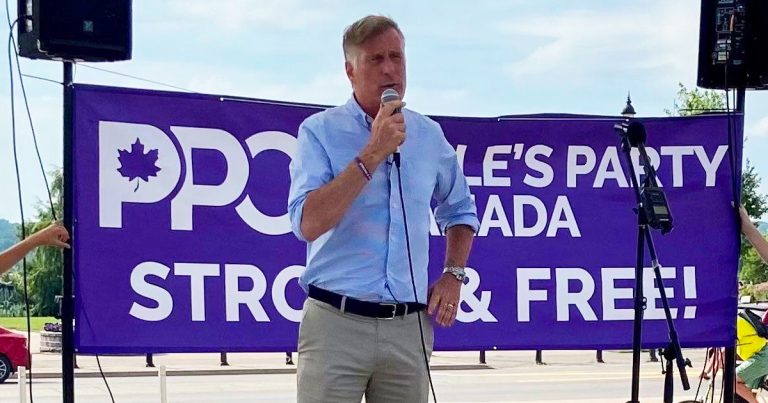
PPC leader Maxime Bernier pledges 0% inflation target if elected

To protect the standard of living of Canadians, People’s Party (PPC) leader Maxime Bernier announced on Thursday that if elected on September 20, a PPC government would change the Bank of Canada’s inflation target from 2% to 0%.

The PPC announcement followed a Statistics Canada report released yesterday that showed the inflation rate in July was 3.7%— almost double the 2% target. The spike in inflation did not surprise Bernier, who said that this is a consequence of the Trudeau government’s decision to print over $350 billion to finance their gigantic deficit. 

“Instead of paying all this spending directly with taxes, we will pay it indirectly with a loss of purchasing power and a debasement of our dollar,” Bernier said. 

The Statistics Canada report shows that the prices of everyday goods have all risen significantly— some at a faster pace than ever before. Food prices increased 1.7% in July 2021 compared with July 2020. The homeowners’ replacement cost index, which is related to the price of new homes, rose at its fastest rate since 1987.

The Bank of Canada inflation-control target mandate is up for renewal this fall and will have to be approved by the Prime Minister. Since the 1990s, the mandate has been to keep inflation at 2%.

On Wednesday, when asked at an Ottawa press conference if he would raise the mandate if re-elected, Trudeau said, “I don’t know. When I think about the biggest, most important economic policy this government, if re-elected, would move forward, you’ll forgive me if I don’t think about monetary policy, you’ll understand that I think about families.

Many blasted Trudeau for his comments including Bernier, who said Trudeau’s comments were “stupid” and affirmed that, unlike the Liberals, the PPC believes that “a sound monetary policy is crucial to maintaining our standard of living and ensuring the stability of our economy.” 

The Conservative Candidate for Carleton Pierre Poilievre also weighed in on the Liberal leader’s gaffe and said that by flooding the market with cash, Trudeau has caused demand-pull inflation in which too much money is chasing too few goods. Poilievre said Canada’s growing inflation rate “is the result of the Trudeauian idea that you can simply create cash, buy things for government with it without any consequences for the people.” 
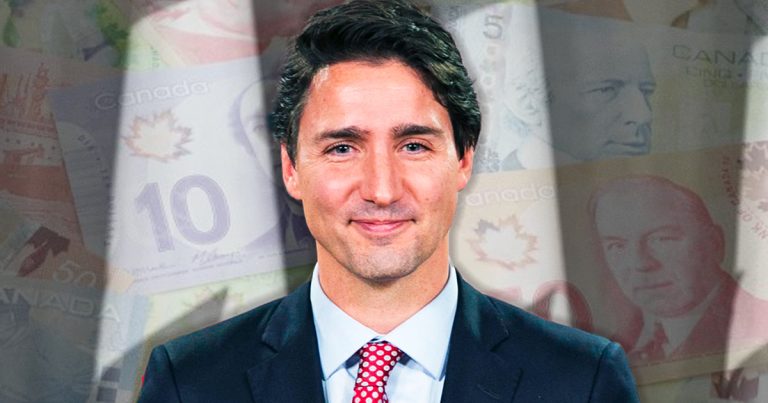
O’Toole first choice among Canadians for growing post-pandemic economy: poll

Conservative Leader Erin O’Toole continues to be the first choice among Canadian voters when it comes to leading the economy out of the pandemic, recent polling shows.

According to the latest poll by the Angus Reid Institute, 41% of voters think that the Conservatives and O’Toole would be the best suited to handle growing the economy post-pandemic. 

“If this were a campaign entirely centred on post-pandemic economic growth, Erin O’Toole would be in a relatively advantageous position,” wrote Angus Reid researchers.

“The Conservatives have been more concrete about their economic plans than the Liberals in the campaign’s early days. O’Toole’s party has promised to recover the one million jobs lost since the beginning of the pandemic within one year.”

The online survey was conducted between August 14-17 and included a randomized sample of 1,614 Canadian voters who were members of the Angus Reid Forum. 

In comparison, a similar poll would carry a margin of error of +/- 2.5 percentage points.

When it comes to the economy, only 36% of Canadians said they would trust the Liberals to handle the country’s finances in the post-pandemic future. 

Despite the Conservative’s advantageous position on economic matters, the Liberals continue to lead in Canadian voting intentions.

The poll found that 36% of people would vote for the Liberals while 30% stated that they would be voting Conservative. Meanwhile, the NDP remains behind at 20% of the vote.

Angus Reid’s findings seem to corroborate a past poll finding O’Toole led on issues like the deficit, the economy, and energy or natural resource issues.

Former general and Liberal MP calls out Sajjan’s handling of military sex misconduct

Former Canadian Armed Forces lieutenant-general Andrew Leslie called out Defence Minister Harjit Sajjan’s handling of the ongoing sexual misconduct scandal taking over Canada’s military. 

Leslie also served as a Liberal MP under the Trudeau government from 2015 to 2019, and was the Liberals’ chief whip.

In response to a statement from Sajjan about why the Liberal government hasn’t managed to address the problem in six years, Leslie pointed out in a tweet that it took less than four years for Canada to plan its monumental D-Day invasion in WWII.

“Interesting. The planning, training, equipping and execution involving many millions of soldiers for the D Day invasion and the subsequent battles to liberate Europe in WW2 took less than 4 years,” tweeted Leslie. 

According to Sajjan, “transformative change” takes time and he has been working on the problem since “day one.” 

“First of all, this started from day one and we’ve been working very hard. I wish transformative can actually happen afterwards. We know that when it comes to 10, 20, 30 years ago and the climate that was there, something that I’ve personally seen that it does take time,” Sajjan said in an interview with CBC News’ Ashley Burke. 

Sajjan’s evasion comes at a time when a growing number of top officials in the military are being accused of sexual harassment or misconduct.

Among the accused is former general Jonathan Vance, who is being investigated over misconduct allegations stemming from a relationship with a female subordinate.

According to testimony by former military ombudsman Gary Walbourne, Sajjan knew of the allegations as far back as 2018 but had turned down seeing evidence Walbourne had presented him at the time. 

“Yes, I did directly tell him about an allegation of inappropriate behaviour against the chief of defence staff,” Walbourne told parliamentarians. 

“I did tell the minister what the allegation was. I reached into my pocket to show him the evidence I was holding. He pushed back from the table and said, ‘No.’ The minister didn’t want to see the evidence.”

Money policy is your job, Justin!

On Wednesday, Liberal Leader Justin Trudeau smugly shrugged off a question about inflation and admitted that he doesn’t think about money policy. Yes, you read that right — Justin Trudeau doesn’t think about money! It’s literally his job to think about the fiscal policy of this country.

This is the same guy who racked up hundreds of billions of dollars in debt over the past five years. In fact, under Trudeau’s watch, Canada’s national debt currently sits at $1,136,864,100,000.00.

Unsurprisingly, the legacy media is pretending this didn’t happen. They don’t want Canadians to see how arrogant and clueless Trudeau is.

Candice Malcolm discusses Trudeau’s latest gaffe, why inflation matters and how the media is treating Trudeau with kid gloves. Tune into The Candice Malcolm Show.

SUBSCRIBE TO THE CANDICE MALCOLM SHOW

Independent NS candidate who opposed lockdowns re-elected as MLA in historic upset

The Nova Scotia election experienced a historic upset on Tuesday after incumbent Independent candidate Elizabeth Smith-McCrossin was re-elected as an MLA .

Smith-McCrossin, who was originally an MLA with the province’s Progressive Conservatives, was kicked out of the party’s caucus after organizing a blockade in response to draconian lockdown measures by Premier Ian Rankin. 

“Our voices have been heard. Cumberland North’s vote will be just as valuable as any other vote in the legislature,” Smith-McCrossin told Global News. 

The blockade followed public health orders issued by Rankin which effectively prohibited travel between Nova Scotia and neighbouring New Brunswick and forced Canadians to self-isolate. 

At the time, Smith-McCrossin took to social media and called on her constituents and supporters to shut down a portion of the Trans-Canada Highway until the premier acquiesced and opened the provincial border to travellers from New Brunswick. 

As a result of her efforts, the provincial border was shut down for over 24 hours due to protesters blocking the area. 

Soon after, Progressive Conservative Leader Tim Houston axed Smith-McCrossin from the caucus accusing her of having a “lack of judgment and personal responsibility” 

On July 17, 2021, Rankin, who leads the province’s Liberal Party called a snap election forcing Nova Scotians to the polls. 

In her riding, Smith-McCrossin squared off against former federal MP Bill Casey who was running under the Nova Scotia Liberal banner to replace her as an MLA. 

Smith-McCrossin won the riding with 54% of the votes while Casey followed behind in second place at 31.7%.

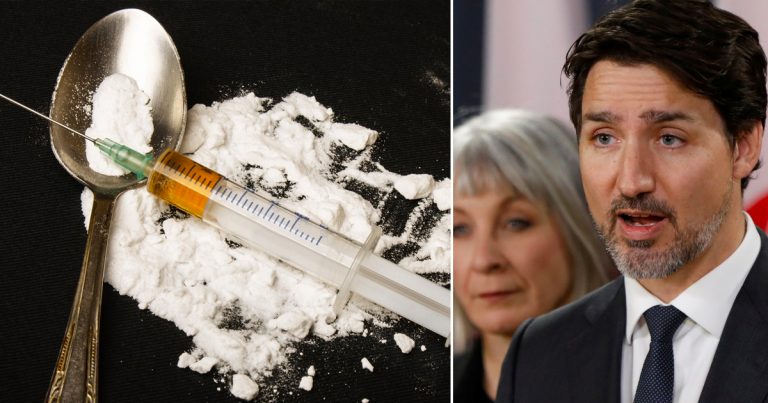
LEVY: The government prepares to enable hard drug use

Is the Trudeau government preparing to enable hard drug use? It certainly seems so.

A recent report by a Health Canada government task force recommends that the Canadian government end criminal penalties for possession of hard drugs like heroin, cocaine, meth and fentanyl.

Health Minister Patty Hajdu even goes as far as to say, “substance use is a health issue. It is not a moral issue or a criminal justice one.”

Sue-Ann Levy says the government’s enabling policies will kill addicts with kindness.

PPC leader Maxime Bernier campaigns on no new spending

Unlike other political parties, the People’s Party of Canada (PPC) will not play a “vote-buying game” this election. 

PPC leader Maxime Bernier announced on Monday that the PPC will be campaigning on the same platform they did in the 2019 federal election, which includes a promise to not introduce any new government spending programs. 

“[The] platform is based on clear and unchanging principles: Individual freedom, personal responsibility, fairness, and respect,” said Bernier. “It puts Canadians first.” 

At an Ontario campaign event on Tuesday, Bernier accused the other political parties of making “costly and unrealistic promises to bribe Canadians and buy their vote.”  

“We know many of these promises are just lies and that the next government will not keep them. This bidding war is also the reason why the government keeps getting bigger and keeps controlling more of our economy and our lives, year after year,” Bernier said.

To constrain government and promote the free market, the PPC platform states they would eliminate all corporate subsidies and other inefficient government interventions, including bailouts, abolish the personal capital gains tax and reduce the corporate income tax rate by 5%. 

The PPC also has an ambitious plan to employ “spending cuts and fiscal prudence” to balance the budget in two years — faster than any other party has promised. In comparison, Conservative leader Erin O’Toole promised to balance the budget within a decade. 

“Spending cuts will include: corporate welfare ($5B-$10B), foreign development aid ($5B), CBC ($1B), equalization payments, and funding for programs which are provincial or municipal responsibilities,” the PPC platform states.

The PPC plan to end media bailouts is similar to Conservative’s leader O’Toole’s promise to remove $500 million in federal subsidies for the press and review $1.2 billion in annual CBC-TV’s English language service funding.

In the 2019 campaign, the PPC polled 294,092 votes and did not elect an MP. Bernier first formed the PPC in 2018 after narrowly losing the 2017 Conservative leadership race and leaving the party.

Pierre Poilievre blames Trudeau for Canada’s skyrocketing inflation

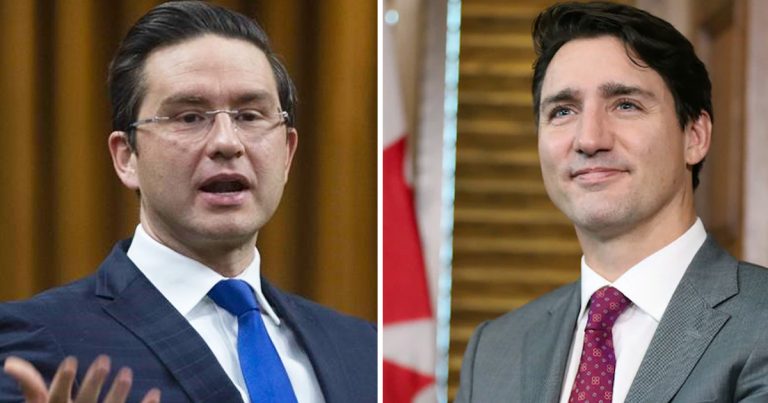
Justin Trudeau’s decision to pay the nation’s debt with printed money has led to skyrocketing inflation, according to the Conservative Candidate for Carleton Pierre Poilievre. 

Poilievre released a video on social media reacting to the Statistics Canada report, which indicated inflation in July was 3.7%— almost double the 2% target. 

“This is the fourth month in a row that inflation has been outside of the 2% target and even outside the acceptable range of 1% to 3%,” said Pierre Poilievre. 

Inflation is an increase in the price level of the goods and services that the average household buys. This rise in inflation means that Canadians have to pay more for necessities.

In July, prices rose faster in every province, although some provinces suffered more than others. According to the Statistics Canada report, Alberta experienced an increase in electricity price of 25.1%, which is “the largest monthly increase since July 2015.”

The homeowners’ replacement cost index, which is related to the price of new homes, rose at its fastest rate since 1987. The prices for durable goods increased at a faster pace in July, with “the purchase of passenger vehicles index” contributing most to the increase. 

The prices of everyday goods have all increased significantly— some at a faster pace than ever before. Food prices increased 1.7% in July 2021 compared with July 2020.

Poilievre said Canada’s growing inflation rate “is the result of the Trudeauian idea that you can simply create cash, buy things for government with it without any consequences for the people.” 
The Trudeau government has created a monumental deficit of over $350 billion with no plan to rein in spending or balance the books. As a result of Trudeau’s spending, Canada’s debt is now over $1 trillion. 

According to Poilievre, Trudeau’s decision to “flood the economy with cheap cash” has caused there to be “too many dollars chasing too few goods and services,” bidding up the price of everything.

On Wednesday, when asked about inflation rates and the Bank of Canada, Trudeau said doesn’t “think about monetary policy” when it comes to managing Canada’s economy.

“I don’t know. When I think about the biggest, most important economic policy this government, if re-elected, would move forward. You’ll forgive me if I don’t think about monetary policy,” said Trudeau. 

“You will understand that I think about families and when we first got elected in 2015 the very first thing we did was raise taxes on the wealthiest 1% so we could lower them for the middle class. Similarly, a re-elected Liberal government will continue to invest in supports for families, for students, for seniors…”

In response, Poilievre said we must scrap “Trudeau’s plan to borrow forever” and “unleash free enterprise.”

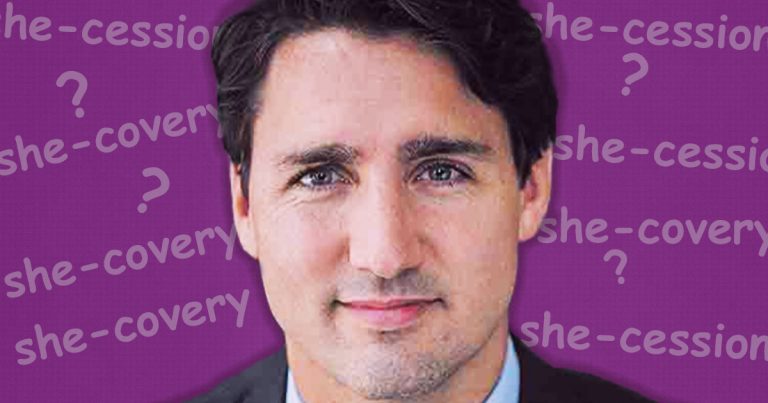
She sells seashells to she-cover from the she-cession

While Canadians are focused on the repercussions of lockdowns, an uncertain economic future, and a potential Afghanistan refugee crisis, Justin Trudeau is taking aim at Conservatives for not talking enough about the “she-covery” from the “she-cession.”

In this election kickoff edition of the Andrew Lawton Show, True North’s Andrew Lawton talks about some of the key platform announcements and messages from several of the parties and leaders, as well as some of the looming questions of the campaign, such as whether Maxime Bernier will get into the debates, how much of an impact the Mavericks will make out west, and whether Trudeau will find a coherent message after a rocky first few days.

SUBSCRIBE TO THE ANDREW LAWTON SHOW

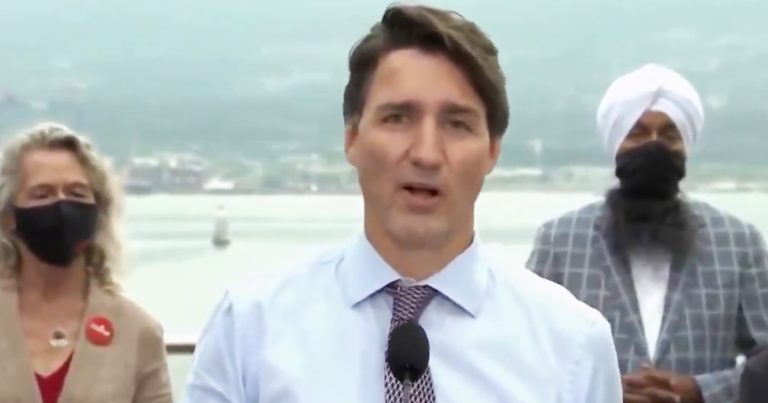
Trudeau says he doesn’t “think about monetary policy” when asked about the economy

Liberal Party leader Justin Trudeau apparently doesn’t “think about monetary policy” when it comes to managing Canada’s economy.

Trudeau made the statement while at a BC campaign stop in response to a reporter’s question on inflation rates and the Bank of Canada. 

“You mentioned the Bank of Canada’s mandate. That mandate is actually expiring at the end of this year. If re-elected, it’s probably the review or the extension of the mandate is probably the first big economic policy decision you’d make after the election,” inquired the reporter. 

“Do you have a position on the mandate? Would you support a slightly higher tolerance for inflation?”

“I don’t know. When I think about the biggest, most important economic policy this government, if re-elected, would move forward. You’ll forgive me if I don’t think about monetary policy,” said Trudeau. 

“You will understand that I think about families and when we first got elected in 2015 the very first thing we did was raise taxes on the wealthiest 1% so we could lower them for the middle class. Similarly, a re-elected Liberal government will continue to invest in supports for families, for students, for seniors…” 

Trudeau’s comments were quickly picked up and ridiculed on social media. 

Conservative candidate Pierre Poilievre took a jab at Trudeau on Twitter singling out the Liberal leader for not sharing the concerns of Canada’s working class. 

“Justin, Of course you don’t think about monetary policy… or fiscal policy… or anything else. You know who does think about these things? The working class people whose cost of living you are ballooning with inflationary deficits,” tweeted Poilievre. 

According to recent polls, Canadians favour the Conservatives over the Liberals when it comes to taking charge on economic issues and government finances. 

An Angus Reid Institute survey from August 5, 2021, found that Conservative Party leader Erin O’Toole came out on top over other party leaders on issues such as the federal deficit, the economy and energy or natural resources.