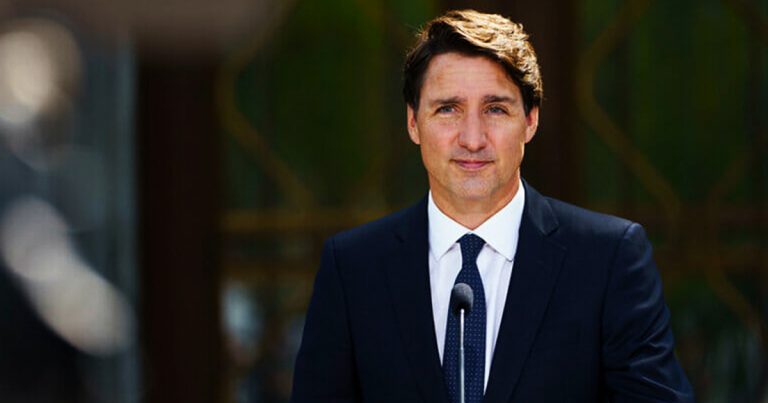
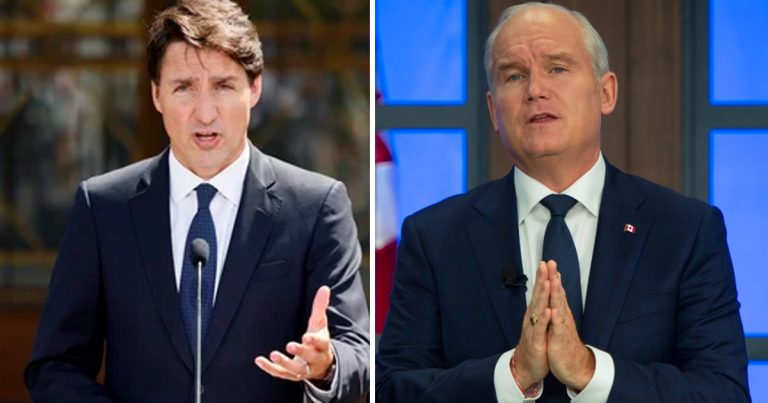
Justin Trudeau is already losing momentum in his bid for re-election.
Trudeau’s bungling of the humanitarian crisis in Afghanistan, his attempts to make vaccines a political issue and his desire for a “she-covery” to deal with a “she-cession” have all caused headaches for the Liberal campaign.
Anthony Furey says it’s going to be a much more difficult road to re-election than Trudeau originally thought.
Prior to the election, True North sent out a pre-election survey to find out what issues matter most to Canadians. The results are in!
Candice Malcolm goes over the results of the survey and is joined by True North’s in-house pollster Hamish Marshall to evaluate the performance of the party leaders at the start of the campaign.
Which party leader is talking about the issues that Canadians care about? Tune into The Candice Malcolm Show to find out.
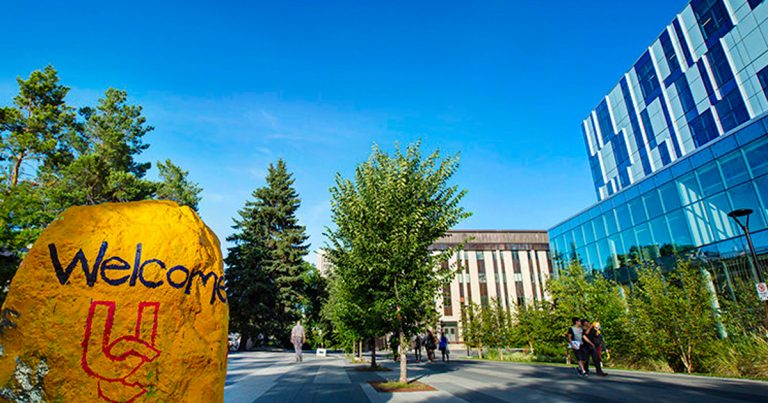
The University of Calgary put out a job advertisement on Tuesday for an “academic development specialist” with the requirement that they have an in-depth grasp of critical “race theory” and “decolonizing.”
According to the job description, academic development specialists will work to address the “unique academic support needs of first generation and equity deserving students.”
“Equity deserving students” are described elsewhere by the University as “women, Indigenous Peoples, racialized minorities, persons with disabilities, LGBTQ2S+, and anyone who might face harassment, bullying, discrimination and marginality.”
Critical race theory, which originally began as an interpretive lens in the field of legal studies, has faced increasing scrutiny from critics in the US over accusations that it teaches a thinly-veiled form of racism and segregation.
Due to efforts by parents who were concerned about the introduction of critical race theory and related concepts into school curriculums across the US, several state school boards have banned the theory from classrooms.
Concepts such as “decolonization” which is defined by the University of Calgary as the complete “bureaucratic, cultural, linguistic and psychological divesting of colonial power” by society often appears alongside or is influenced by critical race theory.
The job advertisement is the second of its kind this month by the University which asks for experience in the controversial fields.
As exclusively reported by True North, a job posting for the University’s Cumming School of Medicine required prospective applicants to have critical race theory knowledge and experience in “activism.”
“This role requires expertise in the areas of community development, advocacy and activism, leadership and innovation, professional and research ethics, and inclusive practices. Areas of expertise may include mad studies, queer studies, critical disability studies, health equity, population health, social justice and critical race theory,” the job ad claimed.
Additionally, in Canada, critical race theory has similarly found its way into major school boards like the Toronto District School Board which held a presentation last year to lecture parents on critical race theory ideas like “colorblindness racism.”
The media associations trusted with overseeing the Liberal government’s $50 million subsidy for local journalists are unable to provide the exact amount dozens of legacy media outlets received under the taxpayer-funded program.
Among the mainstream media outlets participating in the subsidized hiring program are Canada’s National Observer, the Chronicle Herald, the Narwhal, the Tyee and Nunatsiaq News.
Last week, officials with the Department of Canadian Heritage told True North they did not keep records of the salaries, positions or outlets of the journalists hired on the public’s dime under the Local Journalism Initiative (LJI). Instead, the government tasked seven “administrator organizations” to select who would be receiving the subsidy intended for hiring local journalists and paying freelance reporters.
The organizations are News Media Canada, Association de la presse francophone, Quebec Community Newspapers Association, the National Ethnic Press and Media Council of Canada, the Community Radio Fund of Canada, the Canadian Association of Community Television Users and Stations and the Fédération des télévisions communautaires autonomes du Québec.
To track down how much each outlet exactly received as part of these grants to fund journalists at the expense of taxpayers, True North reached out to the above groups.
None of these administrator organizations was able to provide a complete list that included the outlet, positions created, and amount paid.
News Media Canada LJI Director Tina Ongkekok pointed to the group’s website which features a guide of “2021 Host News Organizations.” The list includes the names of the outlets and the created positions, but makes no mention how much each received in funding.
Following further inquiries about whether News Media Canada keeps records of the aforementioned information, Ongkeko suggested True North contact the dozens of outlets themselves.
“The list includes the project titles and media outlets, as well as a link to the outlet’s website. You’re welcome to follow up with the outlets directly—LJI content is required to be identified as such in the byline,” Ongenko told True North.
Additionally, although the program has been in operation since at least 2018, News Media Canada did not respond to further questions about funding recipients from past years.
Similarly, True North was also directed by the Community Radio Fund of Canada to a list of radio stations that received funding through the LJI. While the list names the 28 stations which received public funds, there is virtually no information about how much was distributed and what kind of positions were hired on the public dime.
Further attempts to receive more detailed information from the Community Radio Fund of Canada about the exact amount distributed in subsidies went unanswered.
As Justin Trudeau pushes for mandatory vaccination of federal public servants and those working in federally regulated sectors, a Department of National Defence web page tells employees that while vaccination is encouraged, management “cannot require a public servant to get a vaccine, nor is mandatory vaccination supported under Canadian law.”
Assurances that the COVID-19 vaccination is voluntary have been on the web page since at least March, a review of archived versions shows. However, as the website has been updated over the course of the year, more information about employees’ rights has been added.
On Wednesday, a section was added to the top of the page notifying Department of National Defence staff and enlisted Canadian Armed Forces members of the government’s forthcoming vaccine mandate, but the former information – which says such a mandate is unlawful – remains in place.
This comes one day after Trudeau said at a Markham, Ont. campaign stop that there would be “consequences” for federal employees who refuse to get vaccinated, though he declined to say what these would be.
Trudeau says all affected workers must be vaccinated unless they have a medical or religious exemption. The Conservatives say they encourage people to get vaccinated, but believe “Canadians have the right to make their own healthcare decisions.” Their plan would give federal public servants a choice between getting vaccinated or undergoing frequent rapid testing.
While the Liberals have criticized this proposal for not going far enough, it aligned with a document circulating from the federal treasury board, the central agency that technically employs public servants. When reporters pointed out that the government seemed to be adopting the Conservative plan, the Treasury Board Secretariat pulled the letter, which Trudeau said contained “erroneous” information.”
The Department of National Defence FAQ page not only tells employees vaccination is a choice, but also offers unvaccinated public service employees advice on how to handle “stigmatization” in the workplace from vaccinated colleagues.
“There will be no negative impacts to your employment or your career should you choose not to receive the COVID-19 vaccine,” the website says. “DND respects the rights of their employees. In accordinate with current information from government and public health officials, the COVID-19 vaccine will be voluntary but is recommended for everyone’s safety to decrease the spread of COVID-19 in the workplace.”
The website goes on to say employees “experiencing negative reactions” from coworkers should notify a manager so that “appropriate mitigation measures” can be taken.
Another section on the website says “employees are not required to disclose to anyone whether or not they have been vaccinated as this is private medical information.”
A former Canadian ambassador to China called on the incoming government to take a tougher approach to combat China’s “thuggery” following the 2021 election.
Guy Saint-Jacques who was Canada’s ambassador to China from 2012 to 2016, made the comments in an op-ed penned for the Globe and Mail on Tuesday.
“Ottawa needs to adopt a more robust strategy to counter China’s attack on international law and norms, as well as its interference and spying activities in Canada. The electoral campaign offers an opportunity to ask political parties how they envisage future relations with China,” wrote Saint-Jacques.
“Let’s hope the new government elected on Sept. 20 will quickly produce a new engagement strategy with China that opposes its thuggery and meets the expectations of Canadians.”
The op-ed comes following a series of harsh court decisions handed down by the Chinese government onto several Canadian citizens, including Michael Spavor and Michael Kovrig.
Recently, Spavor was sentenced to 11 years in prison on trumped up espionage charges. Meanwhile, Kovrig was tried before a Chinese court to which Canadian diplomats had no access. China has stated that a verdict regarding Kovrig’s espionage charges would arrive at a later date.
Both Canadians were arbitrarily detained by Chinese authorities in 2018 following the arrest of Chinese heiress and Huawei CFO Meng Wanzhou by Canadian authorities in Vancouver.
Wanzhou is wanted by the US for breaking various sanctions on Iran and other related wire fraud charges.
In recent weeks, China also upheld a death sentence conviction for Canadian citizen Robert Schellenberg who was convicted by Chinese authorities of smuggling drugs. Additionally, three other Canadians are on death row in China and are being denied consular access.
“Knowing China has used hostage diplomacy with increasing frequency in the past 15 years, and following the adoption of the Declaration Against Arbitrary Detention in State-to-States Relations in February, Canada should agree with its allies on a common strategy, including sanctions, that would be applied against China if it dares to take people hostage again,” wrote Saint-Jacques.
The Canadian Taxpayers Federation (CTF) is calling on the NDP to show proof that it had paid back the Canada Emergency Wage Subsidy (CEWS) it had collected.
Ahead of the upcoming election, CTF Federal Director Franco Terrazzano called out the party after it had recently proposed to force businesses that took the CEWS and yet gave their executives bonuses to return the money.
“Businesses shouldn’t be fattening their C-suites while taking tax dollars, but it was also wrong for political parties to help themselves to the wage subsidy meant from struggling businesses,” wrote Terrazzano in a press release.
“It’s great to see the NDP calling on these businesses to pay the wage subsidy back and taxpayers are looking forward to confirmation that the NDP is paying back the subsidy as well.”
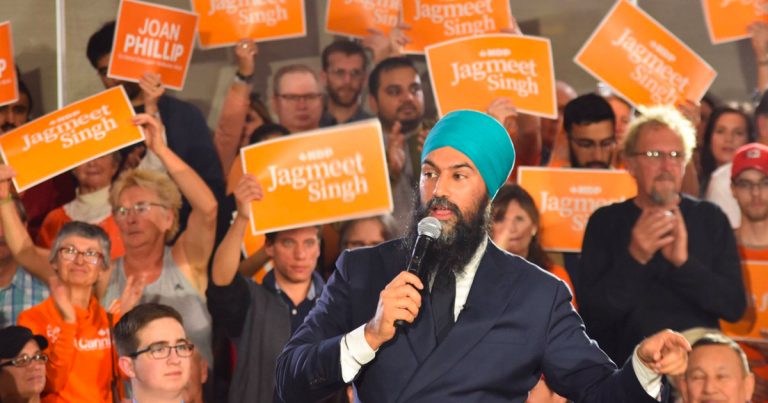
NDP Leader Jagmeet Singh made the announcement on Tuesday while speaking to reporters at a campaign stop in Toronto.
Reports from the time noted that the NDP continued to collect CEWS payments until at least November 2020 despite having one of the best years in fundraising since the last election in 2019.
Additionally, the Liberals, Conservatives and the Greens also collected CEWS. The Bloc Quebecois were the only party to abstain from cashing in on the subsidy.
As noted by the CTF, the NDP like all other federal parties already receives tax credits for political donations and reimbursements during elections which collectively cost taxpayers millions each election year.
“Many Canadians were worried about their jobs during COVID-19, but I don’t think too many people were laying awake at night worried about a shortage of political attack ads,” said Terrazzano.
“Parties already receive special taxpayer treatment and it’s important that they pay the wage subsidy back because they clearly didn’t need it.”
A Liberal campaign kickoff event in Cobourg, Ont. appeared to violate Ontario’s strict guidelines on outdoor gatherings.
Ontario, which is in the third stage of its reopening plan, caps outdoor gatherings at 100 people. Trudeau appeared before a crowd of “several hundred” in the lakefront town Monday evening.
The Liberal party did not respond to a request for comment, but a spokesperson for the Haliburton, Kawartha, Pine Ridge District Health Unit, whose jurisdiction includes Cobourg, confirmed that the 100-person gap for gatherings remains in place.
The spokesperson declined to comment on the specific event, noting the health unit “does not have a role in reviewing or approving plans for public gatherings.”
Trudeau delivered his remarks masked on a local cafe’s outdoor patio, but hundreds of supporters and numerous protesters gathered, without any social distancing, on the street and sidewalk.
In April, police in Cobourg charged four protesters after 30 individuals gathered for an outdoor anti-lockdown protest. No charges have been laid in connection with Trudeau’s event.
Trudeau was met with jeers by people protesting mask and vaccine mandates. Liberal supporters reportedly told one of the protesters, an immigrant, to “go back to Afghanistan.”
Canada’s chief public health officer, Dr. Theresa Tam, has said the country is in the midst of a “fourth wave” of the COVID-19 pandemic, adding that “cases are plotting along a strong resurgence trajectory.”
Conservative leader Erin O’Toole and NDP leader Jagmeet Singh have both criticized Trudeau for calling an election despite his previous pledge to not do so until the pandemic was over.
Northern Saskatchewan candidate Gary Vidal is asking rural voters to consider the Liberal government’s poor record when it comes to issues important to them like rural crime when they vote in the upcoming election.
In an interview with the Prince Albert Daily Herald, the Desnethé—Missinippi—Churchill River candidate, who served as an MP in the last parliament, said the Liberals have turned a blind eye to rural Canadians.
“I asked the prime minister a question on rural crime and I got an answer that was a nothing answer. I challenged (Public Safety Minister) Bill Blair on rural crime… I’ve sent letters recently to the minister of agriculture on the drought conditions and the challenges to the ranchers,” Vidal said.
Vidal pointed to promises by Conservative Leader Erin O’Toole to connect rural communities to high-speed internet services and creating a new cabinet position dedicated solely to rural issues as evidence that his party takes the matter seriously.
“O’Toole talked about building a digital infrastructure to connect all of Canada’s high-speed internet by 2025,” Vidal told the Prince Albert Daily Herald.
“He’s committed to appointing a minister of rural affairs to the cabinet – somebody that will sit at the cabinet table and will speak on behalf of rural Canadians. So, this is a way to get that voice to the table. He’s committed to tackling rural crime… Infrastructure funds would be set aside specifically for rural projects, rather than just urban projects.”
Included in the recently-unveiled Conservative election platform is a series of promises dedicated to addressing rural issues.
The platform includes implementing a national plan to tackle rural crime, improve access to rapid COVID-19 testing in rural communities and bridging the digital connectivity gap for Indigenous communities living on reserves or in remote areas.
O’Toole’s platform builds off of recent legislation introduced by the Conservatives, including Conservative candidate Blaine Calkins’ Private Member’s Bill C-289 which would amend the criminal code to offer more protections to victims targeted because they live in rural settings.
In June, Conservative candidate Damien Kurek similarly chastised the Liberals for being “absentees” on the issues important to rural voters.
Half of Canadians think it’s time for another party to govern, regardless of whether they are satisfied or dissatisfied with the Trudeau government, according to a survey released today by Leger.
The survey was conducted online from August 13, 2021, to August 15, 2021, with 2,007 Canadians and 1,005 Americans, 18 years of age or older, randomly recruited from Leger Opinion’s online panel.
The survey asked respondents if they “are very satisfied, somewhat satisfied, somewhat dissatisfied, or very dissatisfied with the Canadian government led by Justin Trudeau.” 51% expressed dissatisfaction.
Respondents’ opinions on “which federal party leader would make the best Prime Minister of Canada” were recorded as 28% for Trudeau, 18% for Singh and 15% for O’Toole.
When asked which political party they would vote for if the election were held today, 29% said they would vote for Trudeau’s Liberals and 24% for O’Toole’s Conservatives.
Although the Liberals have a 5% lead over the Conservatives, economist and pollster Jean-Marc Léger says “victory is far from assured.” In an editorial accompanying the survey, Léger noted that the Liberals have many hurdles to overcome and “42% of voters can change their mind.”
Léger points to three hurdles that the governing Liberals will have to overcome in order to win the election – COVID-19, the economy and the environment.
With regards to COVID, the Leger poll shows that 24% of Canadians are worried about their safety when voting in the upcoming federal election due to the pandemic.
On the economy, the Trudeau government has created a historic deficit of over $350 billion with no plan to reduce spending or balance the books.
Perhaps the biggest uncertainty, as Léger points out, is the performance of Conservative leader Erin O’Toole. Léger says O’Toole “will be in the spotlight for 36 days and will have to convince Canadians that he is ready to govern.”