
Halifax Police warn public after high-risk sex offender released

Halifax Regional Police are asking the public to stay alert after a repeat sex offender was released into the community.

In a statement, police warned that Gerald Edmund Pike, 53, has completed his sentence and will be subject to a long-term supervision order. Pike is considered a high-risk sex offender. 

“Pike has a criminal convictions history for violent offences dating back to 1999 that includes convictions for sexual assault, assault, assault causing bodily harm, criminal harassment and uttering threats,” Halifax Regional Police said.

“Pike has been assessed as being at a high-risk to re-offend.”

Pike has been charged for attacks on various women over the years and was added to the national sex offender registry following a 2011 assault conviction.

Most recently, Pike was sentenced to eight years in prison in 2014 after he sexually assaulted a teenage girl in St. John’s.

Release conditions dictate that Pike must have no contact with children under the age of 18 and must abstain from alcohol or drugs.

In a recent review, the Parole Board of Canada noted that Pike had long crime-free periods before eventually re-offending.

“The latest Psychological Risk Assessment from December 2019 indicates that your risk for sexual recidivism is in the ‘Well Above Average’ range,” the Parole Board found.

Pike is also required by his release conditions to take his medications. In a previous supervised outing, Pike assaulted an officer while off his prescription. 

Police are asking the public to call 902-490-5020 if they believe Pike is violating his release conditions.
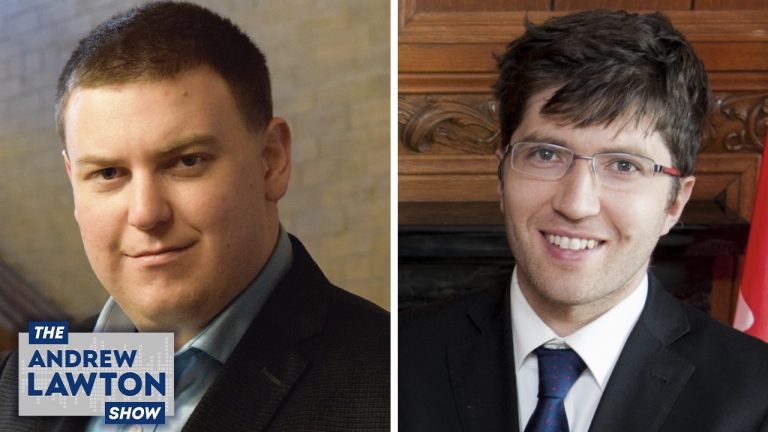

Liberals embrace suicide promotion over suicide prevention

Justin Trudeau’s government is accepting a Senate amendment to its bill expanding access to assisted suicide which will make it so people suffering only from mental illnesses can access state-facilitated deaths. Conservative MP Garnett Genuis joins True North’s Andrew Lawton, a suicide survivor himself, to explain why this bill is so dangerous.

Watch the latest episode of The Andrew Lawton Show

Legal challenge launched seeking end to government quarantine hotels

0

The Canadian Constitution Foundation (CCF) is launching a legal challenge to the Trudeau government’s mandatory quarantine hotels.

In a statement on Monday, the CCF said it will argue that forcing people to stay in quarantine hotels and pay out of pocket violates the Charter of Rights and Freedoms. The CCF is joining five individuals who were forced to stay in quarantine hotels after travelling abroad for compassionate reasons, such as attending a funeral or attending to a spouse who received surgery abroad.

“The quarantine hotel policy is an unjustified limit on the rights of Canadians’ Charter protected right to enter Canada. The $2,000 cost per traveler is exploitive and punitive, and some of the hotels have been operating with inhumane conditions,” said CCF Litigation Director Christine Van Geyn.

Earlier this year, the Trudeau government began requiring that everyone who enters Canada from abroad must stay in government-approved hotels for up to three days and pay up to $2,000 out of pocket. 

The policy has faced increased scrutiny as many travellers have complained about the poor conditions of the hotels. An instance of sexual assault has also been been reported.

As of Monday, the government was attempting to enlist more hotels to become quarantine sites.

“The individual applicants in this challenge must leave Canada for incredibly compassionate and sympathetic reasons. Their need to travel is unimpeachable,” Van Geyn said. 

“It is frankly bizarre and cruel that the federal government provides specific exemptions for compassionate travel into Canada, but not for the reverse situation of individuals travelling out of Canada for compassionate reasons. That’s why we are bringing this constitutional challenge.” 

The CCF claims that the quarantine hotel policy violates multiple sections of the Charter, including those preserving the right to enter Canada, freedom from arbitrary detention and freedom from cruel and unusual punishment.

Canada scores poorly on COVID Misery Index

0

Canada is doing worse than most Western countries when it comes to its handling of the pandemic, according to research from the MacDonald-Laurier Institute (MLI).

In their new COVID Misery Index, ranking the relative despair caused during the pandemic, MLI ranked Canada as the fifth most-miserable country out of the fifteen countries studied.

“While Canada was spared the worst ravages of the disease, our response to it has brought significant misery, largely attributable to quite strong restrictions in behaviour and a lagging vaccination program,” MLI said.

“The economic misery has been severe, and the projections are that Canadian taxpayers will be paying this bill for some time to come.”

The Misery Index measures the relative misery caused by COVID-19, the government response to the pandemic and the economic fallout, giving each a score of 0 to 100.

Canada scored 178.02 on the Misery Index. By comparison, the least miserable country, Norway, received a score of 71.6. The most miserable country was Spain, scoring 220.58.

While Canada scored better than most on misery caused by the virus, Canada had the second-worse score when it came to government-induced misery. Canada ranked third most miserable when it came to economic impacts of the pandemic.

During the pandemic, Canada faced unprecedented unemployment and immense damage to small businesses. Government-enforced lockdowns also lead to increased rates of loneliness, mental illness and drug abuse.

Guilbeault accused of double-standard when it comes to sharing news on social media

Liberal Minister of Canadian Heritage Steven Guilbeault is being accused of hypocrisy after being exposed for sharing news content on social media platforms without properly citing their sources or compensating news organizations.

Guilbeault has stated in the past that the practice by social media websites like Facebook of linking to Canadian news content without compensating creators was “immoral and unacceptable.” 

“That’s immoral to me and it’s unacceptable,” Guilbeault said about the practice on Global News’ The West Block in September 2020. 

Currently, Guilbeault is in charge of developing new legislation which would force social media giants to pay for Canadian news content and be forced to remove offensive and illegal content from their platforms.

Despite Guilbeault’s prior moral indignation, research by University of Ottawa law professor Michael Geist shows that the minister has engaged in the very same practice he condemned at least a dozen times. 

According to Geist, the minister’s Facebook page contains numerous news articles and videos that used third party content for which the creators were never compensated for. Research also shows that Guilbeault had spent at least $10,000 on at least 54 advertisements on Facebook during the 2020 election. 

“The shared articles come from a wide range of news sources including the Journal de Montreal, La Presse, Global News and the Toronto Star. Given that there was no payment for these links, one wonders if Guilbeault thinks these are also immoral,” writes Geist. 

“Rather than post links, Guilbeault has at times made a copy of the video and posted it directly to Facebook. For example, this post features his full appearance on Tout le Monde en Parle. The segment is available online and could be linked, but Guilbeault instead made a copy of the 14 minute appearance and uploaded it himself, thereby denying the referral to the original broadcaster.” 

Conservative Party MP and heritage committee member Alain Rayes took to social media on Tuesday to condemn the minister for the alleged double-standard. 

“How can Canadian Heritage Minister @s_guilbeault post news on his social media and then refer to such practice as immoral. I am very curious to see how he will manage to come up with a fair proposal for Canadian media after that,” tweeted Rayes. 

In response to Rayes’ tweet, Guilbeault claimed that he had invested $24,237 in local publications and only $76 on Facebook ads. 
“Did your research inform you that I invested $24,237 in advertising in local publications, equity-seeking media groups and community organizations in my riding, compared to only $76 for Facebook? Facts first, this information is public,” tweeted Guilbeault.

Canada “well-positioned” to benefit from space industry recovery

Canada stands to benefit from a revitalized space industry, parliamentarians were told at an industry committee meeting on Tuesday. 

Several experts in Canada’s aerospace industry testified before the Standing Committee on Industry, Science and Technology to discuss the space sector’s future. Among those testifying was CEO of the pioneering Canadian space company MDA, Mike Greenley. 

“Countries around the world are moving swiftly and decisively to participate in the new space economy. Because while space might not be the final frontier, it is the next one. The global space market is worth over $420 billion today and is projected to surpass $1 trillion in the next decade,” said Greenley.

Greenley said in spite of the pandemic, the sector saw record investment in 2020, noting that Canada is “well-positioned” to become a leader in it.

“Canada and the entire space community are planning to be a part of this economy in a big way,” he said.

MDA was founded in 1969 as a public company but was privatized in 2020. On Dec. 9, 2020 the company was awarded a contract by the Canadian Space Agency (CSA) to help develop the Canadarm 3, the third generation of the robotic arm used on various space shuttles. 

According to Greenley, the space sector has a role to play in revitalizing Canada’s post-coronavirus economy and the Canadian government can take three key steps to ensure the industry’s long-term success.

Among those steps is positioning the Canadian government as an anchor customer for Canadian space companies, further investments and a long-term space plan. 

The Canadian government allocated $325 million to the Canadian Space Agency in the 2020-2021 budget. 

This year has already seen several major international efforts aimed at space travel and exploration. 

In February, NASA’s latest Mars rover, Perseverance, successfully landed on the red planet for a mission to identify signs of life. 

A number of Canadians, including CSA senior mission scientist Tim Haltigin, were involved in the project and the rover’s SuperCam optic cables were developed by the Kitchener-based company, FiberTech Optica. 

Meanwhile, the Chinese government has also stepped up its efforts to develop its own space industry, announcing that its Tianwen-1 spacecraft had touched down on the moon. 

Unlike the Cold War era, where the major driving forces behind the industry were nations like the US and the USSR, today private companies like Elon Musk’s SpaceX are leading the way.

Last week, SpaceX successfully re-landed its prototype Starship rocket after takeoff at its south Texas launch site.

Vaccine Passports and the Permanent Lockdown

SUBSCRIBE TO THE ANDREW LAWTON SHOW

Justin Trudeau once called the idea of a vaccine passport “divisive” but now the federal government says it’s a “live” issue between Canada and its G-7 allies. True North’s Andrew Lawton talks about this and how opposing lockdown has been characterized as a fringe position.

Also, Conservative MP Garnett Genuis joins the show to explain how the Liberal government is prioritizing suicide promotion over suicide prevention.

Poilievre says Trudeau is delaying the budget for political reasons

Conservative MP Pierre Poilievre tweeted on Monday that Prime Minister Justin Trudeau was delaying the budget for political reasons ahead of reports of a rumoured 2021 election. 

The Liberal government stated that it would not be releasing a budget in March, claiming that they need more time to assess the impact of the pandemic. 

Trudeau’s latest delay marks a period of two years since the ruling Liberals have last presented a full budget to the House of Commons. 

“Let’s face it: Trudeau is delaying the budget, because he wants the election over before people learn how desperately broke he’s made us,” tweeted Poilievre. 

According to the Globe and Mail, an official within the Trudeau government familiar with the matter stated that no date has yet to be set for a full pandemic budget. However, the source also ruled out early April as a possible budget day. 

“It is completely irresponsible for Justin Trudeau to keep Canadians in the dark about his plans for reopening our economy,” Conservative finance critic Ed Fast told the Globe and Mail. 

“For almost two years, this Liberal government has failed to table a budget, which would allow Canadians to assess whether the Prime Minister has a plan to properly manage our economy as we emerge from the COVID pandemic.”

True North reached out to Finance Canada but did not hear back in time for publication of this story.

Under Trudeau’s leadership, the federal government has accrued over $1 trillion in federal debt and is currently expected to post a $385-billion deficit in 2021. 

In February, the Conference Board of Canada warned that the potential consequences of such a poor fiscal situation could be “inescapable.” 

Trudeau government promises to raise immigration rates 117%

The Trudeau government is committed to radically increase the number to immigrants coming to Canada this year.

According to Blacklock’s Reporter, Immigration Minister Marco Mendicino told the House of Commons immigration committee the government plans to increase the number of immigrants admitted to Canada from 184,370 in 2020 to 401,000 in 2021, an increase of 117%.

“In 2021 we plan to welcome 401,000 new permanent residents,” Mendicino said Monday.

“At the very core of our immigration plan is our belief that those who possess the skills and experience will accelerate our economic recovery.”

Immigration was reduced last year as people chose to stay in their home countries rather than travel abroad. To compensate, the government raised the annual immigration quota from 341,000 to 401,000.

Mendicino also defended his $3.25 billion budget by claiming that the increased rates of immigration will increase economic growth and hasten Canada’s recovery from last year’s recession.

“This funding will be put to good use as we advance our ambitious level objectives to accelerate our economic recovery.”

A recent study commissioned by the Department of Immigration found that most Canadians actually disagree with the Trudeau government’s immigration targets.

Out of the 1,500 people surveyed, 57% said Canada should limit the number of immigrants coming to Canada, with only a small minority thinking there were too few immigrants.

In June, a study commissioned by True North found that 76% of Canadians want a total pause on immigration until a vaccine is developed for COVID-19 and the unemployment rate drops down to pre-COVID levels. 

Conservatives protest proposed expansion of assisted suicide to mentally ill

Conservative MPs are sounding the alarm after the Senate passed an amendment that may allow for people struggling with mental illnesses to seek assisted suicide.

At a press conference on Monday, Conservative MPs Rob Moore and Garnett Genuis voiced their opposition to an amendment made to Bill C-7 (An Act to amend the Criminal Code (medical assistance in dying) which they say exploits the mentally ill.

The MPs were joined by concerned Canadians and experts who strongly oppose the amendments, including survivors of mental illness.

“Under the Liberal government’s amendment, medically assisted death will automatically be expanded to cover those with mental illness in 24 months,” Moore said.

“At a time where Canadians often struggle to access mental health services, it sends a dire message — that the lives of those struggling with mental illness are not valued by this government.”

In late Feburary, the Senate passed amendments to Bill C-7 which would eventually allow mental illnesses to become a valid reason to seek assisted suicide, also known as medical assistance in dying (MAiD). The Trudeau government later endorsed the amendment.

Prior to the amendments, Bill C-7 clearly stated that mental illness was not a valid reason to seek assisted suicide. While it is not yet clear if the Liberals will ultimately vote in favour of the amended bill, they will permit the amended bill to move forward.  

Dr. Stephanie Kafie, a family physician with a specialization in elder care, explained that suicidal thoughts can be a long-term battle which usually ends with recovery. By allowing suicidal people seek assisted suicide, the bill will prevent vulnerable people from getting help.

“Giving up on patients by offering [assisted suicide] when they’re at their lowest and most challenging period of their lives is not good medicine,” she said.

“Mental illness can be treated, MAiD is not the standard of care for depression.”

Dr. Kafie noted that many Canadians do not have access to timely psychiatrics or palliative care, and that offering assisted sucide is not acceptable as an alternative.

The Conservatives have proposed their own amendment to exclude mental illness from Bill C-7. Genuis has also created a campaign calling on MPs to vote against the amendment and better support the mentally ill.