“I don’t think Canada can stand by this at all”: economist urges action on Keystone XL cancellation

0

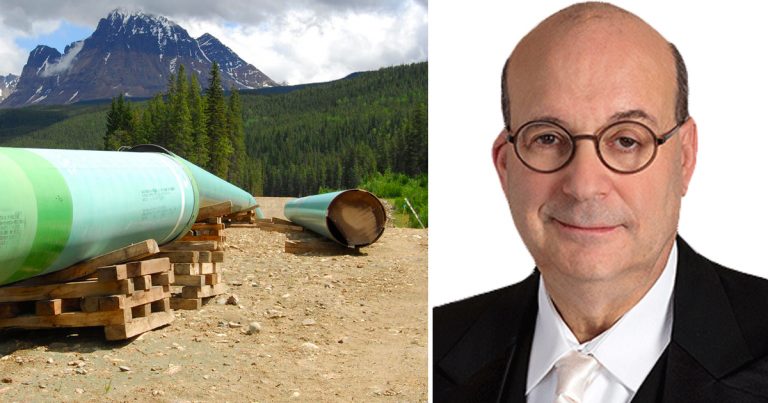
The Keystone XL pipeline was to carry 830,000 barrels of heavy crude oil a day from Alberta to Nebraska, employing 2,800 Canadian workers during construction. It was slated to be the first pipeline fully powered by renewable energy sources. 

But on his first day of office, US President Joe Biden revoked TC Energy Corporation’s permit to build Keystone XL.

“This is actually a very serious issue and it needs to be dealt with,” University of Calgary professor of economics Jack Mintz said at a panel discussion event held by the Macdonald-Laurier Institute on Tuesday. 

“I don’t think Canada can stand by this at all.”

The online panel discussion, titled “Building Across Borders: Energy Infrastructure, Environment, & Canada-US Relations in the Biden Era,” also featured former MP Lisa Raitt, former Canada-US ambassador Gary Doer, Canadian American Business Council CEO Maryscott Greenwood and Alberta to Alaska Railway President JP Gladu.

“The reason why Keystone XL was very important to the industry was not just because it provided greater pipeline capacity for moving oil down, but also because it gave the best netbacks,” Mintz explained, referring to the gross profit per barrel of oil.

“We have to remember that the cancellation of XL will at times lead to some severe problems with pipeline capacities – when a particular pipeline is down, all of a sudden the industry finds that it cannot ship its oil easily, unless it ships it by train, which is more costly to do as well as having higher environmental impacts.”

“Then we are going to have a situation where the price of oil in Alberta is going to be discounted more heavily relative to the Gulf Coast, and of course that means less profits… lower taxes for federal and provincial governments, as well as losing export revenues which will have an impact on Canada’s exchange rate to a certain extent.”

Though Mintz said retaliatory action against the US would be inappropriate, he noted that Canada needs a better deal. 

One of Mintz’s policy suggestions was that Canada implement carbon border adjustments: because the US doesn’t have a carbon tax, Canada could put a carbon tax on items coming in from the US. He also suggested Canada seek out new markets, as Canada currently exports 90% of its oil and gas to the US. 

Reviving the Energy East pipeline project, routing oil through Churchill, MB and Hudson’s Bay or via BC are some ways that oil could get to market, as well as transporting oil by rail through Alaska. But Mintz notes that none of these options would have the same rates of return as the Keystone XL pipeline.

“But now that Keystone XL is dead, I think we have to think of whatever policy alternatives we can have for the future.”

Alberta Premier Jason Kenney called the cancellation of Keystone XL “an insult directed at the United States’ most important ally and trading partner on day one of a new administration.” 

Conservative leader Erin O’Toole called on Prime Minister Justin Trudeau to “immediately reach out to the incoming U.S. administration to stop this from happening and stand up for working Canadians across Canada.”

Prime Minister Justin Trudeau’s only comment on the matter was that he is “disappointed.”

Last week at an online event titled “The Canada-U.S. Climate Opportunity,” former top Liberal strategist Gerald Butts and Hillary Clinton’s 2016 campaign chair John Podesta both suggested Canada should give up on the Keystone XL pipeline.

“I think Keystone is dead. [Biden]’s withdrawn the permit, he’s not going back. He made that commitment and so we just got to get over it, move on and find these places on clean energy where we can cooperate,” said Podesta.

“I don’t know what I can say other than diplomatically the reason that the US has the option to say no to Keystone has more to do with the increase in US production of oil and gas between the time Keystone was announced and today, than anything we can say or do in Canada,” added Butts.
Doug Ford fundraises off his alleged support for businesses

0

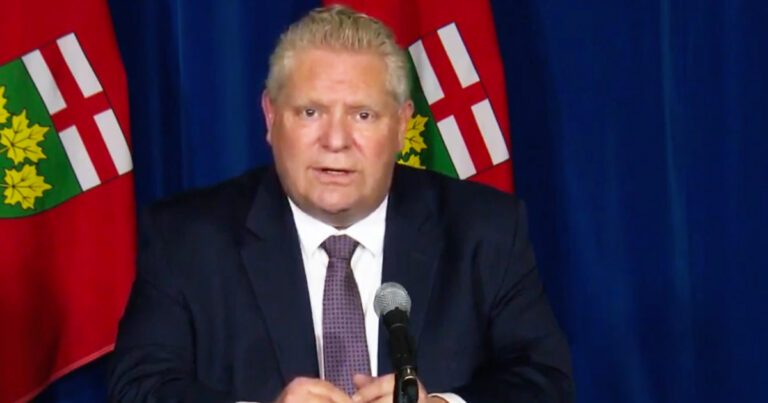
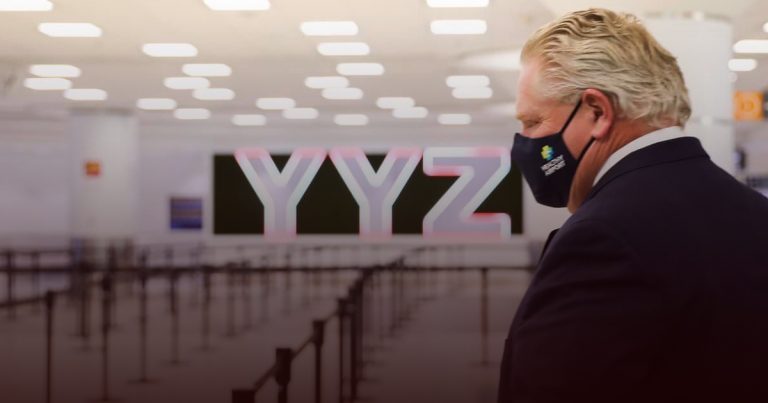
In a fundraising email sent out on Wednesday, Ontario Premier Doug Ford asked supporters to contribute to the Progressive Conservative Party of Ontario to support his “pro-jobs” record as leader.  

The email cites a report by the Canadian Federation of Independent Business (CFIB) which gave Ontario a score of A-. 

“When I became leader of our party I promised I would slash red tape and modernize regulations, the keys to help attract investment and create jobs. It was a promise made – and a promise kept,” the email claimed. 

“We’re supporting individuals, families and businesses on the ground, and removing regulatory roadblocks.” 

Critics have accused the Ford government of unnecessarily harming small businesses in the province through the use of wide-sweeping lockdowns. 

“Is this a joke? Doug Ford has just sent out a fundraising email asking for money because of how he’s supposedly done such a great job supporting businesses in Ontario,” tweeted True North contributor Anthony Furey. 

“The email cites a CFIB report card as proof, but what it doesn’t mention is how when the CFIB put forward a modest proposal the other month to allow Ontario small biz to re-open to a maximum of 3 customers at a time, Ford turned them down.”

In January, the CFIB called on the provincial government to create a plan to allow small businesses to carefully reopen and to expand the amount of provincial support they could receive. 

“Only 37% of Ontario small firms are fully open at this late stage in the pandemic,” said CFIB president Dan Kelly at the time. 

“More of Ontario’s small business community is closed than any other province in Canada and officials have signalled that reopening may be months away. By contrast, 64% of BC small businesses are fully open.”

Recently health officials warned that there was a “very real risk” of a third lockdown following the incoming third wave of the coronavirus. 

“Without the ability to respond quickly and effectively, without the ability to control spread in the community, we face the very real risk of a third wave and potentially a third lockdown,” said the co-chair of the Ontario COVID-19 Science Advisory Table Adalsteinn Brown last week.

FUREY: Why won’t officials acknowledge the massive decline in COVID cases?

In January, Canada saw almost 10,000 COVID-19 cases per day. Five weeks later, Canada is seeing a massive decline in cases – just over 2,000 cases per day. Further, hospitalizations and other indicators have decreased drastically as well.

But instead of celebrating this good news or even discussing the different metrics, public officials are warning about the new variants and a third lockdown.

Anthony Furey asks why won’t public officials acknowledge the massive decline in COVID-19 cases?

Independent MPP Roman Baber proposes MPPs reduce salary to $500 per week

Independent MPP Roman Baber is proposing introducing a private member’s bill that would reduce MPP’s salary to just $500 per week — the same as what millions of Canadians received under CERB.

“The government is quick to shut down the economy, leaving hundreds of thousands of workers on employment insurance,” Baber said Wednesday.

“The unemployment rate is almost double and more than 400,000 Ontarians remain unemployed compared to pre-pandemic levels.”

On Wednesday afternoon, Baber asked the Legislative Assembly for unanimous consent but it was denied. In response, Government House Leader Paul Calandra proposed his own motion to have only Baber’s salary cut.

Speaker Ted Arnott said that motions affecting MPP’s salaries may not be permissible. Arnott will report back tomorrow with a decision on whether Calandra’s motion was valid or not.

Baber, who was removed from the Ontario PC caucus for opposing lockdowns, says reducing salaries would help his fellow MPP’s “appreciate the consequences” of the lockdowns they voted for.

The “We Are All in This Together Act” would reduce MPP salaries to $2,000 per month until all of Ford’s emergency orders are ended with the exception of hospitals and long-term care homes.

MPP’s in Ontario currently make around $2,240 a week before taxes.

In January, Baber was removed from the Ontario PC caucus after he called for an end to the Ford government’s aggressive lockdown measures.

Baber noted that lockdowns have led to a spike in suicides, bankruptcies and divorces. He also claimed that ICU capacity is actually better than before the pandemic.

“The medicine is killing the patient,” he wrote.

Liberal gun bill bans toy guns that look like real firearms

The Liberal government’s new gun bill will ban “replica” firearms if they look like any gun regulated by Canada’s firearms regime.

According to a document published by the government, the new legislation Bill C-21 will “Update the criminal code to ensure that any device, including an unregulated airgun that looks exactly like a conventional regulated firearm (i.e., shoots over 500 feet per second), is prohibited for the purposes of import, export, sale and transfer.”

The government says owners of existing devices fitting the description will be able to keep them, but will not be allowed to sell or transfer them to anyone else.

“No further ‘replica’ firearms could be imported into, or sold/transferred in Canada,” the document says.

Bill C-21’s text defines a replica firearm as “any device that is designed or intended to exactly resemble, or to resemble with near precision, a firearm that is designed or adapted to discharge a shot, bullet or other projectile…and that itself is not a firearm,” with an exception for replicas of antique firearms.

At a Tuesday morning press conference, Prime Minister Justin Trudeau revealed the next phase of the Liberal plan to implement sweeping gun control measures. The plan includes a buy back program for the 1,500 “assault-style weapons” already banned by the government last year. 

The new legislation also hopes to give municipalities the power to ban the possession of handguns within their boundaries. 

“Let’s not forget what this is about. Saving lives. We’re not targeting law-abiding citizens who own guns,” claimed Trudeau during a press conference on Tuesday. 

Soon after the Liberals prohibited 1,500 firearm models through an order-in-council last year, thousands of law-abiding gun owners marched on Ottawa in protest.

Parents need more choice in Canada’s education system, report says

Justin Trudeau claims “diversity is our strength,” but the educational landscape in Canada is anything but diverse, a new report from the Association for Reformed Political Action Canada says.

The report on “educational diversity” says provinces should make it easier for parents to choose private schooling or homeschooling, including not having to pay for the public system if their kids go elsewhere. André Schutten from ARPA Canada joined The Andrew Lawton Show to explain.

Watch the latest episode of The Andrew Lawton Show.

Depression and substance abuse skyrocket during lockdowns: poll

0

Reported feelings of depression and substance abuse have increased dramatically since the beginning of the pandemic according to a new poll conducted by Leger.

The poll, commissioned by the Mental Health Commission of Canada (MHCC) and the Canadian Centre on Substance Use and Addiction (CCSA) found that the number of Canadians feeling depression symptoms increased from 2% before March 2020 to 14% in December.

Only 42% of those surveyed said their mental health was “very good or excellent,” compared to 67%  before lockdowns began last year.

“That’s such a wide gap, it tells us that something is going on there. The fact that fewer Canadians feel their mental health is strong or excellent doesn’t necessarily mean that they’re experiencing a mental illness,” said MHCC Vice-president Ed Mantler.

“They may be experiencing sadness or anxiety that are completely normal reactions to what’s happening around us. But we do know that those who report severe symptoms of depression in particular have increased substantially.”

Around 30% of Canadians who drink alcohol report consuming more as a result of the pandemic. Around 40% of cannabis users also reported a spike in use.

Social isolation, economic turmoil and services closed during lockdowns have all contributed to a dramatic rise in mental health issues and drug use across Canada.

Another recent poll from the Canadian Mental Health Association revealed that 40% of Canadians feel that their mental health has worsened since the pandemic began. 

Mental health experts have recently warned that demand for mental health services will likely spike as a result of the pandemic and lockdowns. In Ontario, major mental health visits jumped 8% from April to December.

2,600 dead, 565,000 displaced as Islamist violence surges in Mozambique

0

An estimate 2,578 people have been killed in Mozambique since 2017 as Islamist violence continues to rise in the African country.

According to the Armed Conflict Location & Event Data Project (ACLED), thousands of people have become “fatalities from organized violence” carried out by terrorist groups, with another 565,000 fleeing their homes as the Mozambican army tries to fight the groups.

In recent years, various groups associated with ISIS have sprung up in Mozambique’s Cabo Delgado province. Prior to 2017, Islamic terror was rare in the majority-Christian country.

Christians are the primary target of the Islamists, with entire villages being burned and residents massacred. Attacks on churches and Christian aid workers have also become common in Cabo Delgado.

While attacks have slowed down in 2021, experts associate the decrease to the ongoing rainy season rather than success fighting the Islamists.

“The rainy season decline in insurgent attacks in Cabo Delgado has led to speculation that the government has made significant military gains against the insurgency in recent weeks, a narrative that has also appeared in pro-government propaganda,” the ACLED wrote.

“There are encouraging signs for the government on the security front, and last week’s offensive in Mocimboa da Praia has the potential to bring more. However, the lack of insurgent activity in January is not necessarily indicative of government success.”

In November, 50 people were beheaded in a mass-execution by ISIS-affiliates in a Christian village. 

Open Doors currently ranks Mozambique the 45th most dangerous countries for Christians jumping twenty one places from the previous years’ ranking.

Across Africa, violence against Christians have increased dramatically, leading to fears that Christian communities are at risk of genocide on the continent.

“Not our role” to tell China it’s doing wrong: NS premier

Outgoing Nova Scotia Premier Stephen McNeil believes it isn’t the place of Canadians to question or criticize China.

Speaking to the China Business Council (CCBC), McNeil praised the ongoing economic cooperation between Nova Scotia and China.

“It’s not our role to go in and tell someone else they’re wrong. Our role is to go in and work with them and learn,” he said.

“I’m grateful and proud of where I live. I’m proud to be a Canadian but Chinese people are proud to be Chinese. And they have a way of doing things. Let’s go learn. Let’s teach each other. And let us grow economic ties.”

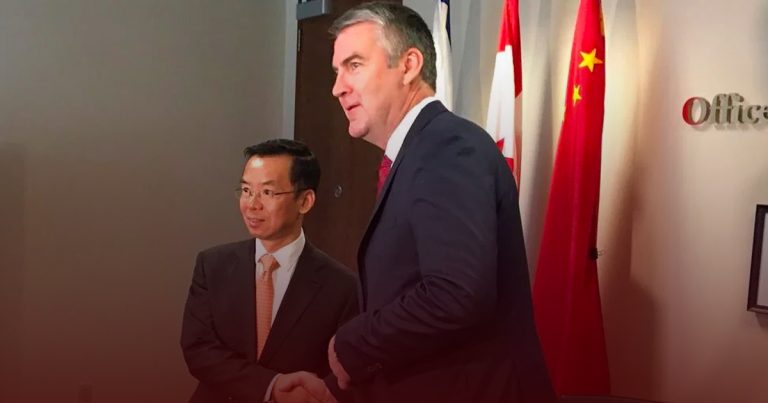
As premier, McNeil put a focus on strengthening ties between Nova Scotia and China, having personally met with the Chinese ambassador in the past. 

McNeil’s statements have been condemned as naive and dangerous as it has become known that China is committing genocide against Uyghurs and increasing persecution of Hongkongers, Christians and other minorities.

Further, two Canadians Michael Kovrig and Michael Spavor remain in a Chinese prison after they were arbitrarily detained by China.

Former Canadian Ambassador to China David Mulroney called McNeil’s remarks shameful and foolish given China’s “genocidal behaviour” and mistreatment of the two Michaels.

“The remarks actually sound like something that China’s premier might say to a room full of gullible foreigners,” he told Postmedia.

“We don’t expect our politicians to insult other countries, but we do expect them to have the courage to speak honestly about major human rights abuses.”

McNeil will be stepping down as premier in the near-future, with transition already started with NS Liberal leader-elect Iain Rankin.

Committee advises London to remove “racism” from policies, partner with BLM

An official anti-racism task force in London, Ontario is recommending that the city remove unspecified anti-black and anti-Indigenous “racism materials” from its policies and public documents. 

The recommendation is one of 12 filed ahead of a Diversity, Inclusion and Anti-Oppression Advisory Committee meeting to be held this Thursday. 

Other suggestions by the group formally known as the Community Diversity and Inclusion Leadership Table (CDIS) include fostering a “strong relationship” with Black Lives Matter London, changing the face of City Hall to reflect the city’s ethnic makeup and creating several anti-racism positions. 

“(The City of London shall provide) an update on the implementation and application of the Equity and Inclusion lens and the de-colonization lenses, with specific reference to what steps have been taken to identify and remove anti-Black and anti-Indigenous racism materials and systemic barriers present in existing City of London policies, procedures, and operating manuals,” reads one recommendation. 

Another recommendation suggests London “implement a detailed plan to change the face of City Hall to reflect the composition of the city of London. Addressing issues relating to, greater diversity amongst Senior Leadership Team, and the members of the Police Force, Fire Services, and other Union Executive members. Ensure the plan includes specific targets and deadlines.” 

CDIS was launched in 2019 and includes five independent working groups made up of local volunteers and organizational representatives. 

Part of the effort’s mandate inclues “zero tolerance for oppression, discrimination and ignorance.” Among the strategies listed on the group’s official website include addressing one’s own privilege and to “encourage everyone to undertake de-colonization, anti-racism, anti-oppression” and other forms of social justice training. 

Over the summer, anti-racism protestors took to the streets of London in droves to call for the defunding of police following the controversial US death of George Floyd while in police custody.

At the time, Black Lives Matter London put out a list of demands including a call for the city to “defund the London police”, cease ticketing racialized people and for all prisoners being held or awaiting trial to be immediately release among several other demands.