Earlier this year, the Ontario Provincial Police conducted a criminal investigation into senior members of the RCMP on allegations of obstruction of justice – relating to the treatment of the RCMP officers involved in the arrest and death of Robert Dziekanski.
Earlier this week, BC’s Director of Police Services Brenda Butterworth-Carr resigned from her post. Butterworth-Carr said she opted “to focus on personal matters and spend time with my family.” But is this actually the case?
True North’s Leo Knight believes there’s much more than meets the eye.
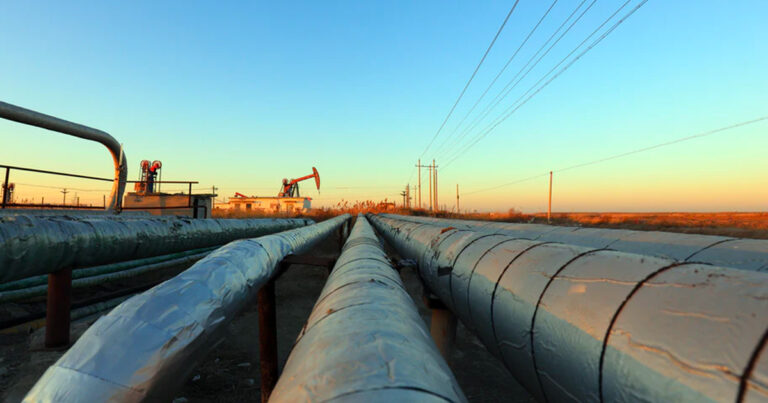
The amount of greenhouse gas emissions produced by Canada’s oil sands is significantly lower than previously claimed.
The study from the University of Calgary, the University of Toronto and Stanford University found that emissions from the oil sands are 14-35% lower than estimates from a 2018 report, which claimed that Canadian oil was more carbon-intensive than most.
The study was funded by Alberta Innovates and Emissions Reduction Alberta, two provincial government agencies.
The authors of the study also found that new technologies being implemented will soon lower the oil sands’ carbon-intensity by 14-19%.
“Given current climate targets and ambition to reduce GHG emissions globally, there is an increasing need to transparently demonstrate baseline GHG emissions and reductions achieved over time,” said author Joule Bergerson.
“The emerging technologies assessed in this study show reductions on the order of 14 to 19 per cent in upstream emissions and one to two per cent on a full cycle basis.”
The revelation comes just as the Trudeau government is initiating two massive tax hikes on the energy sector.
In early December, Trudeau announced that the carbon tax will increase by $15 a year to $170 by 2030, or an increase of 240%. The government claims Canada was no where close to meeting its emission-reduction goals.
The Trudeau government is also planning on launching a second carbon tax in the form of the Clean Fuel Standard, a regulatory regime aimed at energy producers. The energy industry estimates the tax will cost them an additional $150 and $180 per tonne.
Evidence from British Columbia, which has had carbon tax for 12 years, shows that carbon taxes do not have a noticeable impact on total emissions.
Emissions Reduction Alberta CEO Steve McDonald said the report shows the need for accurate date when determining policy.
“Putting forward the best available evidence from credible research is essential to both understanding and improving the performance of Alberta’s oil sands,” he said.
“This study will help accelerate the identification and development of the most promising solutions for the industry’s continued success in a lower emissions future.”
2020 will be the worst year on record for opioid overdoses in Alberta as the province struggles to deal with its own toxic drug epidemic.
Between January and October of this year, 90 people died from opioid overdoses every month.
In total, the province recorded a tragic 904 overdose deaths, 455 of which were a result of accidental opioid overdoses.
In comparison, the last record of 806 deaths was set in 2018.
In Alberta, more people have died from opioid overdoses than they have from the coronavirus. As of Friday, 790 people have died from the coronavirus in Alberta.
According to the Alberta government, new reporting measures were introduced this week to better track opioid use.
On Friday, the government revealed the Alberta Substance Use Surveillance System which officials hope will help them better track the drug epidemic.
“For people who suffer addictions and mental health illness, [the pandemic] just made their life even more difficult,” said Alberta’s associate minister of mental health and addictions, Jason Luan.
“Every life lost is too many. Those are the people who are family members, colleagues, members of our community. It’s awful.”
The Liberal government has missed a parliamentary deadline to make a decision on Huawei’s inclusion in Canada’s 5G network.
In November, with support from the opposition parties, a motion titled “Foreign policy toward China” was passed in the House of Commons requiring the federal government to take a tougher stance on China and arrive at a decision on Huawei within 30 days.
Friday was the last opportunity for the Liberals to provide a response.
“Today is the day. We’ve reached the deadline for the Trudeau Liberals to ban Huawei and present a plan to protect Canadians from Communist China’s intimidation. So where is it? All I see are broken promises and inaction,” wrote Conservative Leader Erin O’Toole on Twitter.
The motion also calls for the government to develop a strategic approach with regard to China like Australia has done.
Critics have accused the government of kowtowing to China’s interests by delaying a decision on Huawei.
National and cyber security experts have warned Canada that allowing the company onto the network could provide a back door for Beijing to spy on Canadians and threaten to upend Canada’s intelligence sharing relationships with its Five Eyes partners.
“Huawei claims that it is a private company—similar to Apple or Google—and is being unfairly treated by the United States and its allies. But the reality remains that Huawei is a company beholden to higher laws that could—and most likely would—make it a tool for state-sponsored espionage,” warned former National Security Adviser Richard Fadden.
To date, Canada has been the only Five Eyes member to not outright ban Huawei from having a role in its 5G network.
Several Canadian telecommunications providers have already announced that they will not be implementing Huawei hardware into their 5G networks including Bell and Telus.
Climate alarmists are using the coronavirus pandemic to push their green agenda – and this includes the United Nations.
The United Nations recently released a report saying, “governments have an opportunity to catalyse low-carbon lifestyle changes by disrupting entrenched practices.”
Entrenched practices?
Anthony Furey asks if the Government of Canada supports this radical call.
New findings suggest that schools are not causing the coronavirus to spread as previously assumed.
According to asymptomatic testing done in Ontario schools, students don’t seem to be spreading the virus while attending class.
Out of 3,600 tests conducted in Ottawa, Toronto, York and Peel, only 57 positive cases were found among students.
That means that the test positivity rate is lower than 2%.
Earlier this week, Ontario Education Minister Stephen Lecce acknowledged that even though transmission in schools was low, students and teachers could still have to resort to online learning in 2021.
“We have consulted with the Chief Medical Officer of Health as well as the Public Health Measures Table and have determined that an extended winter holiday is not necessary at this time, given Ontario’s strong safety protocols, low levels of transmission and safety within our schools,” said Lecce in November.
A large portion of the cases were found to have been from Thorncliffe Park Public School, where 26 people tested positive for the virus.
Critics of Premier Doug Ford have accused the Ontario government of imposing too stringent lockdown measures that harm ordinary Canadians.
A recent ruling by an Ontario Superior Court judge found that Ford’s lockdown measures showed “apparent unfairness” towards small businesses while letting large retailers continue to operate.
The Ontario Superior Court heard arguments in an injunction hearing on a legal challenge to Ontario’s lockdown on religious worship Friday.
The case was brought by the Toronto International Celebration Church, which is seeking an injunction against Ontario’s limit on church attendance in coronavirus “grey zones,” or regions under lockdown.
In grey zones, religious services are limited to just ten attendees regardless of the size of the venue. Toronto International Celebration Church has capacity to hold one thousand worshippers.
A lawyer for the church noted the arbitrary nature of the limits on religious services in Toronto. While religious services are limited to ten people, liquor stores and retail establishments are allowed to hold many more.
The lawyer added that under the current restrictions, a movie studio could rent out a church and film a fake service with paid actors, but an actual church service with real attendees could not take place.
The Canadian Constitution Foundation, which was granted intervenor status, argued that the restrictions on religious worship violate Charter rights and unfairly target religious institutions.
“Christmas is an extremely significant time for Christians to celebrate, and the government cannot arbitrarily come in and cancel Christmas for thousands of people,” said litigation director Christine Van Geyn in a statement.
“The right to freedom of religion is one of our oldest and most fundamental rights, and the limits the government has imposed are not rational or justified.”
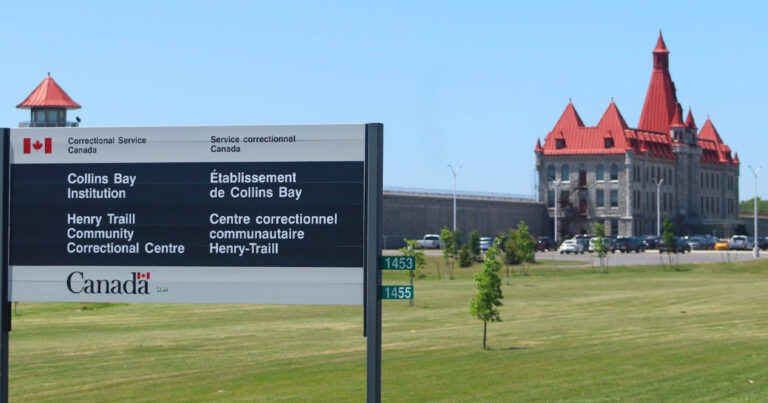
A coronavirus outbreak in a federal detention centre near Kingston, Ont. has spread to multiple institutions after prisoners were transferred to different locations away from the source of the outbreak.
According to a Thursday afternoon news release by Correctional Service of Canada (CSC), five COVID-19 cases have been confirmed at Collins Bay Institution, plus another three cases at Warkworth Institution, in addition to the 84 positive cases – including four staff – first reported by True North at the Joyceville Institution.
“The inmates at Collins Bay and Warkworth who just tested positive were recently at Joyceville and based on the initial epidemiological investigation, it appears that the inmates were exposed to the virus at Joyceville institution,” wrote CSC spokesperson Mike Shrider.
“In addition, all inmates who were recently transferred out of Joyceville Institution are being medically isolated in their respective institution and monitored by staff.”
Prison authorities have reported that over 300 inmates have been tested for the virus at the affected institutions.
“These impacted sites have also modified their institutions’ routines for health purposes in order to mitigate any risk while contact tracing and the initial epidemiological investigation is being conducted. Testing is being offered to all staff and inmates at these institutions,” said the CSC.
Prior to the outbreak, the CSC had prohibited inmate visits in the Ontario region due to spiking cases in the province.
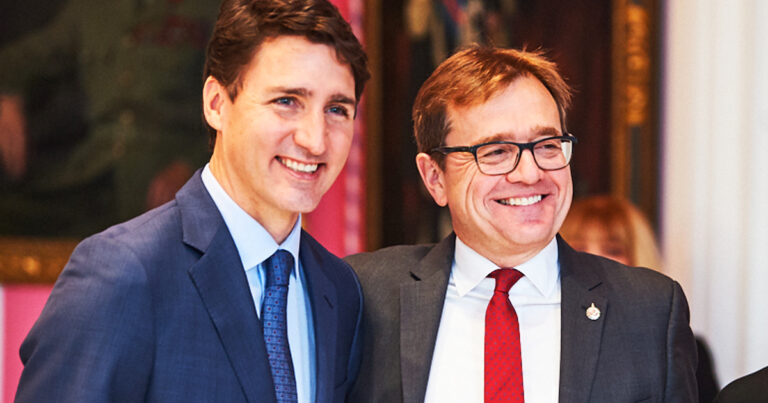
Environment Minister Jonathan Wilkinson says the government is looking to work with the incoming Biden administration to ban the purchase of gasoline-powered vehicles in North America.
In an interview with Reuters, Wilkinson said he is excited to work with President-elect Joe Biden to do “what the European countries and Quebec and British Columbia have done, which is to put a date at which they will no longer allow the sale of internal combustion engines,” he said.
According to Wilkinson, the Trudeau government wants to talk and see if “whether there is a North American pathway to doing something like that.”
Wilkinson added that both the Trudeau government and Biden agree more action has to be taken to reduce the number of gasoline powered vehicles on the road.
“I think we can collectively come up with mechanisms that will help both countries make progress on climate change.”
While both countries plan to rapidly increase spending on electric vehicles and infrastructure, results from Canada so far show there is little interest to give up fossil fuels.
Despite spending $186 million on an electric vehicle subsidy scheme, Transport Canada does not know if the program has had any effect on the environment. By October the rebate program had only put 43,912 new electric vehicles on the road after five years.
In 2019, a federal audit found that stations in Ontario and Quebec only receive one to three uses a day on average.
Quebec and California both want to stop the sale of gasoline-powered vehicles by 2035, with British Columbia planning to do the same by 2040.
In his campaign for president, Joe Biden promised to increase the number of charging stations in America by 400% and subsidize electric vehicle production.
Canadian taxpayers are footing the bill for the private chauffeurs of 53 senior Ottawa bureaucrats, the Toronto Sun reports.
Among those civil servants who have a private vehicle and driver are the Superintendent of Financial Institutions Jeremy Ruding and the President of the Public Service Commission Patric Borbey.
The cars and drivers are in addition to the personal chauffeur already afforded to Prime Minister Justin Trudeau and those afforded to members of his Liberal cabinet.
According to government statistics, top civil servants in Canada can earn up to $350,000 a year including a 39% bonus on top of their salaries.
Just this year, the federal government arrived at an agreement to boost the salaries of civil servants including retroactive raises dating back to 2019. The Liberals also billed Canadians $36 million for home office equipment for civil servants who have to work from home, while many Canadians struggle to keep their jobs.
As for the driving habits of Trudeau’s ministers, a recent report revealed that Minister of Canadian Heritage Steven Guilbeault put 21,000 km on his government vehicle despite his past insistence that he would not drive.
When broken down to a monthly basis, Guilbeault put on average 3,000 km a month between January and August of 2020. Meanwhile, estimates show Canadian commuters drive an average 15,000 km.
Shortly after the 2019 election, Guilbeault told a Quebec radio program that he would avoid using a car as much as possible.
“I never needed to have a car. I understand that there are requirements when you are in a practice,” said Guilbeault.
“I don’t want to make a big ‘no, I’ll never do that’ statement, but I would try to do without. Why not? Maybe it won’t work, but at least I’ll try it.”
When questioned about the minister’s driving habits and his past insistence, his office claimed that the fault was the pandemic’s for changing “the way we socialize work and travel.”