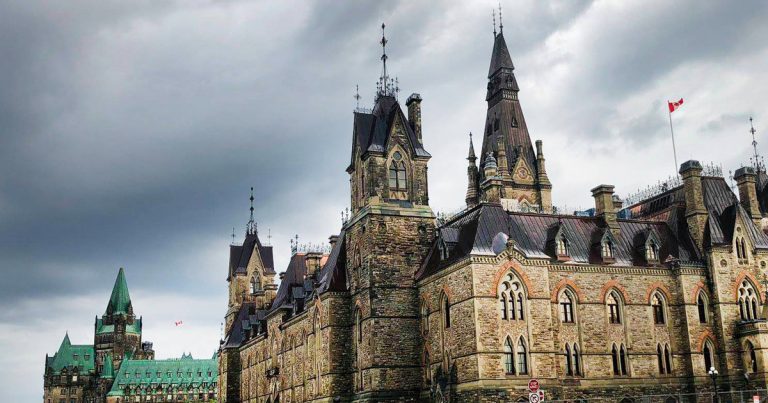
Government execs want more money and less work during COVID

A record number of public sector executives making six-figure taxpayer-funded salaries have complained they are not being paid enough for having worked through the COVID-19 pandemic. 

Since the pandemic began, the number of executives working for the government has grown by over 21%. Today, there are a record 7,900 executives employed in the public sector.

The Association of Professional Executives of the Public Service of Canada (APEX) says it has been working behind the scenes to lobby Liberal Treasury Board President Mona Fortier to boost their salaries and improve working conditions. 

Some are even upset that employees under them are being paid more, calling it a sign of “disrespect by the employer.” 

“Levels of frustration, beyond what has ever been seen before in the executive community, are being measured,” APEX CEO Carl Trottier wrote to Fortier.

“A record number of executives are asking APEX how to be demoted out of the executive cadre stating pay inversion and disrespect by the employer as the main causes.”

Pay inversion is when subordinates who can earn overtime make more than their employer. APEX has called the issue “demoralizing” and noted that many executives have worked hard while dealing with the threat of COVID-19.

“Taxpayers have struggled through two years of revolving government lockdowns, pay cuts, job and business losses and we can’t afford higher taxes to pay for raises for bureaucrats that already receive big six-figure salaries,” Federal Director of the Canadian Taxpayers Federation (CTF) told True North. “We don’t need more bureaucrats with bigger salaries, taxpayers need our government employees to be willing to share in the tough times and take a pay cut.”  

Taxpayer-funded executives have complained of a $7,000 pay difference among some employees. Entry-level executives can make up to $132,100 a year, while some higher level policy analysts get paid up to $140,571. However, according to 2018 figures, higher end executives were being paid up to $343,100 with a 39% performance bonus. 

Currently, several public sector unions are involved in ongoing negotiations with the Liberal government for larger raises, citing the need to keep up with inflation. 

According to the CTF, over half a million federal and provincial government workers benefited from pay raises during the COVID-19 pandemic at the expense of the taxpayer. 

“We’re not all in this together,” said Terrazzano. “We’ve seen a tale of two pandemics: one full of private sector pain and the other full of financial gain for bureaucrats and politicians.”

On Apr. 1 senators and MPs also received a scheduled pay raise, with Prime Minister Justin Trudeau earning an additional $21,604 this year, raising his total salary to $379,404. 
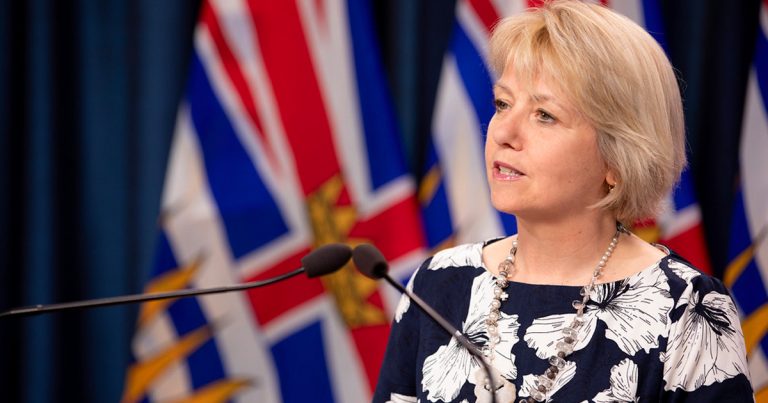
People in BC are still being fired over Covid vaccines (Ft. Harley Sims)

While the rest of the world is moving on and learning to live with Covid, one Canadian province doesn’t seem to have gotten that memo.

British Columbia feels months behind when it comes to adapting to everything we know about Covid. It still enforces its draconian vaccine mandate and the government continues to fire workers for not complying with its failed mandate system.

On today’s episode of the Candice Malcolm Show, Candice is joined by True North Senior Editor and Civil Liberties Reporter Harley Sims, who lives in BC and reports on these issues daily. 

They discuss the latest court actions and firings, why BC is so out of step, what it’s like for unvaccinated people out West and a few glimmers of hope in the fight to restore our freedoms: namely CAF veteran James Topp and his courage march across Canada. 

SUBSCRIBE TO THE CANDICE MALCOLM SHOW

Elementary school hosts “sexuality diversity in children” workshops

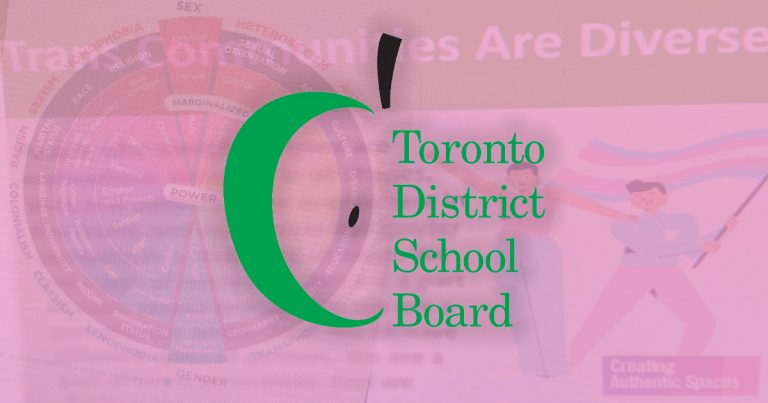
A Toronto District School Board (TDSB) elementary school is hosting a series of workshops on affirming “sexuality diversity in children” and youth. 

JK-Grade 8 Rawlinson Community School seminars titled “Affirmation of Gender and Sexuality Diversity in Children, Youth and Families” are being conducted by the organization 519 Space For Change. 

According to a Rawlinson newsletter, parents and families are being invited to join the Apr. 12 Zoom event. 

“Sessions will focus on Affirmation of Gender and Sexuality Diversity in Children, Youth and Families. We look forward to seeing many of our Rawlinson families at this workshop as we continue to deepen our perspectives and understanding of equity and inclusion,” school officials wrote. 

The first workshop of the series already took place on March 9. A tweet by the official Rawlinson Community School Twitter account showed several slides of a presentation which discussed additional concepts such as “colonialism” and “intersectionality.” 

519 Space for Change is an LGBTQ City of Toronto agency that has been operating since the 1970s. It has repeatedly partnered with local schools to offer educational and social programs. 

The agency’s website also contains guides full of explicit sexualized language on oral sex, masturbation and prostitution. 

This is not the first time that the TDSB has hosted events focused on indoctrinating kids with LGBTQ activism. 

As reported by True North fellow Sue-Ann Levy last week, kids as young as 11 were invited to a virtual TDSB LGBTQ conference featuring a performance by the dance group Toronto Kiki Ballroom Alliance, which hosts photos and videos of highly sexualized dances on its social media. 

Levy also reported on Wednesday that a TDSB high school had hosted a talk where presenters told officials that students should be able to use whichever bathroom they wanted based on whichever gender they identified with.Educators were also told not to inform parents of students’ gender identity without the student’s consent.

“A student’s self identification is the sole measure of the student’s gender,” documents stated.

The presentation came in the wake of a Halton District School Board directive a few months earlier that stated that students should also be able to use whichever change room they feltl was “most gender affirming,” and that female students who were uncomfortable with the arrangement should be asked to change elsewhere.

Alleged illegal gun trafficker from Ottawa arrested with 58 guns in US

A 36-year-old man from Ottawa was arrested during a routine traffic stop on Sunday in Rochester, New York after he was found carrying an arsenal of illegal guns. 

According to reports, police pulled over Badri Ahmed-Mohamed in a quiet neighbourhood for speeding. 

“I was patrolling the Village and had a vehicle pass me at a high rate of speed,” said Officer Kyle Regal. 

Soon after interacting with Ahmed-Mohamed – whom officers described as agitated and suspicious – police asked him if he had anything illegal in the car. 

“As I went up to the vehicle, the driver seemed very suspicious and starting shaking,” Regal added. “I asked him if there was anything illegal in the vehicle, which he answered with ‘yes.’ 

“I had the gentleman exit the vehicle. He gave me consent to search the vehicle, and then that’s when I found the weapons in the trunk of the vehicle.”

Police discovered 58 handguns with several high-capacity magazines in a duffle bag. 

According to local authorities, Ahmed-Mohamed was allegedly engaged in trafficking firearms from the US into Canada. 

In 2020, the Liberal government banned over 1,500 different guns from being owned by law-abiding Canadians. Prime Minister Justin Trudeau justified the decision by claiming that the weapons were used to target humans specifically by criminals. 

“These weapons were designed for one purpose and one purpose only — only to kill the largest amount of people in the shortest amount of time,” Trudeau said. “You don’t need an AR-15 to bring down a deer.”

The ban meant that Canadians could no longer buy, sell, import or transport these guns rendering them essentially useless. 

Critics of the ban including Canadian Coalition of Firearm Rights CEO and Executive Director Rod Giltaca have said that the ban does very little to combat violent crime and illegal guns entering Canada.

“Of course, the government’s ban has had no effect on this kind of criminal activity. No serious person would claim it would. Criminals like this aren’t even aware of the government’s ban. In fact, this is the same government that provided reduced sentencing options including repealing mandatory minimums for these types of crimes in bill C22. Fortunately, this bill was not passed because of the 2021 election.”

Giltaca added that if governments were serious about combatting gun crime, they would not obsessively focus on targeting law-abiding citizens. 

“The government’s obsessive focus on licensed gun owners has made Canada a more accommodating environment for this kind of criminal activity and Canadians are less safe as a result,” he said. 

“If you’re concerned with public safety, none of this makes any sense. Licensed, law-abiding Canadians are sick and tired of this,” said Giltaca. “The Liberals and law enforcement know who’s committing these crimes. They just need to get serious about addressing them.”

Despite initial claims that their gun ban didn’t apply to hunting and sporting rifles, the Liberals have recently admitted that it does.

A government notice read that “(s)takeholders raised concerns the Amnesty Order did not allow for the transportation of firearms that were previously non-restricted and used for sustenance hunting or to exercise a right under section 35 of the Constitution Act for maintenance purposes, for example for repair or sighting in preparation for hunting.”

Trudeau appointee says Canadians can trust CRTC to regulate internet

The head of Canada’s unelected broadcasting and telecommunications regulator has said that Canadians can trust the group to regulate the internet once the Liberal government’s Bill C-11 gives it that power. 

Canadian Radio-television and Telecommunications Commission (CRTC) Chairman Ian Scott was appointed by Prime Minister Justin Trudeau to the position in 2021. 

“Users of online and social media services expect freedom of expression, and they will continue to enjoy this under the new Broadcasting Act,” Scott claimed in a recent speech. 

“Put another way, the CRTC issues about 250 broadcasting decisions annually. Not a single one has ever been successfully challenged on the basis that it somehow infringed Canadians’ freedom of expression.”

C-11 will revise Canada’s Broadcasting Act and expand the CRTC’s powers to include the digital realm. It is an updated version of Bill C-10, which failed to pass into law prior to the 2021 election.

Critics have blasted the bill as an affront to freedom of expression, allowing the government to regulate what Canadian users can post online or how said content will be promoted. 

According to University of Ottawa Internet and E-Commerce Law Research Chair Michael Geist, the Liberals have misled Canadians on the scope of the bill. Concerns with the law include “virtually limitless jurisdictional, overbroad scope, and harmful discoverability provisions,” said Geist. 

“Bill C-11 treats all audio-visual content as programs subject to potential regulation. With exceptions that could easily capture TikTok or YouTube videos, the bill is about far more than just large companies,” he added. 

Meanwhile, Scott has stated that the bill needed to be open-ended so that the CRTC could have room to maneuver. 

“As we have seen, it can take several decades before Parliament has an opportunity to review legislation, and in the meantime circumstances on the ground can shift significantly,” said Scott.

In addition to Bill C-11, the Trudeau government recently introduced Bill C-18. 

The Liberals have claimed that the bill is a way to make big tech giants like Google and Meta pay for Canadian news and cultural content they host on their platforms. 

However, critics including Geist have said that it’s a “government-backed shakedown that runs the risk of undermining press independence” and that the law will actually make it harder for Canadian content creators to succeed. 

The legislation would exempt news corporations from the Competition Act and anti-trust laws, requiring social media platforms and search engines like Facebook and Google to pay news media from ad revenues generated by news content.

Even former CRTC officials have spoken up against the Trudeau government’s plan to regulate the internet, with two signing onto a petition which labeling Bill C-10 an “authoritarian” move. 

Will the UCP in Alberta stay United? (Ft. Danielle Smith)

Last week on the Candice Malcolm Show, the former Executive Director of the United Conservative Party (UCP) Brad Tennant joined Candice to give viewers an understanding of what was happening in Alberta and the UCP leadership review from a pro-Kenney point of view.

Today, we hear the other side of the story in Alberta.

On this episode of the Candice Malcolm Show, Candice is joined by the former leader of the Wildrose Party and the former Leader of the Opposition in the Alberta Legislature Danielle Smith.

Smith announced her return to politics last week and will be seeking the UCP nomination for the riding of Livingstone-Macleod, and to seek the leadership of the UCP if Kenney loses his review.

SUBSCRIBE TO THE CANDICE MALCOLM SHOW

Canada has no chance matching Russia’s Arctic presence: Defence Chief

A commander with the Canadian Armed Forces (CAF) has stated that Canada has no chance of matching Russia’s military capabilities in the Arctic. 

According to Defence Chief Gen. Wayne Eyre, Canada cannot hope to maintain a permanent presence in the north, but instead will only deploy troops where necessary. 

Eyre appeared before a Senate committee earlier this week as Prime Minister Justin Trudeau and Defence Minister Anita Anand met with premiers from Canada’s territories – Nunavut, Yukon and the Northwest Territories. 

“We are continuing to stand strong in our sovereignty and our defence of the Arctic,” said Trudeau. “Of course, with Norad modernization on the table, with increased investments in defence, the Arctic is an area we’re going to look closely.”

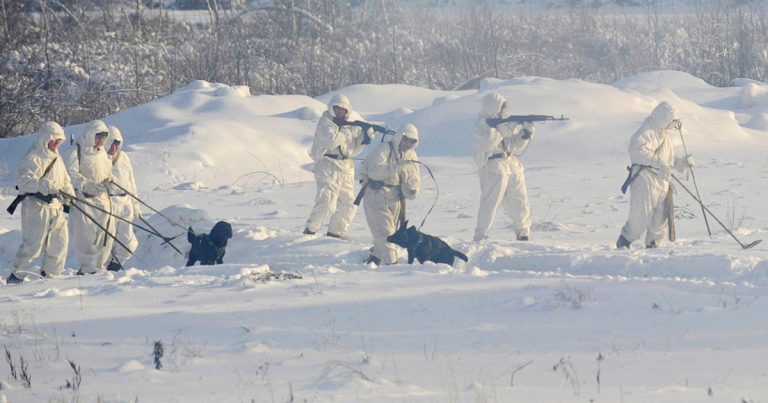
Over the past few years, Russia has expanded its Arctic presence with bases littering the entire region. Satellite images show Russian expansion and strengthening of airfields along Russia’s Arctic coast. 

“Russia is refurbishing Soviet-era airfields and radar installations, constructing new ports and search-and-rescue centers, and building up its fleet of nuclear- and conventionally-powered icebreakers,” Pentagon spokesman Thomas Campbell told CNN in 2021. 

In March, it was also revealed that Russian forces had recently reoccupied more bases used by the former Soviet Union. 

“One of the challenges, one of the expressions of sovereignty is being able to project force to the extremities of your country,” Eyre told a Defence Conference earlier this year. 

Russian forces have also crossed into disputed territory as numerous nations vie to make claims on the Arctic. For example, in Jan. 2020, NORAD warned that two nuclear-capable Russian bombers had buzzed Canadian airspace. The jets crossed over the North Pole and approached Canada, although they remained in international airspace. 

The UK’s Chief of Defence Staff Gen. Sir Nick Carter has said that his nation is “keen to cooperate” with Canadians on Arctic defence. 

Conservative leadership candidate Jean Charest also recently proposed that Canada develop more military bases in the arctic. As part of his defence plan, Charest stated that if elected prime minister, he would “develop and properly support two military bases in the arctic, including a deepwater port.” 

Additionally, Charest’s plan included having drones surveil the north and to procure two armed icebreakers. 

LEVY: Trans rights extremism spreading like wildfire in Ontario schools

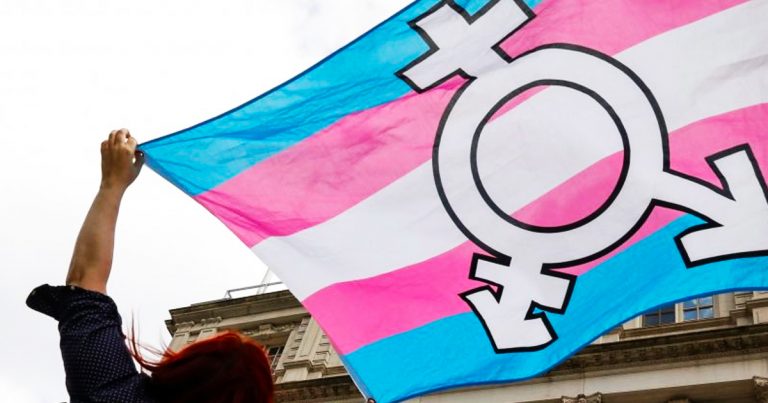
According to documents obtained by True North, officials at a Toronto District School Board (TDSB) presentation on transphobia last week heard that students should be able to use whichever bathroom “best corresponds” to a student’s gender identity and that parents should not be informed of that identity without the student’s consent.

“A student’s self identification is the sole measure of the student’s gender,” documents from the high school state.

The presentation comes in the wake of a Halton District School Board directive a few months ago stating that students should be able to use whichever change room they feel is “most gender affirming,” and that female students who were uncomfortable with the arrangement should be asked to change elsewhere.

Details of the surreal presentation to the TDSB high school were provided to True North by staff extremely concerned with what they felt were “alarming developments” at the Toronto board. The name of the school is not being identified to protect sources.

The talk – led by 19 trans students and their allies – informed staff of TDSB guidelines, stating that a school should never disclose to a parent a student’s gender or preferred pronouns without that student’s consent.  

They added that the policy must be followed “regardless of the age of the student.”

The trans students and their allies also insisted these guidelines make it perfectly acceptable for a boy to use a girl’s washroom if it “best corresponds” to the student’s gender identity.

It was noted that the school has a gender-neutral washroom already, but that some students may not feel comfortable using it. No reason was given as to why that would be the case.

Considerable time was spent introducing the trans panel and their pronouns.

One student claimed to go by two names “with no preference” – Kori and Elisha – as well as relatively new pronouns (or neo-pronouns), “aem/aemia” and “it/its.”

Another named Izzy uses “they/them,” while Avery uses “any pronouns.”

Kara said “her/their” pronouns are “she/they.”

Two woke teachers – who were certain to say they use “she/her” – interjected to say, “it’s not a big ask” to learn all these special names and pronouns because they already refer to students by their preferred names. The teachers failed to mention how the pronouns fit into that.

Another presenter, Tiana, noted that the word “queer” is no longer a slur but has been “reclaimed” by many LGBTQ+people. She said some of the group will take Queer Studies courses in university and listen to queercore punk.

“Still you don’t want to call someone ‘queer’ unless you know they’re cool with it,” she said.

Teachers were also given a fact sheet of questions and answers, telling them that if they “misgender a student,” they should apologize, “do better (use the correct pronoun next time) and move on quickly.”

Alarming as all this sounds, woke ideology is spreading like wildfire through Ontario school boards.

The Halton District School Board has also issued an administrative procedure echoing the discussions at the TDSB high school meeting. This includes receiving a student’s consent before advising a parent of that student’s gender identity as well as allowing students to use washrooms that are the “most gender affirming.”

But officials at this woke board go even further, declaring that students can use a change room for health and phys ed that is the “most gender affirming” or where they “feel the safest.” 

They also say if a female, for example, feels uncomfortable with that, she will be asked to change at another time or use a nearby private area.

Students will also be able to attend a class of their choosing that is “most gender affirming” or meets their safety needs and – get this – participate on sports teams that are most “gender affirming” (reminiscent of the accommodation being made for American trans swimmer Lia Thomas).

If a trans student goes on an overnight trip or excursion, school staff must work “in collaboration” with the student to finalize room arrangements that are the “most gender affirming” – and cover any extra costs that may result (if said person gets his, her, their or its own room), the policy says.

The TDSB teachers who approached me are right. This is very disturbing for so many reasons. 

Never mind that so much time is being spent on satisfying the gender-obsessed teachers to learn all these ridiculous pronouns instead of actually preparing students for life in the real world.

It quite simply has gone too far.

The idea that a school board can keep a student’s gender status from their parents if they are under the age of majority is a disturbing and appalling overreach.

If radical leftists at the TDSB or the Halton board want to groom would-be transgender kids, at least wait until they’re adults. 

And if students want to use a washroom that is a “safe space,” let them use the gender-neutral washroom – don’t make it uncomfortable for the rest of the (female) student population to change, visit a washroom or even go on a school excursion to appease a fringe minority of cult-like woke teachers and students.

I’m afraid Ontario school officials have completely lost their way.

Students are not a social science experiment.

TDSB – Transforming IT Syst… by True North

Hamilton District School Bo… by True North

TDSB – Staff Questions and … by True North

Liberals to force Google and Facebook to pay CBC, legacy media

In another effort to save unprofitable legacy media from going under, the Trudeau government has tabled Bill C-18, a bill that would force “online communications platforms” to fork over ad revenue for news appearing on their feeds. 

The legislation would exempt news corporations from the Competition Act and anti-trust laws, requiring social media platforms and search engines like Facebook and Google to pay news media from ad revenues generated by news content. 

As reported by Blacklock’s Reporter, the CBC would be the largest beneficiary of the bill, with ad revenue sharing based on existing market shares, and the state broadcaster having the largest share of digital news traffic of any Canadian news corporation. The CBC estimates in-house digital advertising revenues to be worth $54.8 million a year.

If Bill C-18 is passed, the government-run Canadian Radio-television and Telecommunications Commission (CRTC) would be granted the power to decide which media organizations qualify. These organizations will then be able to force ‘online communication platforms’ to negotiate a deal with them through a CRTC oversight board. 

The legacy media lobby group News Media Canada – which represents the Globe and Mail, Postmedia, the Toronto Star, Le Devoir and more – have pressured the Trudeau government to introduce the legislation in an effort to save many of the dying newspaper publications across Canada. 

“We thank Pablo Rodriguez, Minister of Canadian Heritage, and his officials for working diligently and quickly to bring forward legislation that will ensure we have a fiercely independent and commercially viable news publishing sector, where local community news thrives alongside a vibrant open web,” said Paul Deegan, president and CEO of News Media Canada.

The bill has been modelled after similar legislation made law in Australia, which has resulted in payouts of over $190 million, most of which benefitting that country’s legacy outlets. 

Despite Google’s strong opposition to the Australian version of the legislation, the law passed in 2021. 

One of the biggest winners from the passage of this legislation is sure to be the CBC and other legacy media organizations. “This legislation is an important step in ensuring fair compensation for news content produced by CBC/Radio-Canada and supported by Canadians,” said Leon Mar,  corporate spokesperson for CBC.

The bill’s critics have been vocal about the legislation’s threats to competition and freedom of the press, as well as its reliance on big tech to keep Canadian media afloat.

University of Ottawa law professor Michael Geist weighed problems with creating a ‘shakedown subsidy’ system in an Apr. 5 blog post, warning the bill minimizes press freedom. 

“Establishing a cross-industry subsidy model premised on little more than one sector being more profitable than the other further embeds the reliance on big tech,” said Geist.

Geist noted how the legislation compromises press freedoms and even how the lobbying process compels media organizations to give the government favourable coverage.

“I know of cases where opinion pieces have been spiked by mainstream media outlets because they criticized the previous Heritage Minister at a time when he was being actively lobbied on a potential media bill.” 

Rodriguez claimed that since 2008, more than 450 media outlets have closed down, and one in three journalism jobs has disappeared. These losses, he said, come as a result of Canadians abandoning cable and subscription newspaper services and opting instead for getting their news from the internet.

Former chair of News Media Canada and New Brunswick billionaire Jamie Irving complained that Facebook and Google were not sharing enough of their ad revenue.

“Canada’s news publishers are facing an existential threat with Google and Facebook now taking about 90 percent of online ad revenue,” said Irving.

“Ad revenue was down 35 percent in 2020. More than forty newspapers have closed permanently since the start of the pandemic.”

However, critics have pointed out that dozens of Canadian news organizations have been able to thrive online, and that the legislation is intended to insulate legacy media from competition. 

“A policy that favours the legacy companies that have struggled to adapt to the online environment is an approach that will harm competition and make the transition to digital, independent media even more difficult,” said Geist. 

As of this article’s publication, Bill C-18 is currently in second reading. 

43% of Canadians putting off plans to buy a house due to costs

A new poll shows that nearly half the country is delaying purchasing a home due to the out-of-control housing market. 

The survey conducted by Scotiabank found that in 2022, 43% were putting off a home purchase. Last year that figure was 33%, while in 2020 it was only 20%. 

Housing affordability hasn’t reached this level since 1990, according to the RCB housing affordability measure. 

“Rapid price escalation in the early months of 2022 has already raised the bar to impossible levels for many homebuyers,” said RBC senior economist Robert Hogue. “Worst-ever affordability levels could well ensue, putting buyers in a precarious spot.” 

With younger Canadians, the number of people delaying plans to purchase a house grows to 62% for the 18-34 age group. 

In Vancouver it would cost a household 73.9% of its income to buy a home, while in Toronto that figure is 68.6%.

“While income gains will provide a partial offset, it’s entirely possible RBC’s measure could spike to all-time highs in the year ahead. A shock of this magnitude would severely stress homebuyers and exert significant downward pressure on demand,” said Hogue. 

Canadians are also looking to move elsewhere for cheaper housing costs with 35% saying they are considering relocating. 

The survey comes in the wake of reports in January showing average price gains in 2021 at or near $100,000 or more in Victoria, Vancouver, Toronto, Ottawa, Montreal and Halifax. 

Housing prices went up the most in the Greater Toronto Area, where they increased by $286,000 (31%) to about $1.2 million. Homes in Victoria saw their prices increase by $172,400 (24%) to $902,700. 

Housing prices in Halifax went up $89,162 (22%) to $490,127. Prices for the Greater Vancouver Area increased by $181,600 (17%) to about $1.2 million. 

As revealed in March, the federal Canadian Mortgage and Housing Corporation (CMHC) also awarded employees $48 million in bonuses while the rest of the country dealt with a housing affordability crisis. 

“Why is the CMHC patting itself on the back and handing out millions in bonuses while Canadians are facing a housing affordability crisis?” said Canadian Taxpayers Federation federal director Franco Terrazzano in a press release on the matter. 

“If its number one goal is housing affordability, then it doesn’t make sense for the CMHC to give its employees bonuses while Canadians are struggling to find homes.”

When broken down, that would be over $12,000 for each employee per year. According to ATIP documents, over 93% of CMHC employees earned a bonus last year.