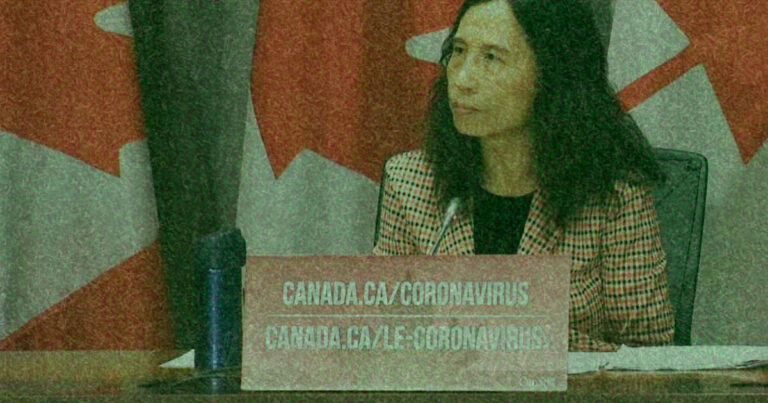
Rural communities facing uptick in crime and addiction: Waterloo police chief

Waterloo Regional Police Chief Bryan Larkin is warning that rural communities are being impacted by an uptick in crime and addiction since the onset of the coronavirus pandemic.

Larkin made the comments during a media roundtable on Tuesday morning.

“The first 90 days from March through to early June, no doubt, we saw a significant decline in crime, significant decline in calls for service. And we essentially saw our citizens very much obeying community lockdowns by local public health orders, by provincial orders,” said Larkin about crime in the region. 

“Now, as we’ve traversed out of that, and even though we’re in the second wave of the pandemic, most recently our call volume has increased to normalized levels. Crime, and in particular violent crime, is something that we’re dealing with.”

The Waterloo Region saw 12 violent shootings in 2020, a majority of which were in Kitchener. 

In 2019, the region reported 780 overdoses, 63 of which were fatal. 

According to Larkin, the problem is not only isolated to city centres and urban areas but has negatively impacted nearby rural communities. 

“…the challenges of addiction go beyond any specific boundary. They go beyond any special specific neighborhood – opiate addiction doesn’t discriminate. So we’re seeing it impact the rural communities, we’re seeing rural communities in many ways becoming more dense,” said Larkin. 

“We need to be vigilant. We need to actually make sure that we report crime in rural communities. It’s easier if you’re in Elmira, Baden, New Hamburg because it’s more neighborhood-centric, it’s a little more difficult than some of the rural areas where your neighbour may be a concession down the road.” 

According to health experts, northern and rural Ontario communities are struggling to deal with the opioid epidemic due to a lack of access to services and slow response times. 
Dangling Christmas

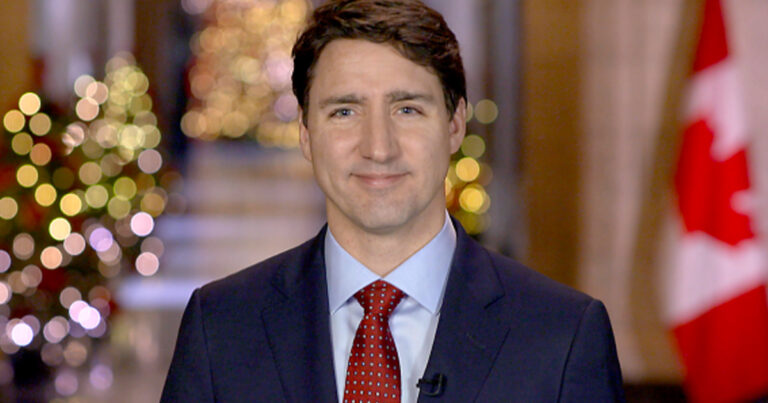
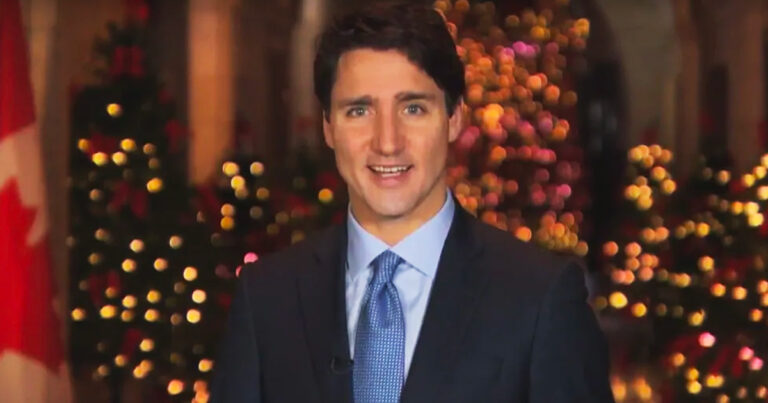
As provinces ramp up coronavirus restrictions and predict rises in cases over the coming weeks, Prime Minister Justin Trudeau says it’s not clear whether families will get to celebrate Christmas together. True North’s Andrew Lawton unpacks this and the latest from the never-ending lockdown.

Also, a Nova Scotia school has gotten rid of its Sir John A Macdonald name, and a new review of masks finds several types don’t actually block coronavirus particles.

UPDATE: Possible hostage situation at Ubisoft headquarters in Montreal false alarm

A possible hostage situation at the buildings of video game company Ubisoft in Montreal’s Mile End neighbourhood is now being considered a false alarm.

On Friday afternoon, multiple outlets reported that dozens of people may be held hostage in the Ubisoft office building as police have set up a perimeter. 

At the time, Montreal Police warned people to stay away from the area. A police operation took palace at the intersection of St-Viateur and St-Laurent, with eyewitnesses reporting heavily-armed officers in the area.

Montreal Police are now reporting that no threat was found and the building was evacuated without incident. According to police, the incident started as a 911 call early Friday afternoon. 

“It is still not confirmed as to the nature of the event,” Montreal police spokesperson Véronique Comtois told the media. 

“We have had some evacuations, which are still in progress. The nature of the event is not confirmed, because the operation is not over. We still have things to verify.”

According to Ubisoft employees interviewed on the street by Journal de Montréal, some employees still inside the building have barricaded themselves on the terrace and in conference rooms.

A news helicopter had captured a video showing dozens of people on the roof of the building. Ubisoft employees, believing their lives to be in danger, barricaded the door and waited on the roof for several hours.

An investigation is ongoing. The source of the original 911 call has not been identified.

Opioid deaths up 38% in Ontario since coronavirus pandemic began

A new Public Health Ontario report has revealed a shocking spike in opioid-related deaths since the onset of the coronavirus pandemic. 

“In the first 15 weeks of the COVID-19 pandemic in Ontario, 695 people died of a confirmed or suspected opioid-related death, representing a 38% increase compared to the 15 weeks immediately preceding the pandemic,” the report reads.

“During the pandemic, fentanyl and stimulants (particularly cocaine) were more commonly direct contributors to these deaths.” 

Projections indicate that there will be a record 2,200 deaths by opioid abuse in 2020 if the weekly rate continues until the end of the year. In 2019, Ontario reported 1,512 opioid overdose deaths. 

“The report shows an increasing number of preventable opioid-related deaths during the pandemic, particularly among young men. It must not be forgotten that each of these deaths represents the loss of an individual who was part of a family, had friends and was a member of a community,” said Chief Coroner for Ontario Dr. Dirk Huyer. 

“There is a need to continue to work together to ensure adequate support and services are in place during the pandemic and beyond, to prevent further deaths.”

Other regions in Canada have seen a worrying uptick in opioid-related overdoses throughout the pandemic. 

In its annual report, the Public Health Agency of Canada (PHAC) stated, “Jurisdictions across the country have reported increases in overdose deaths and non-fatal harms related to opioids and other substances, in part due to increasing toxicity of the illegal drug supply since the start of the pandemic.”

According to PHAC data, British Columbia saw over 100 overdose deaths each month from March to August 2020.

Limit spread of coronavirus or no Christmas: Trudeau

0

Prime Minister Justin Trudeau said Canadians will need to do everything possible to limit the spread of coronavirus if they want to celebrate Christmas with their loved ones.

Speaking to 980 CFPL in London, Ont. on Friday, Trudeau warned that Canada needs to reverse the upward trend in coronavirus cases if there is to be any in-person festivities this holiday season.

“It depends on what people do right now. We’re seeing those numbers spike in the wrong direction and if people act now, we can stop that,” he said.

“If you want to gather with your loved ones at Christmas, even in a restrained way, we’re going to have to make sure that we change the trend lines on this COVID crisis right now.”

On November 12, the number of new coronavirus cases reached 5,516, the highest increase to date. In recent days Manitoba, Alberta and Ontario have seen new restrictions imposed.

Trudeau said that new lockdowns are a possibility and that his government is pushing the provinces to take aggressive action to prevent coronavirus cases from accelerating.

“The federal government will continue to be there to support (provinces and territories) and encourage them to make those difficult decisions to shut things down now so things don’t get too bad in the coming months.”

At a press conference on Friday, Trudeau promised the federal government will be there for provinces and individuals financially if they return to full lockdowns.

This week, Manitoba announced a provincewide lockdown as coronavirus cases continue to increase. Gatherings are limited to five people, in-person religious services are banned, and all non-essential businesses are limited to pickup or delivery.

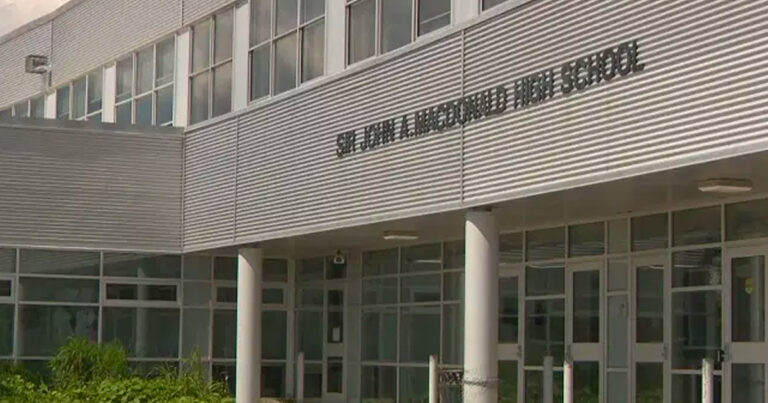
Nova Scotia’s Sir John A. Macdonald High School changing name for “inclusion”

0

Sir John A. Macdonald High School in Upper Tantallon, NS will be changing its name to be “more inclusive.”

On Thursday, students were told the school was changing its name because of Canada’s first prime minister’s role in the residential school system.

“I truly feel that Indigenous students, when they see that name up above, it’s not giving them full inclusion. This is really a no-brainer for me,” said Principal Darlene Fitzgerald.

“We strive every day to make sure that every student that walks through our door feels like they belong. When you have a name like Sir John A. [Macdonald], and you have Indigenous students, that’s tough.”

Fitzgerald said changing the school’s name has been something she’s been considering since she became principal four years ago. Over the summer, Fitzgerald proposed the change to the faculty.

Students, parents and faculty have until the end Nov. 26 to propose a new name that promotes “inclusivity.”

Sir John A. Macdonald High School is the latest in a recent push to rename buildings and locations named after historical figures.

Last month the Queen’s University board of trustees voted to remove Sir John A Macdonald’s name from their faculty of law building, citing the “terrible harm” he brought during his life.

Across Canada, several streets named after historical figures have been renamed, with activists arguing that many more also need to go. 

In recent months, entire communities like the City of Vaughan and the Township of Russell in Ontario have been the target of social justice advocates for being named after controversial figures. In Toronto, a proposal to rename Dundas Street will cost $3 million, according to the City’s estimates.

160,000 to 225,000 small businesses could permanently close: CFIB

0

The Canadian Federation of Independent Business (CFIB) estimates that 160,000 to 225,000 small businesses could permanently close due to declining revenues caused by the coronavirus and the ensuing lockdowns.

As a result of these findings, the CFIB is calling for improved federal support. Although the government has supplied subsidies and relief to small businesses, their situation is still dire.

When speaking to True North, CFIB President Dan Kelly said that there are good programs coming on the horizon and important changes are ahead, but that shutdowns are happening in advance of the programs being put in place.

“If any government, federal or provincial wants to shut down again, they need to ensure that these programs are in place and are not just future promises.” said Kelly.

Kelly recently appeared before the senate finance committee to discuss BIll C-9, an amendment to the current rent and wage subsidies that would see the benefits of the programs like the Canada Emergency Rent Subsidy (CERS) extended to December 15. 

During his committee appearance, Kelly shared that one third of Canadian businesses remain partially or fully closed. 42% have normal levels of staffing and only 30% of businesses have normal or better revenue, which means that 70% of businesses are behind.

“39% of businesses are losing money every day that they are open and over 50% have seen a drop in sales due to fears of the second wave and 14% are considering bankruptcy or winding down.” said Kelly.

Kelly also noted how there was a need for significant amendments to Bill C-9.

“They have been too slow and there have been a huge number of businesses that have fallen through the cracks. Bill C-9 does help quite a bit in helping address a number of problems, the new version is quite a bit better but there are still challenges.” said Kelly.

The federal government put in place requirements to ensure that only legitimate businesses can access the programs, one of those requirements being having a registered business number. These standards have caused many businesses to fall through the cracks.

Another area of great concern regarding C-9 rent relief is the requirement for businesses to pay their rent first, the subsidy would then provide reimbursement for that cost. The reality is that businesses simply do not have the money to cover these expenses.

“The rules are intended to ensure that the money goes to a legitimate business. The end goal is fine, but anyone who did not operate until 2020, or began as the pandemic started, they are basically disqualified from these programs. We are trying to encourage the government to be sure more firms can access these programs.” said Kelly.

Canadians should “be careful” to not criticize China: Chinese ambassador

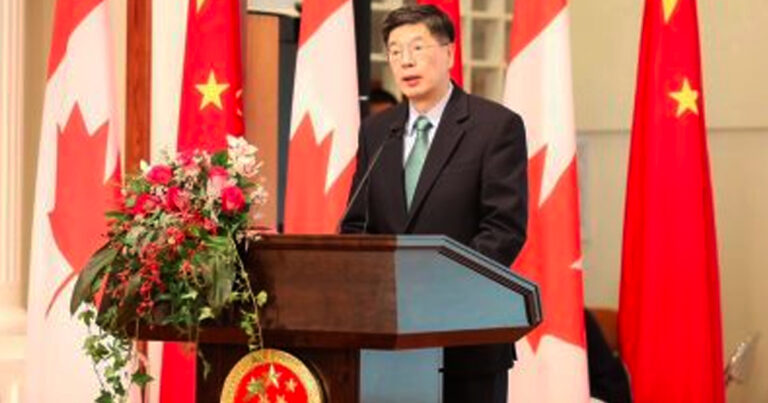
Chinese Ambassador to Canada Cong Peiwu said in an interview with Ottawa Life Magazine that Canadians should be careful with what they say about China.

“People should be careful with their comments. China is peaceful,” said Cong. 

“The fundamental principle in the relationship has been undermined by Canada. Mutual respect means we respect systems here and the choices of Canadians here, but Canadians do not respect the Chinese system. This does not work well.”

Cong’s latest comments follow a veiled threat he made in October allegedly targeting the safety of Canadians currently residing in Hong Kong. 

“We strongly urge the Canadian side not (to) grant so-called political asylum to those violent criminals in Hong Kong because it is the interference in China’s domestic affairs. And certainly, it will embolden those violent criminals,” Cong said at the time.

“So, if the Canadian side really cares about the stability and the prosperity in Hong Kong, and really cares about the good health and safety of those 300,000 Canadian passport-holders in Hong Kong, and the large number of Canadian companies operating in Hong Kong SAR, you should support those efforts to fight violent crimes.”

In response to the statement, Conservative Party Leader Erin O’Toole called for Cong’s immediate apology and removal from his post should he fail to make amends. 

“The Chinese Ambassador has decided to engage in belligerent rhetoric unbecoming of his office. To be clear, this was a threat to the 300,000 Canadians in Hong Kong. And a barely veiled one at that,” wrote O’Toole in an official statement on the matter. 

“Conservatives are therefore calling on the Ambassador to fully retract his remarks and issue a public apology. Should the Ambassador fail to do so expeditiously, we expect the government to withdraw his credentials.”

Since the arrest of Huawei CFO Meng Wanzhou in 2019, China’s attitude towards Canada has become increasingly belligerent and aggressive. 

Currently, two Canadian citizens Michael Spavor and Michael Kovrig remain detained in Chinese prison cells after being arrested in retaliation to Meng’s extradition proceedings.

What is Canada’s pandemic objective?

As the number of cases goes up, public officials are becoming more alarmed and implementing more lockdown measures.

Anthony Furey argues we need to take a step back and ask what is the government trying to accomplish exactly? What is the plan? What is the objective?

Anthony says if we can’t agree on what our pandemic objective is, Canadians will increasingly become frustrated and divided.

Liberals set to miss 2020 emission targets by up to 99.2%

The Liberals are poised to miss their 2020 greenhouse gas emissions target by up to 99.2% according to the latest government data. 

In his first term as prime minister, Justin Trudeau proposed a plan to reduce emissions in 2020 to 17% less than 2005 levels by this year, with a later goal of achieving a rate 30% below the 2005 benchmark by 2030. 

In 2005, Canada emitted 730 million tonnes of greenhouse gases. According to Trudeau’s plan, emissions in 2020 should be 606 million tonnes. However, government data shows that Canada emitted 729 million in greenhouse gasses this year.

In a statement given to The Star on Wednesday, the federal government maintained that they would exceed Canada’s 2030 target.

“Our government is committed to exceed Canada’s 2030 emissions reduction target, and we recognize that addressing oil and gas sector methane emissions provides some of the most cost-effective approaches to reduce greenhouse gas emissions in the country,” said Moira Kelly, who is a spokesperson for Environment Minister Jonathan Wilkinson.

The Trudeau government’s assertions that Canada can meet the emission targets set by the Paris Accord have been thrown up in the air by recent data and reporting. 

According to the Department of Environment, British Columbia’s carbon tax – which served as a model for the federally imposed scheme – failed to cut emissions in the province. According to the National Inventory Report submitted to the United Nations Framework Convention on Climate Change, greenhouse gas emissions in BC actually increased by 10% from 2015 to 2018. 

Even a year after the federal carbon tax was imposed on non-compliant provinces, Canada’s greenhouse gas emissions grew by 15%. 

When questioned on whether or not the carbon tax impacted Canada’s emissions levels, the Trudeau government refused to provide a clear answer. 

“Current estimates do not yet fully account for future reductions from green infrastructure, clean technology and innovation,” said a February 2017 report. 

“The overall approach to pricing carbon pollution will be reviewed by 2022 to ensure that it is effective and to confirm the path forward, including future price increases.”