Sam is long-time Canadian human rights activist with experience serving as a regular media spokesperson, often called upon to discuss a wide range of topics ranging from Antisemitism and Human Rights in Canada to Israel and the Middle East.
Justin Trudeau has made it clear that he’s determined to secure a seat on the United Nations Security Council (UNSC), but at what cost?
The Security Council is comprised of 15 members. Five (Russia, the U.S., the U.K. France, China) permanent and 10 non-permanent members which are elected by the General Assembly to serve two-year terms. Unlike other UN bodies, resolutions of the Security Council are considered legally binding, making it prestigious to sit on the Council and take part in crafting the language of resolutions.
As part of his ongoing campaign to secure the necessary votes for a seat, Prime Minister Trudeau recently travelled to Africa to meet with officials and heads of state. During the trip, he committed millions of dollars of foreign aid, adding to the over $1.9 million he already spent wining and dining UN bureaucrats.
While spending money campaigning for a seat on the Security Council is potentially what any country would do, it’s not just the financial costs that Canadians should be worried about.
Many people erroneously believe that the UN is everyone and therefore no one. However, the UN is not ‘no one’.
It includes countries like Syria, Cuba, Venezuela, Iran and North Korea — countries with atrocious human rights records where repression is the norm, corrupt leaders live in mansions and villas while the people starve, and where dissent is punished with jail, torture or death. And because the General Assembly includes all UN member states, it is precisely these types of countries, not just our friends and allies, which must be courted as well.
This is apparently not a problem for Trudeau, who has often been quoted lovingly admiring dictators and despots.
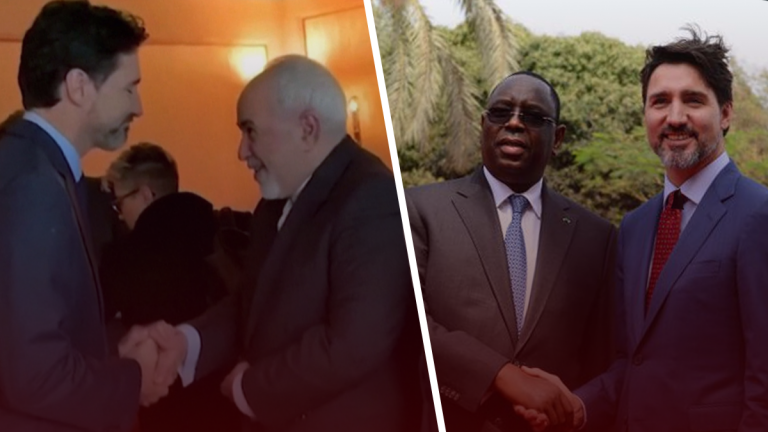
Who can forget the glowing words of commemoration he had for Cuban dictator Fidel Castro — Trudeau referred to him as a legendary revolutionary loved by his people — or his recent kind embrace of Iranian Foreign Minister Javad Zarif at the Munich Security Conference.
The fact that Iran shot down a passenger plane killing all 176 on board, including 57 Canadians, just weeks before was seemingly forgotten by Trudeau.
These actions, combined with strong rhetoric and insistence from the Prime Minister that he will restore Canada to prominence on the global stage (he famously declared ‘Canada’s back’ during a 2015 election victory speech) beg the question, what exactly is Trudeau offering besides foreign aid in exchange for votes at the UN?
A month ago, the Iranian regime admitted to shooting down a Ukrainian airliner and killing 57 Canadians on board.
Today, Prime Minister Trudeau happily bowed and shook hands with Iranian Foreign Minister Javad Zarif. #cdnpolipic.twitter.com/ncMHZ6oW1O
No one does anything for free, especially not in the political world; There are always considerations and a “you scratch my back, I’ll scratch yours” attitude. It’s therefore reasonable to assume that these countries are not agreeing to support Canada out of the goodness of their leader’s hearts.
For a leader who claims to support the rights of women, minorities and the LGBTQ community — as he constantly reminds and preaches to us about at home — his willingness to overlook human rights violations in Senegal (where sex acts between same-sex partners are outlawed) and Iran (which persecutes women as well as sexual and other minorities) should be rightly questioned.
Canada has an important role to play in international affairs, whether it be in the form of peacekeeping or using our influence as a member of the G7 to deal with important global issues. A seat on the Security Council would allow us such a platform, but it should not come at the expense of our principles as we cozy up to repressive regimes.
This is why we must ensure that Canada’s voice on the international stage is one of principle and aligns with Canadian and Western values.
The only antidote for bad behaviour is good behaviour, not more bad behaviour.
Prime Minister Trudeau must be clear with Canadians not only about what he plans to do once we are on the Security Council but what it will cost us to get there.
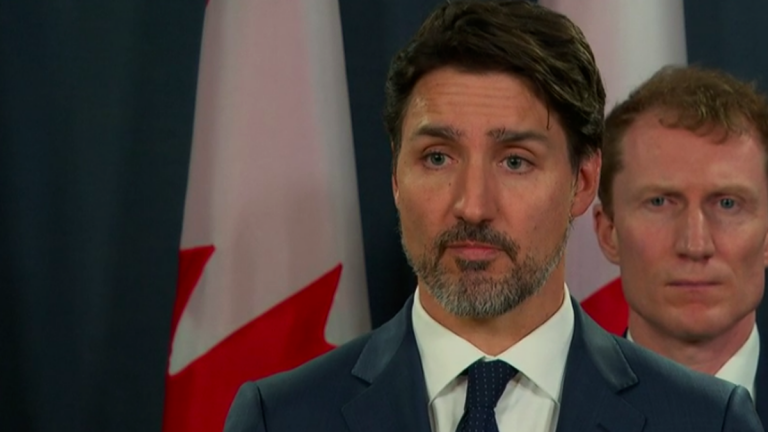
Prime Minister Justin Trudeau addressed the media on Friday afternoon regarding the ongoing national blockade crisis.
The prime minister told the media that after two weeks of ongoing blockades and rail disruption, “the barricades must come down now.”
“Canadians who are feeling the very real impacts of these blockades are running out of patience,” said Trudeau.
The prime minister told reporters that while the government remains open to discussion, discussions with protest leaders have not been productive.
“For this reason, we have no choice but to stop making those same overtures,” Trudeau said.
Trudeau reiterated that the blockades must come to an end but did not specify how the government would enforce the injunctions.
“The fact remains the barricades must now come down. The injunctions must be obeyed, and the law must be upheld,” said Trudeau.
“I am confident and I trust the professionalism and the ability of our law enforcement agents to work in the right way and to do the right things. But I’m also confident that Indigenous leadership, which is not monolithic that represents a vast number of voices within the communities across the country wants to continue to be a part of the solution.”
During the conference, Trudeau did not give a specific time frame for when Canadians can expect the blockades to come down.
Prior to the conference, Trudeau met with cabinet ministers who are part of an emergency response team in an effort to find a solution to the blockades which threaten to cripple Canada’s national economy.
“We are gathering the incident response group this morning to continue discussions, negotiations. Dialogue is continuing hour by hour. I will have more to say this afternoon at the National Press Theatre,” said Trudeau prior to the meeting.
A coalition of business organizations estimated that nearly half a billion worth of goods has been halted in their tracks due to the illegal protests.
Trudeau is facing growing pressure from the public and Canada’s premiers to find a swift solution to the crisis.
Canada’s premiers have asked Trudeau to meet immediately to discuss a solution to the crisis. Quebec Premier François Legault warned that police could be called in by the provinces to put an end to the blockades if Trudeau doesn’t solve the crisis.
“What I say is we cannot exclude to use police but it has to be done in co-ordination with every province at the same time,” said Legault.
The Liberals are asking Parliament to approve an additional $2.1 billion in taxpayer funds to be spent on Indigenous programs.
The funding would be on top of commitments already made by the federal government up to now.
In total, Prime Minister Justin Trudeau is asking for $3.8 billion in extra spending to be approved, a majority of which will be spent on First Nations issues.
Part of the new Indigenous spending includes $919 million to be put towards Indigenous debt forgiveness promised in the 2019 budget. Last year, the federal government pledged it would either forgive or repay $1.4 billion in debt for Indigenous communities so that they can take part in negotiations over land claims.
A little over $588 million will be put towards family services, while $232 million will be used on First Nations children’s health and social services.
Funding for Indigenous cultural preservation and First Nations policing services was also included in the newly proposed spending.
The new funding comes at a time when the federal government is facing growing pressure to deal with the national blockade crisis.
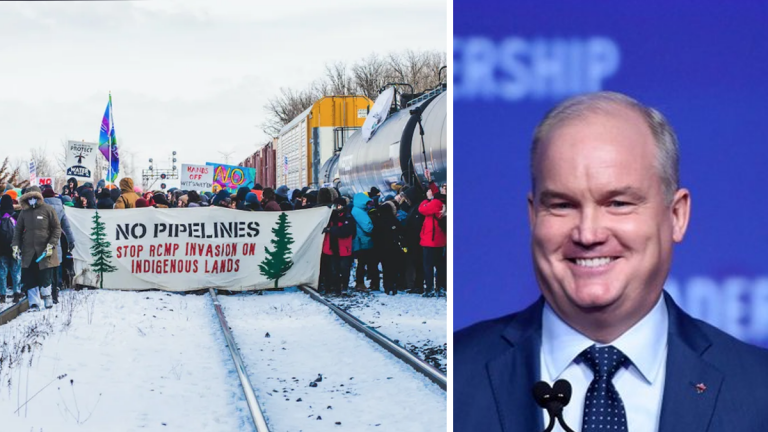
Far-left protesters claiming to represent hereditary Wet’suwet’en chiefs opposed to the BC LNG pipeline have blockaded several rails across Canada in order to bring the national economy to a standstill.
In response, Trudeau has called for dialogue between the hereditary chiefs and the federal government. Earlier today the chiefs announced they would meet with government officials to discuss the situation.
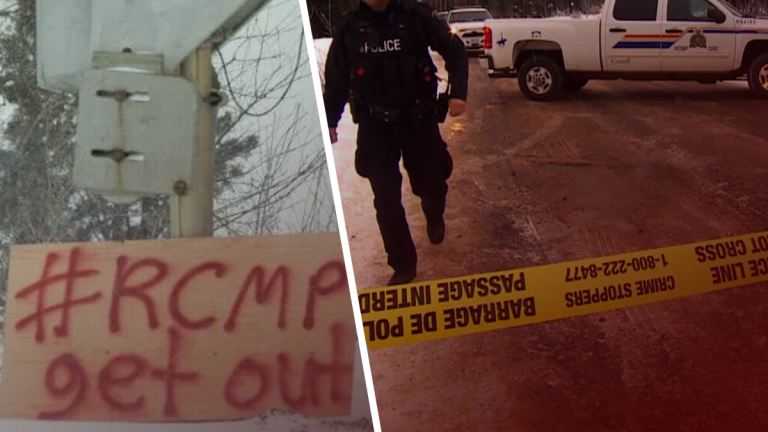
The RCMP announced yesterday that they will be evacuating the LNG pipeline site, where a protest camp has been erected, in the hope of securing an end to the blockades.
Premiers from all across Canada are also calling to meet with the prime minister in order to reach a quick resolution to the crisis.
Two anonymous senior RCMP sources have told True North that officers on the ground feel betrayed after they were ordered to abandon their guard at the LNG pipeline site.
One senior RCMP officer present at the blockade said that officers were ordered to leave Wet’suwet’en territory despite “stiff objections” from commanding leadership on the ground. The same officer then said that they feel “sold out” because of the order.
On Thursday, RCMP Deputy Commissioner Jennifer Strachan offered to move the police detachment from the protest site to the nearby town of Houston with the hope that it would lead to an end to the national blockade crisis.
A senior source close to the matter said that officers on the ground feel betrayed by the order.
“[They] feel they are being used as pawns and scapegoats,” the senior RCMP officer told True North on the condition of anonymity.
“Politicians without a clear mandate are the issue, [the officers] just wanted to enforce Supreme Court orders.”
In January, the Supreme Court of British Columbia ruled that the blockade led by a small number of hereditary Wet’suwet’en chiefs has caused irreparable harm to the project.
In her ruling, BC Supreme Court Justice Marguerite Church granted the RCMP an injunction and enforcement order to intervene and ensure that construction on the site proceeds.
Public Safety Minister Bill Blair hopes that the decision to abandon the protest site would lead to an end to the barricades.
“I’m very hopeful that that will satisfy the concerns that were raised. I believe the time has come now for the barricades to come down,” said Blair.
The minority Liberal government has been under mounting pressure from the public and members of the opposition to put an end to rail blockades which have brought Canada’s economy to a standstill.
Prime Minister Justin Trudeau has promised that his government would find a solution to the crisis, however, his calls for the hereditary chiefs to engage in dialogue with federal ministers have gone largely unanswered.
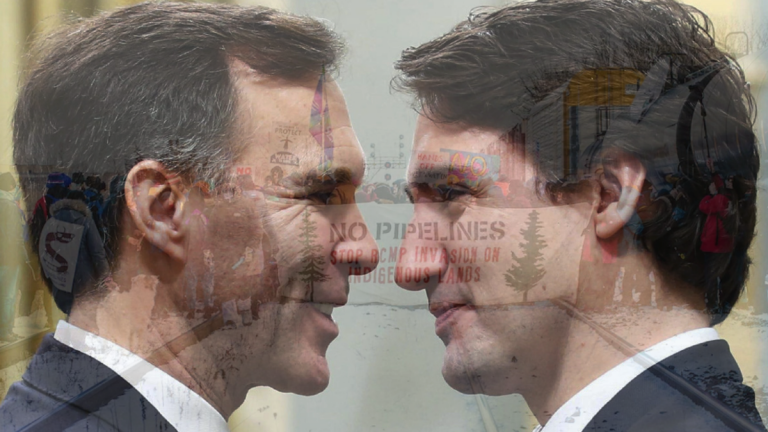
Both Prime Minister Justin Trudeau and Finance Minister Bill Morneau failed to provide an answer when pressed on how much the ongoing illegal blockades are costing Canadians per day.
Conservative finance critic Pierre Poilievre grilled Morneau during a finance committee meeting on Wednesday, asking him to provide the daily amount Canada is losing due to the nationwide protests.
“Do you know the daily costs to the Canadian economy of this rail blockade?” asked Poilievre.
“As I think you might know, the impacts are significant on multiple fronts and they’re impacting people individually as well as individual businesses,” replied Morneau.
According to the CEO of Canadian Manufacturers and Exporters Dennis Darby, approximately $425 million in goods are at a standstill due to the blockades.
“The damage inflicted on the Canadian economy and on the welfare of all our citizens mounts with each hour that these illegal disruptions are allowed to continue,” said a coalition of 39 industry associations.
“In addition to disrupting domestic and global supply chains, the blockades undermine Canada’s reputation as a dependable partner in international trade.”
The number of people calling on the federal government to immediately resolve the national crisis has grown.
Prime Minister Justin Trudeau has called for a meeting between federal ministers and a small number of Wet’suwet’en hereditary chiefs opposed to the BC LNG pipeline who sparked the national protests. So far, no such meeting has occurred.
During Question Period on Wednesday, Poilievre posed the same question to Trudeau, asking him how much the infrastructure disruptions were costing the country every day.
“Today at finance committee I asked the finance minister who’s supposed to be in charge of the money, how much these illegal blockades are costing the economy every day, he didn’t know. Does the prime minister?” said Poilievre.
“We recognize that this is a time of hardship for Canadians, with shortages, with disruptions in their daily lives to commuters, with layoffs as well. This is a situation that needs to end, it needs to end peacefully and it needs to end quickly. And the approach that we’re taking is to look to resolve this in a peaceful manner so that we don’t continue to see disruptions like this in the coming months and years,” said Trudeau.
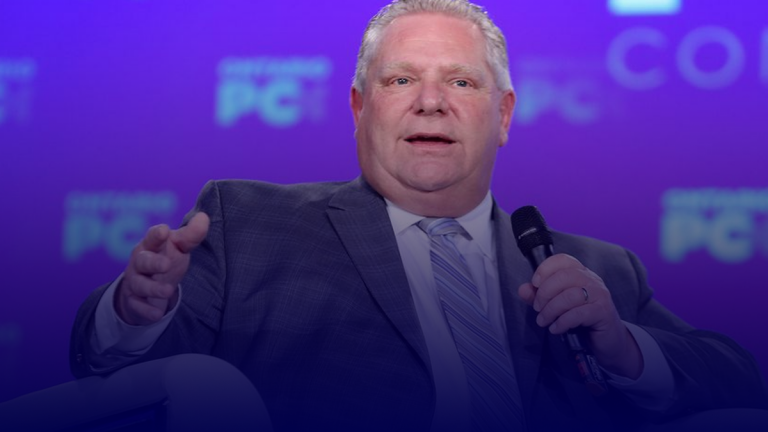
The Policy Chair and 3rd Vice President of the Progressive Conservative Party of Ontario (PCPO) has accused the party’s president and executive team of ignoring the party’s constitution in the planning of an upcoming “policy conference” in Niagara Falls.
Bola Otaraki laid out her allegations in an open letter to riding presidents, MPPs and the party executives.
“On the weekend of February 21-22, 2020, the PCPO Executive has organized an event, which they are calling a ‘Policy Conference.’ Before you attend, be aware that while this is a real event, it is not a validly constituted ‘Policy Conference,’” wrote Otaraki.
In the letter, Otaraki alleges that PCPO President Brian Patterson and members of the Executive usurped her role and ignored her attempts as policy chair to open up the policy process to a grassroots level by encouraging more involvement from local ridings.
True North reached out to Patterson and conference co-chair Patrick Harris for comment but had not heard back by the time of the article’s publication.
In her open letter, Otaraki outlines three alleged violations of the party’s constitution. The violations include failure to host the policy conference in conjunction with an annual general meeting; failure to have elected delegates present at the conference; and the circumvention of her role as VP and Policy Chair.
“In direct violation of the constitution, Brian Patterson and the PCPO Executive have organized this “event” in Niagara Falls that is being called a “Policy Conference” with no delegates elected from the ridings,” writes Otaraki.
As exclusively reported on by True North, the PCPO sent out an email to members announcing that the February conference would not require elected delegates.
“This year, you are not required to be elected as a delegate by your local riding association. If you’re a member, you’re eligible to attend. It’s that simple,” wrote conference co-chair Patrick Harris.
Otaraki claims that the PC Executive appointed Harris as co-chair despite her objection, and that Harris allegedly co-opted the policy committee in violation of the constitution which states that the committee has a single chair.
“The policy committee has been run from start to finish without any oversight or input from me, the ELECTED VP responsible for policy and the ex-officio Policy Chair. The process has been manipulated by President Brian Patterson, and by VP Patrick Harris in blatant disregard to the PCPO Constitution,” wrote Otaraki.
Conservative leadership candidate Erin O’Toole released a statement saying he would criminalize blockades on critical infrastructure and give the police powers to clear them without a court injunction if he was prime minister.
O’Toole’s plan put the blame for ongoing national blockades on Prime Minister Justin Trudeau and the ruling Liberals.
“The Liberals are the party that began the Shut Down Canada culture by cancelling pipelines, banning tankers and bringing forward Bill C-69 over the objections of a majority of provinces,” said O’Toole.
“The illegal blockaders took their cues from the Trudeau Liberals.”
According to the National Post, O’Toole would introduce legislation that would designate certain ports, railways, highways and bridges as “Critical National Infrastructure.” The new law would mean that any attempt to block said infrastructure would be a criminal offence.
The law would also include giving the police the power to intervene in blockades on critical national infrastructure.
“Organizations should not have to wait for the courts and then see them ignored or have to endure more intimidation and loss before an injunction is enforced in order to simply continue operating legally,” said O’Toole.
The statement also referenced changes to the tax code which would strip groups that receive foreign funds and engage in blockades of charitable status.
O’Toole’s plan comes as rival leadership candidate Peter MacKay flip-flopped on his support for counter-protesters who took down a blockade in Edmonton.
MacKay took down a tweet last night in which he said he was “glad” to see the blockade taken down. He has since retracted his position telling supporters he was in fact “sad” about the situation.
“In Edmonton a few frustrated citizens cleared away debris from a railroad. We all share in the frustration. And a mistake was made it how the reaction was that worded,” wrote MacKay in a fundraising email.
“I’m not glad.I’m sad. I’m sad because our Prime Minister has left Canadians feeling like the law, the police, and the government aren’t on their side.”
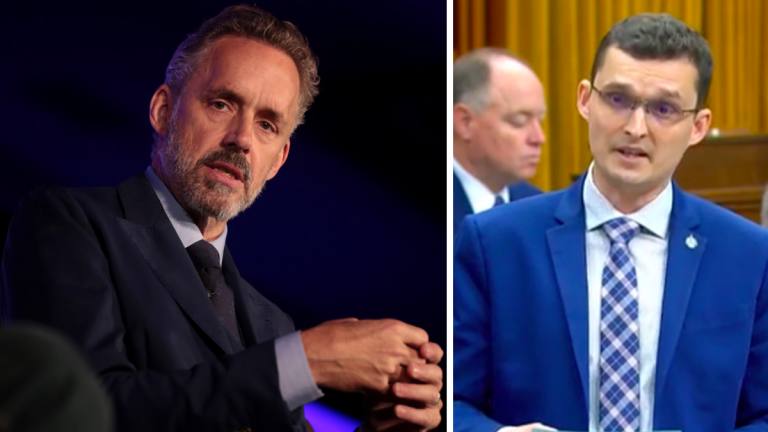
Alberta Conservative member of parliament Tom Kmiec honoured the work of Prof. Jordan Peterson in the House of Commons on Wednesday.
“I rise to pay respects to one of Canada’s leading public intellectuals,” Kmiec said. “It is said a nation’s treasure is its scholars. Mr. Speaker, Jordan B. Peterson is one of Canada’s treasures.”
The psychology professor at the University of Toronto rose to international prominence after he publicly challenged the consensus surrounding transgender ideology in his classes.
Peterson been recovering from a drug dependency in Russia after being prescribed benzodiazepines to treat his depression after his wife was diagnosed with terminal cancer.
“His battle with depression reminds of that being sick doesn’t mean you are weak. He went to rehab to treat his addiction to anti-anxiety medication after his wife Tammy’s terminal cancer diagnosis,” said Kmiec.
“I invite all members to join me in wishing Dr. Peterson a speedy recovery.”
Shortly after the news broke of Peterson’s ailment, several prominent left-wing Twitter accounts viciously attacked him over it.
Nora Loreto, who became infamous after pointing out the “whiteness” of all of the Humboldt Broncos crash victims, said she hoped “for years of hell” for Peterson.
In 2017, Peterson testified before the Canadian senate to warn against the dangers surrounding Bill C16, which codified the use of gender pronouns into law.
During his career as an academic, Peterson wrote several best-selling books and lecture series. According to Google Scholar, Peterson’s work has been cited nearly 13,000 times by other academics.
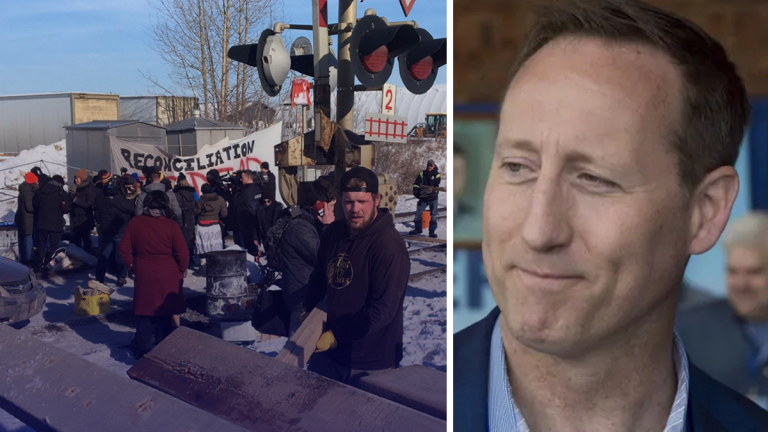
Conservative leadership candidate Peter MacKay has deleted a tweet in which he expressed support for counter-protesters who dismantled a railway blockade.
“Glad to see a couple Albertans with a pickup can do more for our economy in an afternoon than Justin Trudeau could do in four years,” MacKay had tweeted.
The tweet came in response to an Edmonton blockade taken down by a group of private citizens less than 12 hours after it was erected in the early hours of Wednesday morning. The protesters scattered shortly after.
The original tweet was deleted after some people, including CTV host Evan Solomon criticized him for supporting “vigilantism.”
His tweet was replaced by a series of tweets clarifying his stance on the removal of the blockade. MacKay tagged several reporters in the follow-up tweets.
“I see this as an act of good citizenship. The peaceful removal of debris deliberately placed on a railway that posed a threat to public safety. Clearing the track and preventing harm,” MacKay said.
This is the second time in less than a month that MacKay backtracked from something posted on Twitter.
Earlier in February MacKay blamed his team for a tweet from his account criticizing Prime Minister Justin Trudeau for expensing $876.95 for yoga.
“I am not happy at the way that was put up on my site. And I voiced that to my team,” MacKay said.
MacKay sent out a fundraising email to supporters apologizing for the comments saying he wasn’t glad about the blockade removal.
“We could all see it coming after more than 2 weeks of blockades. In Edmonton, a few frustrated citizens cleared away debris from a railroad. We all share in the frustration. And a mistake was made it how the reaction was that worded,” wrote MacKay.
“But to be truthful, I’m not glad.I’m sad.I’m sad because our Prime Minister has left Canadians feeling like the law, the police, and the government aren’t on their side.”
Blockades by anti-pipeline protesters across Canada have stopped rail traffic nationwide, putting people out of work and creating shortages in goods such as propane.
On Thursday leadership candidate Erin O’Toole said as prime minister he would make it a criminal offence to blockade railways, ports, and bridges for any reason.
“Peacefully protesting is a key type of speech that our government must protect,” O’Toole said in a statement.
“Intimidation and physically preventing people from going about their lives is different. It is a form of common law assault and should, in the appropriate situations, be treated as such.