CBC salaries include 125 senior directors earning up to $186,000 each

CBC/Radio-Canada has 125 senior directors earning between $112,000 and $186,000 per year, True North has learned. 

The information was obtained from an ATIP True North submitted to the public broadcaster requesting the salaries of various positions for 2021.

After senior directors, executive producers are the second-highest earning “band,” making $82,609 to $103,848 per year, according to the document. 

This is followed by senior producers, who make between $76,480 to $96,222. 

CBC/Radio-Canada said in the document that their agreement with the Canadian Media Guild (CMG) requires negotiations on salaries to take place every year after 2020 and that salary increases have been set at 1.5% since 2019.

“When determining how salaries are established, one element is to review data from comparable Canadian companies, as well as a selection of Crown corporations and federally regulated companies,” said CBC media relations and issues management director Leon Mar in a statement to True North on Monday.   

The lowest-earning employees at CBC are positions such as assistant fabric specialists, editorial assistants and library assistants, who earn between $36,774 to $51,155 for a 38.75-hour work week, 

Mar said CBC is committed to accountability and transparency by disclosing these salaries. 

“By providing this information, the corporation is at the forefront of other Crown corporations and other broadcasters, providing a clear picture of the remuneration earned by its employees, while maintaining its ability to attract and retain high-calibre talent in a very competitive broadcasting industry and respecting existing federal law regarding the privacy of individual’s specific salaries,” he said. 

CBC/Radio-Canada’s president and CEO had a base salary range of $390,300 to $459,100 in 2019. The two executive vice presidents collected $275,000 to $411,278 and the five vice presidents garnered $250,000 to $411,278. 

Prime Minister Justin Trudeau wants to spend more taxpayer dollars on CBC even while the crown corporation’s revenues decline, according to Blacklock’s Reporter. 

CBC’s annual report presented to Parliament revealed that their advertising revenue fell by 10% between 2020-2021. 

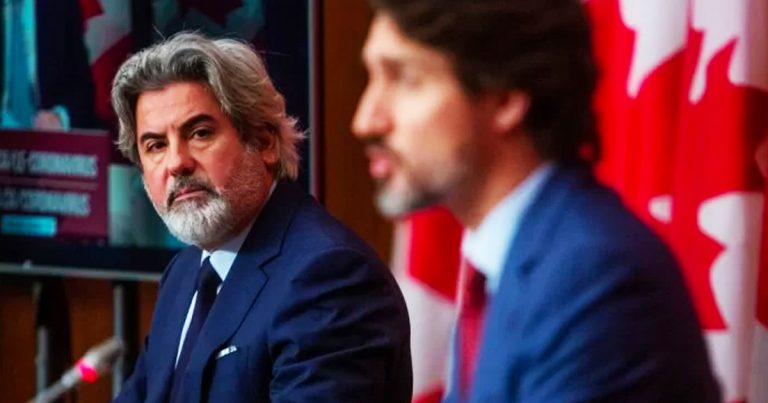
Trudeau tasked Heritage Minister Pablo Rodriguez in his mandate letter with providing “additional funding” to the state broadcaster. 

Public financial disclosures revealed that CBC/Radio-Canada receives $1.2 billion in government funding every year, accounting for 71.2% of their revenue. 
Google executive says Liberal internet censorship bills border on the extreme

A Google executive warns that incoming Liberal legislation meant to censor the internet could drastically change how Canadians interact online. 

According to an interview with the Globe and Mail, Google president of global affairs and chief legal officer Kent Walker said that while the company is open to new regulations, current proposals border on the extreme. 

“The closer you get to that extreme, the more concern. Whether that’s on bespoke content regulation, or local content requirements, or government mandates for link taxes and other sorts of things – any flavour of one of those could actually really be bad,” Walker told the outlet. 

Google has already moved to take the German government to court over its proposed internet regulation and has threatened Australia with pulling access to its search engine. 

Similarly last year, Facebook temporarily banned news from being shared on its platform in Australia, forcing legislators to walk balk on several policies. 

For some time now, the Liberals have been floating several pieces of legislation including Bill C-10 and Bill C-36, which intend to tackle a swath of digital issues.

C-10 has been represented as an update to Canada’s Broadcasting Act, which would expand government regulatory powers to the digital realm. Its critics have accused the Liberals of attempting to censor Canadians online after MPs moved to strip the bill of a caveat that would protect user-submitted content from oversight. 

A number of former Canadian Radio Television and Telecommunications Commission (CRTC) commissioners have spoken out against Bill C-10, even going so far as to brand it “authoritarian.” 

Meanwhile, Bill C-36, which seeks to reintroduce the controversial Section 13 to the Canadian Human Rights Act, has been labelled an attempt by the Liberal government to potentially criticize online speech it finds offensive. 

Several leading free speech and civil liberties groups have raised concerns about the sweeping powers online hate legislation would give the government. These powers could potentially include house arrest and hefty fines for simply posting messages online. 

In September the Independent Press Gallery called on the Canadian government to scrap its plans to regulate the internet, saying that the legislation was unworkable and would violate Charter rights. 

“The IPG opposes the proposal and expresses a serious concern to the harmful effects on freedom of expression and principles of law that will ensue if the government moves forward with the proposal,” wrote IPG president and True North founder Candice Malcolm in her submission to the federal government.  “We expect that the government will take our criticisms into account and will cease its pursuit of the proposal in its current form.”

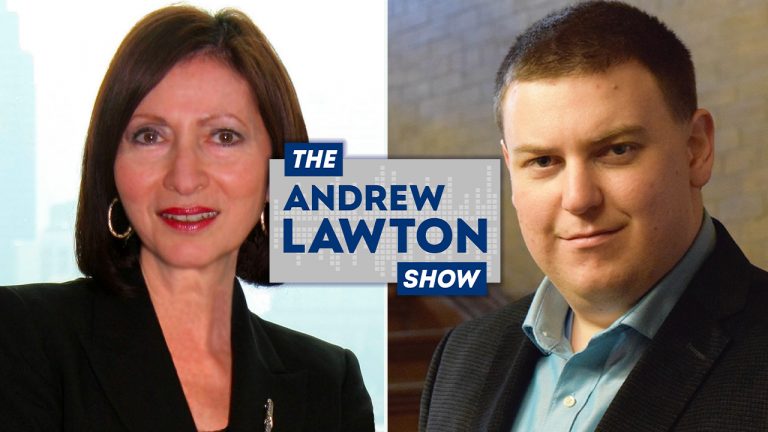
Former privacy commissioner Ann Cavoukian on vaccine passports and erosion of privacy

As provinces continue to double down on vaccine passports, former Ontario Privacy Commissioner Ann Cavoukian says it’s clear that governments pose the greatest threat to privacy, which she says is a prerequisite to freedom.

In this episode of The Andrew Lawton Show, Dr. Ann Cavoukian says Canadians – regardless of vaccination status – need to stand up for their rights in the face of regimes forcing the disclosure of private medical data to engage in civil society.

Watch the full episode of The Andrew Lawton Show.

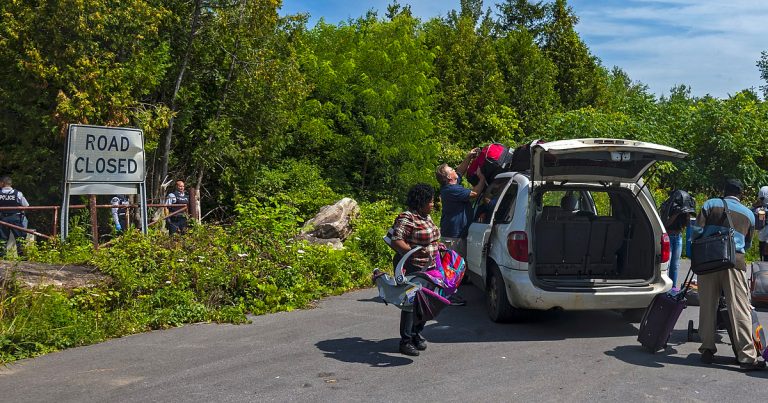
2,800 illegal border crossers entered through Roxham Road in December

New statistics reveal that 2,800 illegal border crossers entered Canada through Roxham Road in December, only one month after Prime Minister Justin Trudeau announced its reopening. 

According to CTV News, that’s nearly a threefold jump since November, which saw 832 crossings at the controversial crossing.

On Nov. 22, Trudeau reopened the unauthorized point of entry to refugee and asylum claimants after it was shut down due to the COVID-19 pandemic. Border officials reported that only 96 people were admitted at Roxham Road in October.

As exclusively reported by True North, unvaccinated migrants are being allowed to enter the country freely without a vaccine passport while unvaccinated Canadians are barred from leaving by air or land. 

Canadian Border Services Agency spokesperson Sandra Boudreau stated that the claimants are being accepted “regardless of their vaccination status.” 

“Refugee claimants are requested to show proof of vaccination if they have been vaccinated,” Boudreau told True North. “Unvaccinated individuals will be permitted to enter if making an asylum claim but will be required to follow all COVID-19 public health obligations, including all testing requirements.”

To date, approximately 60,000 illegal border crossings have taken place at unauthorized ports of entry. 

A recent ruling by the Federal Court of Appeal affirmed Canada’s right to turn back asylum seekers from the United States, noting that such a move would not violate Charter rights. 

The ruling also found that the Canada-US Safe Third Country Agreement, which regulates asylum claims between the two countries, was constitutional. 

“Those who arrive in the United States must claim refugee status in the United States under United States law,” the ruling read. “They cannot leave the United States and claim refugee status in Canada at a land port of entry. If they do so, Canada can refuse to consider their refugee claim and, if they have no other legal basis for remaining in Canada, return them to the United States.” 

Despite the court’s position, Trudeau has continued to refuse to turn away asylum claimants arriving at illegal border crossings. 

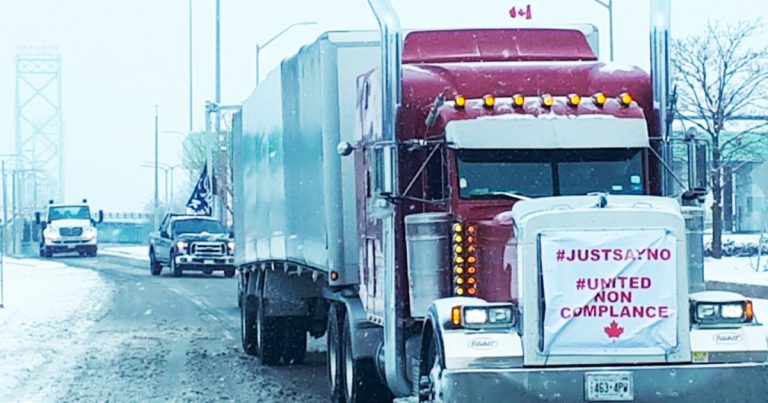
Recap of Day 3 of the Truckers for Freedom Convoy across Canada

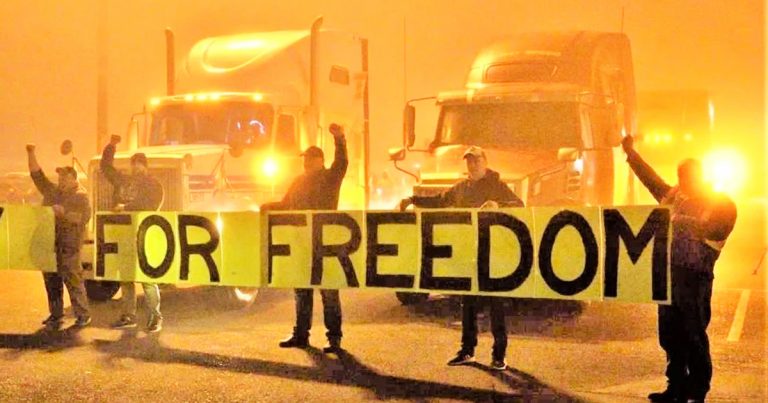
On day 3 of the Truckers for Freedom Convoy, the large Western fleet made its way through Saskatchewan and Manitoba, an Eastern convoy out of Newfoundland began rolling and Conservative MPs jumped on board to show their support.

In the early morning hours, crowds in Saskatchewan lined the roads in support of the truckers.

In Moose Jaw, crowds lit fireworks. 

Later on as the convoy made its way through Manitoba, huge crowds gathered in Brandon to celebrate the truckers. 

This was the scene in Brandon, Manitoba.

As the truckers made their way through Winnipeg, huge crowds greeted the convoy. 

In Windsor, Ontario, truckers continue their ongoing “slow-roll” protests.

This was the scene earlier today. 

In Newfoundland, a group of truckers began their roll into Ottawa as they left the island. 

Supporters can be seen lining this overpass as the Newfoundland truckers roll on.

As momentum and support continued to grow across Canada for the convoy, Conservative MPs broke ranks with Erin O’Toole and began throwing their support behind the truckers.

Most notable of the MPs that voiced support for the convoy today was Deputy Leader of the Conservative Party, Candice Bergen and former leadership candidate Leslyn Lewis.  

The Conservative MPs that have now publicly supported the convoy include Pierre Poilievre, Candice Bergen, Andrew Scheer, Leslyn Lewis, Dean Allison, Rachel Thomas, Brad Vis, Warren Steinley, Brad Redekopp, Ryan Williams, Jeremy Patzer, Kevin Waugh and Martin Shields. 

The GoFundMe in support of the truckers at the time this article was published has reached $4,858,580. 

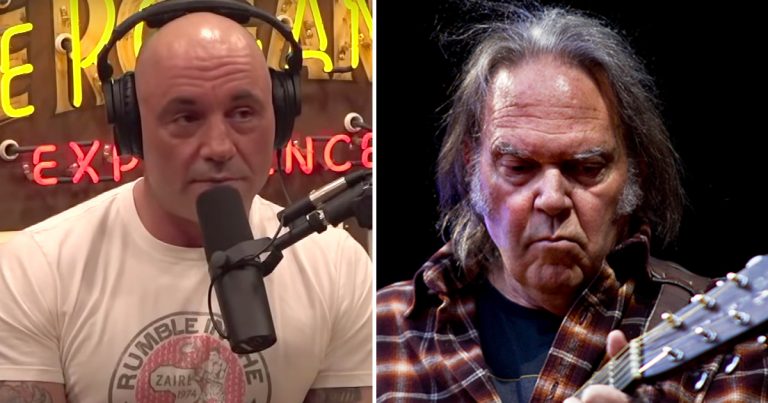
6 million listeners or 200 million – Neil Young tells Spotify it’s him or Joe Rogan

Canadian-American rock star Neil Young made an ultimatum to Spotify on Monday, telling them that if they don’t drop “The Joe Rogan Experience,” they can say good-bye to his music. 

“They can have Rogan or Young,” he said. “Not both.” The 76 year-old singer’s demand was first reported by the Guardian and included in a letter since deleted from his website.

“I am doing this because Spotify is spreading fake information about vaccines – potentially causing death to those who believe the disinformation being spread by them,” wrote Young. “Please act on this immediately today and keep me informed of the time schedule.”

“The Joe Rogan Experience” is the most popular podcast on Spotify not only in Canada but also in the English-speaking world. Whereas Neil Young’s channel has just over 6 million listeners per month, Rogan’s podcast has an estimated 200 million monthly, or 11 million per episode.

“The Joe Rogan Experience,” Young said, has “tremendous influence.” Young added that Spotify needs to act to stop the spread of inaccurate information about COVID-19 vaccines. 

In January, a group of “scientists, medical professionals, professors, and science communicators” wrote a letter to Spotify after Rogan hosted a talk with Dr. Robert Malone the previous month. A closer look at the letter revealed that the majority of its signatories were not direct medical providers or practitioners. About 100 hold a PhD but do not practice regularly. 

Malone, a virologist and immunologist who pioneered mRNA technology, has questioned the prevailing narratives surrounding COVID-19 and has been accused of spreading misinformation about vaccine efficacy. 

The letter requested Spotify put in place a misinformation policy to stop “the misleading and false claims” Rogan has made, adding the host’s comments were  “provoking distrust in science and medicine.” 

Young has a history of campaigning for left-wing causes. 

In 2014, he criticized former prime minister Stephen Harper and Alberta’s oilsands, comparing a Fort McMurray industrial site to Hiroshima after it had been hit by a nuclear bomb.

“Canada is trading integrity for money,” Young said. “That’s what’s happening under the current leadership in Canada, which is a very poor imitation of the George Bush administration in the United States and is lagging behind on the world stage.”

In 2006, Young released a song called “Let’s Impeach the President,” which called for US president George W. Bush to be removed from office. 

Young’s music remains on Spotify as of Tuesday.

Truckers’ convoy isn’t about vaccines – it’s about freedom

Millions of dollars in donations. Thousands of big rigs. Countless supporters lining highways and overpasses. The trucker convoy hasn’t even made it to Ottawa yet and it’s already making an impact, advocating against Justin Trudeau’s vaccine mandate for truckers. True North’s Andrew Lawton says the convoy is doing more to stand up to mandates than any of the opposition parties represented in Parliament have.

While Erin O’Toole won’t say whether he supports the convoy, a growing number of Conservative MPs are breaking ranks to show their support for the truckers.

Also, former Ontario privacy commissioner Ann Cavoukian joins the show to discuss vaccine passports, privacy rights, and the surveillance state.

SUBSCRIBE TO THE ANDREW LAWTON SHOW

Ontario Liberal leader wants vaccine passports for liquor and cannabis stores

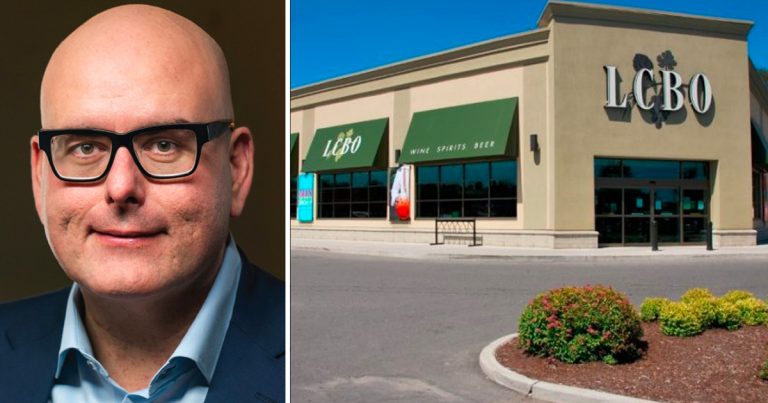
Leader of the Ontario Liberals Steven Del Duca is demanding Doug Ford’s government require proof of vaccination for entry to all LCBO and cannabis stores.

The move, if adopted, would put Ontario in line with Quebec, which extended its vaccine passport system to province-run liquor and cannabis stores on Jan. 15.

At a press conference Tuesday, Del Duca declared that it wasn’t “time to be weak” and for the unvaccinated to be barred from more establishments. 

“In essence, this is my call out to Doug Ford to say given all of the lessons that we have learned during this pandemic – lessons that I would have hoped that Doug Ford himself would have learned – this is not the time to be weak, and this is not the time to be half-hearted,” Del Duca said.

“We need real responsible and competent leadership at this moment to make sure that as the reopening happens and school starts and as the restrictions start to get lifted, that we are positioned to make sure again that we don’t have to go backwards.”

In Ontario, proof of COVID-19 vaccination is currently required for indoor dining at restaurants and bars, event venues such as concert halls, indoor sports facilities and indoor event venues, among other places.  

Only last week, Del Duca also called for the vaccine passport program to be expanded to include a third booster shot. Ontarians currently require two COVID-19 shots to be considered fully vaccinated. 

“Ontarians have been doing our part to fight COVID-19, and we deserve a plan to beat the fifth wave so we can safely return to doing the things we all love,” said Del Duca. 

“That’s why we are calling on Doug Ford to make the booster shot a requirement for vaccine certificates.”

Premier Ford has stated that he is not currently considering making third doses mandatory. After plunging Ontario into another lockdown this month, he has also pledged to reopen restaurants and bars at 50% capacity as of Jan. 31. 

On Monday, Ottawa’s Medical Officer of Health Dr. Vera Etches also urged provincial health officials to require a third dose of the vaccine for its certificate program. 

To date, only 59% of eligible Ottawa residents have received COVID boosters. 

Vancouver councillor wants “decolonial and anti-racist” community policing

Vancouver councillor Pete Fry wants the city to adopt a “decolonial and anti-racist” community policing model. 

According to a council member’s motion titled Community-based Crisis Management Through Understanding and De-escalation submitted this week, Fry envisions a program of “crisis worker teams” working independently of police to respond to various emergencies. 

Fry’s motion calls for council to “direct staff to develop within the strategy a pilot community-based crisis management program of public information education, and engagement that … is informed by destigmatized, decolonial and anti-racist practice.” 

True North reached out to Fry to inquire whether Vancouver Police Department funds would be re-allocated to such a program and to ask what a “decolonial and anti-racist” community policing model would look. Fry did not respond before publication time. 

Following violent protests in Canada and the US calling for cities to defund their police forces in 2020, Vancouver city council voted to reject a $6.4 million funding increase by the police board but stopped short of slashing the force’s budget. 

While council debated a cut to the policing budget, Fry was among a few councillors who made arguments in favor of reducing funding by 1%. 

“Decolonization” and “anti-racism” have become popular buzzwords among far-left advocates who seek to dismantle institutions they see as systematically racist. According to academic publications cited by the University of British Columbia, decolonization “sets out to change the order of the world (and) is, obviously, a program of complete disorder.” 

The terms are closely interlinked with the controversial theoretical lens known as Critical Race Theory (CRT), which has been blasted by critics as a thinly veiled form of racism itself. 

The positions and assumptions of CRT have crept into an increasing number of institutions across Canada including government, business, entertainment, public schools and higher education. 

In a recent op-ed, renowned speaker and academic Dr. Jordan B. Peterson blasted the “Diversity, Inclusivity and Equity” (DIE) mandates sweeping through academia and other institutions. 

“Diversity, Inclusivity and Equity — that radical leftist Trinity — is destroying us,” wrote Peterson. ”Wondering about the divisiveness that is currently besetting us? Look no farther than DIE …When does the left go too far? When they worship at the altar of DIE, and insist that the rest of us, who mostly want to be left alone, do so as well.” 

“Enough already. Enough. Enough.” 

Conservative MPs speak out in support of Truckers for Freedom Convoy

A growing chorus of Conservative MPs is speaking out in support of the massive Truckers for Freedom Convoy as it barrels towards Ottawa to protest vaccine mandates and an erosion of freedoms under Liberal Prime Minister Justin Trudeau. 

Siding with the mass movement of truck drivers, these Conservative MPs are breaking with party leader Erin O’Toole, who has evaded questions on whether he supports the convoy and whether he will even meet with them once they arrive at the capital.

Among the prominent Conservative voices speaking in support of the truckers are finance critic Pierre Poilievre, deputy leader Candice Bergen, infrastructure critic Andrew Scheer, Canadian heritage critic Kevin Waugh, MP Leslyn Lewis and others. 

Pierre Poilievre slams hypocrite Trudeau for punishing truckers 

Leslyn Lewis stands by convoy’s peaceful protest

Martin Shields awaits anti-mandate trucking convoy

Earl Dreeshen posts supportive image on Facebook

Kevin Waugh meets with convoy in Saskatoon

Shannon Stubbs supports Convoy for Freedom

Andrew Scheer thanks truckers

Candice Bergen supports peaceful trucker convoy protest

Jeremy Patzer observes huge crowds awaiting convoy 

Ryan Williams supports the truckers

Brad Redekopp stands with trucker convoy

Warren Steinley meets with truckers

Brad Vis stands behind truck drivers

Rachel Thomas stands with truckers

Dean Allison tells truckers to “keep on peacefully and respectfully trucking!”

Candice Bergen supports Canadian Truckers

John Barlow supports Canadian truckers

Kelly Block stands up for truckers

Bob Zimmer supports Canadian Truckers

Mel Arnold stands up for truckers