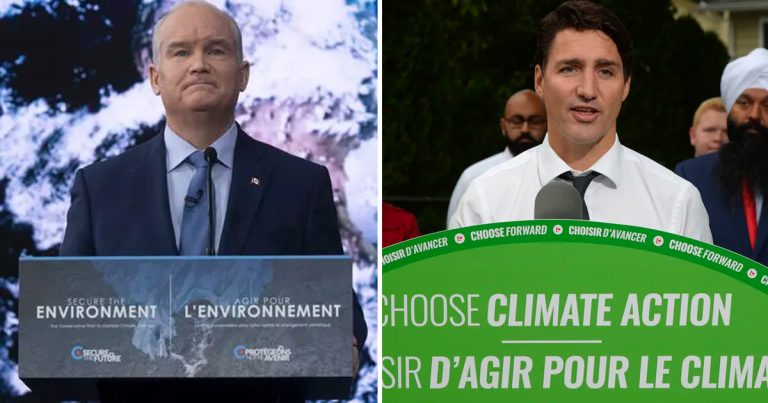
Canadian political discourse puts a little bit too much time on climate change – particularly this election. In fact, climate change is taking priority over other important issues that Canadians care about.
For example, during the English Leaders’ Debate, a significant chunk of the debate was spent on climate change and how each political leader was determined to meet its aspirational Paris climate targets.
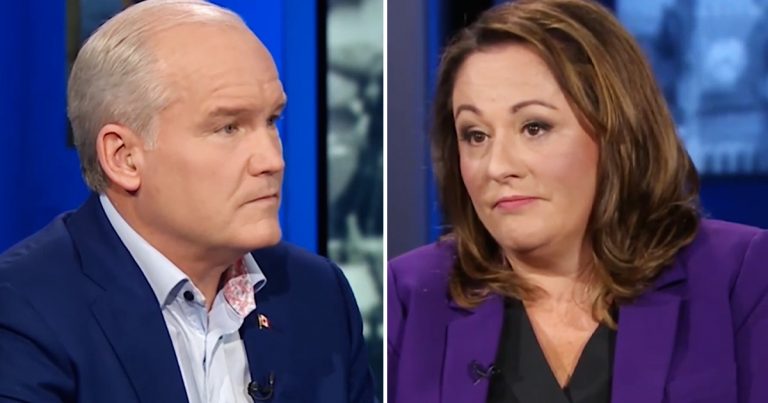
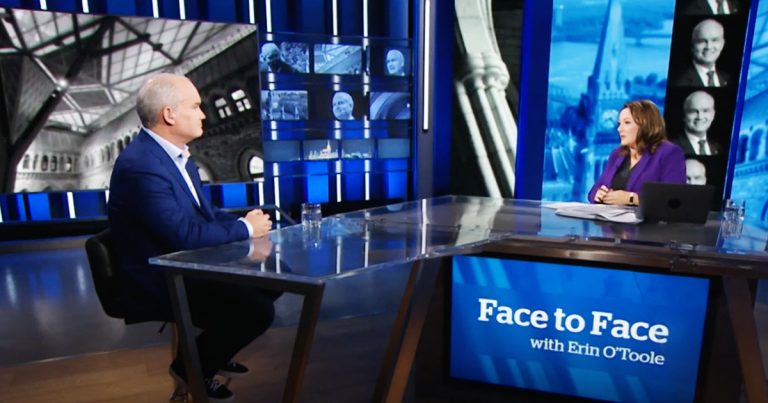
A Sunday afternoon election interview of Erin O’Toole hosted by CBC’s Rosemary Barton featured questions heavily skewed towards issues important to Liberal voters while ignoring the priorities of other Canadians.
The interview was the first of a four-part CBC series titled Canada Votes: Face to Face with the Leader.
Throughout the 46-minute exchange, Barton repeatedly interjected with comments and questions echoing Trudeau’s campaign messaging, raising questions about the objectivity of the network.
A majority of the program was dedicated to topics such as climate change, mandatory vaccines, systemic racism and other left-wing issues. As revealed by an exclusive poll commissioned by True North, the top issues for Conservatives are government spending, the economy and COVID-19 recovery. The CBC program spent very little time dedicated to these topics.
On the issue of healthcare, Barton parroted misleading accusations from the Liberal campaign that O’Toole wants to introduce private healthcare into Canada at the cost of its universal healthcare system.
“You say provinces can make decisions in their jurisdictions and make innovations – that doesn’t sound like someone who will enforce the Canada Health Act… If you’re PM, can someone pay for access to a service faster than the rest of us on a waitlist?” Barton asked O’Toole.
In August, Trudeau claimed that O’Toole “wants to bring private, for-profit health care to Canada” – a line repeated by the Liberals in recent weeks. Like Barton did on Sunday, Trudeau also insinuated that under O’Toole “the wealthiest pay to jump ahead in line.”
Despite these claims, O’Toole has made it clear both in his party platform and on the trail that he will maintain Canada’s universal healthcare system. On top of that, private healthcare already makes up around 55% of healthcare spending in Canada, a point never addressed by Barton in the interview.
Not only was Barton’s line of questioning as a moderator hostile towards Conservative positions, questions from handpicked CBC viewers were also found to have a Liberal bias.
At one point, Edmonton-based Grace Peng essentially asked O’Toole how he would deal with Conservative MPs whose views were found to be not progressive enough.
Following another question by Peng on O’Toole’s track record on climate change, Barton jumped in to defend Trudeau’s poor record in reducing Canada’s emissions.
“Those are the previous Paris commitments,” Barton said of Trudeau’s decision to change Canada’s emission targets in 2021. “We now have new ones.”
During the interview, Barton also pressed O’Toole on his Conservative leadership slogan “Take Back Canada,” which she implied was being divisive.
“When you were running for leader, you talked a lot about ‘taking back Canada’ …that kind of language doesn’t seem to be a ‘uniting’ kind of language. Do you feel like you contributed to division?” asked Barton.
In 2019, Rosemary Barton and another CBC journalist were initially named in a copyright lawsuit over a campaign ad which featured CBC footage by the public broadcaster against the Conservative Party of Canada. CBC eventually lost that lawsuit.
In its platform, the Liberals pledged an additional $400 million in taxpayer funding for the CBC/Radio-Canada. This is in addition to the $1.2 billion the state broadcaster already receives on an annual basis.
The Debates Commission has been a complete disservice to Canadians. It’s an insult to voters that we had three debates this election — two in French and all three in Quebec.
The CBC could have made up for it through their town hall sessions with the party leaders. It could have been a good opportunity for Canadians to get to know their party leaders.
Instead, as Candice details in the latest episode of her show, the entire premise was based on partisan Liberal spin and a far-left woke worldview.
Canadians deserve better than a biased, activist, hyper-partisan state broadcaster looking to tilt the scale in Trudeau’s favour and pushing issues that divide Canadians and hurt our country.
This event proves once and for all why we must defund the CBC.
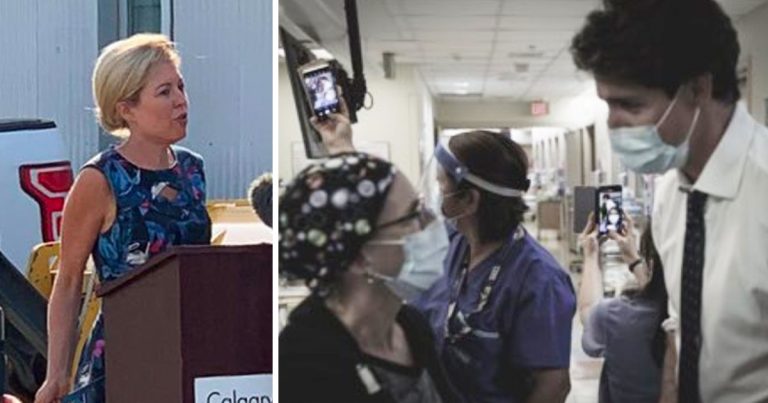
Incumbent Conservative Candidate and former health critic Michelle Rempel Garner blasted Liberal Party Leader Justin Trudeau’s decision to visit two hospitals while on the campaign trail.
In an emailed statement to True North, the Calgary Nose Hill candidate noted that while many Canadians can’t see their sick loved ones, Trudeau gets to woo voters in hospitals.
“It’s extremely concerning that Justin Trudeau decided to campaign in a hospital twice during the fourth wave of the pandemic during an election he called,” Rempel Garner told True North.
“Some individuals could not see their family members in the hospital due to visitation rules, but Justin Trudeau thought it would be a good idea to campaign in a hospital. It was shameful to see him once again put his own political interest ahead of Canadians.”
1/ Thread. Trudeau's photographer posted pictures of Trudeau campaigning in a hospital (with said photographer whose account is now locked). First, I have a close friend in yyc who didn't get to spend her husband's dying days with him in a hospital because of COVID restrictions. pic.twitter.com/w4yUNhqyA1
According to each hospital’s respective COVID-19 policy, visitor restrictions currently remain in place at both locations. In Toronto, only up to two people can be at a patient’s bedside while in Ottawa patients can only have two daily visits with one person at a time.
On Monday, as hospitals across Canada dealt with protests against mandatory vaccines and vaccine passports, Trudeau vowed to make it a crime to block access to hospitals and other health care facilities.
“It’s not right that the people tasked with keeping us safe and alive during this pandemic should be exposed to hatred, violence, fear and intimidation,” said Trudeau in Vancouver.
As a result of the COVID-19 pandemic, hundreds of thousands of surgeries and consultations have been cancelled. A March 2021 report by SecondStreet.org revealed that 353,000 different procedures were axed by hospitals all across Canada.
Critics have accused the Trudeau government of failing to ensure that Canada was prepared to deal with a health crisis such as the COVID-19 pandemic. Despite the Public Health Agency of Canada receiving $675 million from the federal government in 2019, the National Emergency Response Stockpile was heavily understocked.
In total, an estimate by the Treasury Board of Canada found that the government’s handling of the stockpile cost Canadian taxpayers $1.8 billion in the midst of a pandemic.
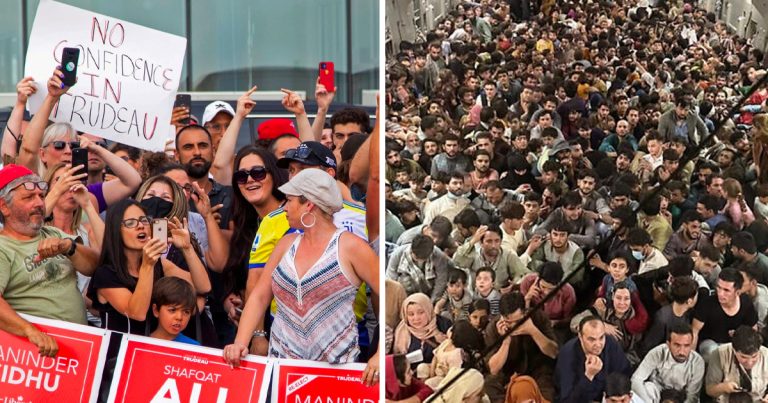
Researchers at McGill University’s Media Ecosystem Observatory (MEO) have found that Canadian media outlets’ coverage of the protests trailing beleaguered Liberal Party Leader Justin Trudeau far exceeded their reporting of the Afghanistan crisis.
The findings were released on Monday in a memo published under the Canadian Election Misinformation Project, which is run in partnership with the University of Toronto’s Policy, Elections & Representation Lab.
In the memo, which sought to track how misinformation impacted the protestors crashing Trudeau’s campaign events, researchers noted that Canada’s media heavily featured the anti-Trudeau protests in their election reporting at the cost of other election issues.
According to their results, the media on average dedicated nearly 25% more headlines to the protestors than they did to the government’s handling of the Afghanistan evacuation or the topic of gun control.
“We pulled all headlines from Canadian news organizations from Aug. 27 to Sept. 9 (totalling 8,709 headlines) and found 3.1% contained reference to the protests (representing 268 stories during that period). Coverage of these events far exceeds that of other major stories during this period including Afghanistan (2.3%) and gun control (2.3%),” the memo noted.
The MEO notes that the media dedicated a total of 268 stories to the protests alone. To achieve their results, researchers relied on the Facebook pages of 161 Canadian media organizations.
A list exclusively obtained by True North of the Facebook pages included in the count reveals that the pages of legacy news outlets like CBC, CTV, CityNews and Global News made up 40% of the media sample. The high quantity can be explained due to the sheer volume of local and thematic legacy media Facebook pages like CBC Saskatoon, CBC Politics, Global BC, Global National and dozens of others.
Other independent outlets including the Post Millennial, the Western Standard and Rebel News were also considered by researchers.
True North made an appearance in the survey but an independent tally of Facebook posts from that period found that posts featuring the Afghanistan crisis outnumbered posts about anti-Trudeau protests by nearly two to one.
In an emailed statement to True North, MEO Research Director Aengus Bridgman also noted that the appearance of Afghanistan-related words in headlines dropped significantly following the election call on August 16, 2021.
Bridgman said, “that on August 16th nearly 12.5% of headlines contained those keywords. It remained at close to 5% for about a week then dropped to 2.3% for the period from August 27 to September 7.”
To date, Canada has only evacuated approximately 3,700 people from Afghanistan. In comparison, the UK has evacuated 15,000 people from the country, while Germany has saved approximately 5,347.
As a result of the government’s unprecedented spending during the COVID-19 pandemic, young Canadians are expected to collectively pay an additional $117.9 billion in personal income taxes over their lifetimes, according to a new Fraser Institute report.
This substantial increase in the future tax burden is largely attributable to measures such as the Canada Emergency Response Benefit (CERB), wage subsidies and an increase in transfers to provincial governments.
The report highlights how debt accumulation has skyrocketed during the pandemic and states that Canada is projected to have added $500 billion in federal debt.
The Trudeau government has created a monumental deficit of over $350 billion, well above pre-pandemic levels and the largest annual deficits as a percentage of the Canadian economy since World War II.
The Fraser Institute report states that Canadian taxpayers also face a significant risk of a potential rise in interest rates in the future, which could increase federal debt accumulation and impose a larger tax burden.
“Today’s deficits are tomorrow’s taxes,” and “on a per-person basis, all individuals who are 16 to 25 can expect to pay a lifetime tax burden of at least $20,000 as a consequence of the increase in federal debt,” reads the report.
“The implications of the pandemic will be unevenly felt by Canadians, with noticeable differences in burdens between generations.”
According to the report, younger individuals will bear the brunt of the tax burden. They will be responsible for paying 80% of the “increase in personal income taxes associated with the uptick in federal debt to GDP.” This is because young individuals still have many years ahead of them in their careers and have a longer time period left to pay taxes than older Canadians over 65, who will pay less than 3% of the total tax burden.
If politicians in Canada do not curb spending in the near future, the budget won’t be balanced until 2070 according to the most recent PBO Fiscal Sustainability Report. The Canadian Taxpayers Federation criticized the Trudeau government for its failure to attempt to rein in spending, saying that “if things don’t change, Canadians will lose out on a tonne of money to the bond fund managers because of government debt interest charges. That money can’t go to health care or lower taxes because of these huge debt interest costs.”
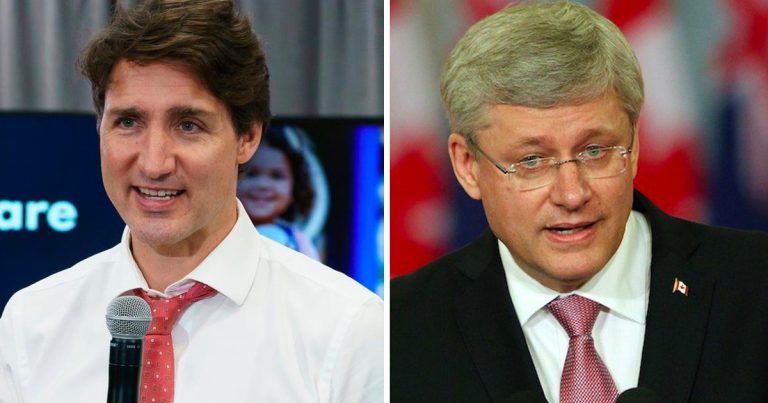
With one week until the election, Liberal leader Justin Trudeau continues to campaign against former prime minister Stephen Harper.
Despite the fact that Harper has been out of federal politics since 2015, the Liberal leader has referenced the former prime minister at least five times while on the campaign trail.
The latest instance was while Trudeau met with supporters in La Prairie, Que. on Sunday.
Reporter: Has the Quebec Premier’s endorsement of the CPC over you hurt your campaign here?
Trudeau: Not at all, Quebeckers are as terrified as I am of giving Stephen Harper another mandate in Ottawa pic.twitter.com/PKBltp8Yhx
In response to a question about Quebec Premier François Legault’s comments that a Conservative government would be better for Quebec, Trudeau said it hasn’t hindered his campaign.
“On the contrary, what I’m hearing from Quebecers is that they are really preoccupied about the idea of going back to Stephen Harper’s targets on the environment. They really worry that weapons might be legal again and that the unanimous desire of the National Assembly of Quebec to ban handguns in Quebec won’t move forward, as it will under a Liberal government, as it won’t under a Conservative government,” Trudeau said.
Last week, Legault told journalists after the federal French language debate that a minority Conservative government under Erin O’Toole would be easier to work with.
“To protect the nation of Quebec, I think we have to be careful with these parties,” he said Thursday morning of the Liberals, NDP and Green Party.
“Those three parties, they are not ready to transfer powers to the Quebec government.”
Additionally, Legault praised O’Toole’s policy commitment to increase federal health transfers to provinces by $60 billion over the next 10 years.
“The Quebec nation wants more autonomy, not less autonomy,” said Legault.
This is not the first instance where Trudeau has used Harper as a bogeyman to scare Canadians into supporting his party.
In August, when he was asked about his handling of the Afghanistan evacuations, Trudeau evaded questions and instead blasted the Harper government’s supposed mishandling of the 2015 Syrian refugee crisis.
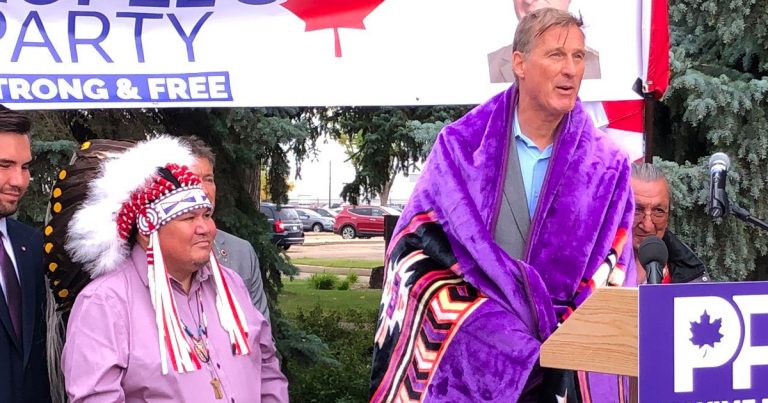
People’s Party of Canada leader Maxime Bernier announced his platform for Indigenous issues at an Edmonton press conference on the weekend, joined by the party’s Indigenous candidates. After the announcement, the PPC platform, which calls for a repeal of the Indian Act and a “freedom”-first approach for Crown-Indigenous relations, Chief Calvin Bruneau of the Papaschase First Nation in Edmonton endorsed Bernier and presented him with a ceremonial blanket.
Liberal elites in politics and the media have a bigotry problem. They suffer from populist-phobia — an irrational fear and hatred of populist protesters.
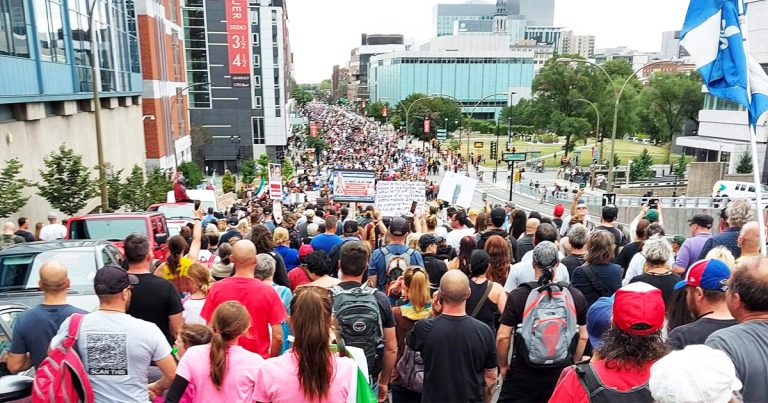
Just look at the way much of the media writes off the tens of thousands of anti-lockdown protesters who have overwhelmed the streets in major Canadian cities throughout the pandemic.
Again last weekend in Montreal, Canadians of all walks of life — of diverse backgrounds and ethnicities — came out to protest against vaccine passports. An estimated 50,000 freedom-loving Canadians were peacefully using their voice to say “enough is enough.”
The media either completely ignore the concerns of these protestors, or like Liberal leader Justin Trudeau, demonized them as “angry extremists.”
Trudeau goes even further in his ruthless attacks against populist protesters.
Trudeau referred to them as “those people” — a phrase similar to the one that got iconic Canadian hockey commentator Don Cherry fired.
Trudeau mischaracterizes them as “anti-vaxxers” and flat out states that they are “racist and misogynistic.” He repeated these accusations multiple times during Thursday evening’s English leaders debate.
Trudeau saved his most passionate attack of the two debates when he unleashed a tirade at a female reporter working for Rebel News.
Trudeau is the worst offender when it comes to populist-phobia, but he is not alone.
The Leaders’ Debates Commission — a government body set up to take the election debates away from private media companies and run it themselves — went out of its way to exclude populist voices.
Rebel News founder Ezra Levant had to sue the Trudeau government for the privilege of allowing his journalists to attend the debate, and People’s Party of Canada (PPC) Leader Maxime Bernier was excluded altogether with no recourse.
This made the Debates Commission look particularly petty given that two polls released on the days of the debates showed Bernier’s party ahead of the other protest parties and even closing in on the NDP for third place nationally.
An Ekos poll released Wednesday showed the PPC polling at 10%, compared to 3% for the Greens, 4% for the Bloc and 16% for the NDP.
In case you thought that was an outlier, another Ekos poll on Thursday showed the PPC at 11% to the NDP’s 16%.
Love or hate Bernier, he is a relevant national figure with a large following who deserves to be heard.
But instead of listening to the valid concerns of a growing number of Canadians who have flocked to Bernier over his anti-establishment attitude and pro-freedom message, the political elite goes out of their way to demonize and condemn these Canadians.
Contrast this with the way the media have treated angry protesters pushing causes on the political left.
Whether it be the “climate crisis” rallies of 2019, led by the angry Greta, or Black Lives Matter protests that were hijacked by far-left calls to “defund the police,” many journalists went out of their way to defend the extremists and insist that riots and looting were actually just peaceful protests.
Once again this past summer when over 50 churches were vandalized or burned to the ground, there were those who told us it was a reckoning, that the destruction of sacred religious spaces wasn’t violence and that the church burnings were “understandable.”
When left-wing protesters are angry, it’s because they’re righteous and passionate. When populist protesters are angry, it’s because they’re fringe extremists, “racist and misogynistic,” and selfishly putting lives at risk.
Liberals have spent years lecturing Canadians on topics of “diversity and inclusion.” Trudeau routinely chastises conservatives and accuses them of marginalizing various groups of Canadians.
All of that political gesturing feels particularly trite given how readily he dehumanizes the populists.
Former Liberal MP Celina Caesar-Chavannes said on Sunday that she will be voting for the Conservative candidate in her riding.
Caesar-Chavannes announced in an interview on “The West Block” on Global News that while she is a Liberal at heart, she has decided to vote for the Conservative candidate for Whitby Maleeha Shahid.
“I’ve never done that in my life,” said Caesar-Chavannes. “But at this particular time, maybe we have to think about doing things differently.”
The former Liberal MP said Canadians have the opportunity to take a different approach to politics this election by voting for the Conservatives. She hopes the Liberals will distance themselves from Prime Minister Justin Trudeau.
In 2019, Caesar-Chavannes resigned from the Liberal caucus citing conflict with the Prime Minister. She met with Trudeau on the same day former minister of justice and attorney general Jody Wilson-Raybould resigned from cabinet in the wake of the SNC-Lavalin scandal.
The SNC-Lavalin scandal saw Trudeau and the Prime Minister’s Office attempt to interfere with Wilson-Raybould’s decision to grant the company a deferred prosecution agreement for a criminal case. Conflict of Interest and Ethics Commissioner Mario Dion found Trudeau guilty on one count of improperly using his position to seek to influence.
Caesar-Chavannes said she cried when she read the excerpt of Wilson-Raybould’s new book.
“I was heartbroken because we keep continuing to reward bad behaviour from a prime minister that won a 2019 election, had a majority and a minority government for six years, and continues to say there’s more to do,” said Caesar-Chavannes. “I really think that rewarding bad behaviour is not something Canadians should do any further.”
Wilson-Raybould’s book, called “‘Indian’ in the Cabinet: Speaking Truth to Power,” will be released on Tuesday. Wilson-Raybould said in the description of her book that she will tell the full story of the SNC-Lavalin scandal.
When asked about Caesar-Chavannes’ comments on Sunday, Trudeau said at a press conference that he wishes her all the best.
“People have a really important choice to make in this election,” said Trudeau. “Mr. O’Toole wants to take Canada back, take it back to 1951, apparently.”