The People’s Party of Canada is currently seeing a surge of support across the country, leading the Greens and the Bloc in many polls. But why is this happening?
One reason might be because PPC leader Maxime Bernier is the only federal leader to oppose the stringent public health measures during the pandemic. He’s an appealing option to many Canadians who oppose lockdowns.
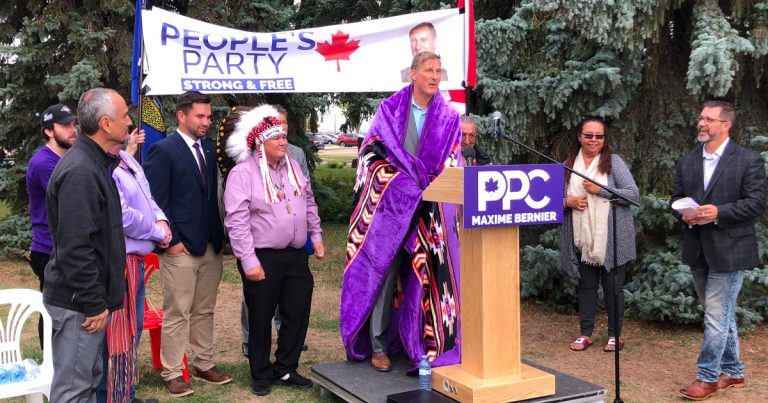
People’s Party of Canada (PPC) leader Maxime Bernier’s message of freedom was endorsed by an Edmonton First Nations chief.
Papaschase First Nation Chief Calvin Bruneau said the PPC’s Indigenous platform is “on the right track,” particularly with Bernier’s commitment to abolish the Indian Act and address the drinking water crisis on reserves.
Chief Calvin Bruneau of Papaschase First Nation presents Maxime Bernier with a ceremonial blanket. Chief Bruneau tells me Bernier’s message of “freedom” resonates with him and First Nations. pic.twitter.com/ultBK6CFFL
Bruneau also noted that Indigenous Canadians and non-Indigenous Canadians alike should be “working together” in pursuit of liberty.
“We lost our freedoms over the years,” Bruneau said. “We’ve been living this for a good 150 years. And Canada in general, has only been experiencing that the last year. It’s something we definitely know something about. With this idea of having freedoms and freedom of choice, especially, that’s what we’ve got to do.”
At a Saturday afternoon press conference in Edmonton, Bruneau presented Bernier with a ceremonial blanket he said represents “health and wellness and good intentions.”
“According to treaty, we’re to be working together and sharing this land,” Bruneau said.
Bernier hosted the press conference alongside four Indigenous PPC candidates in the upcoming election, one of whom, Murray MacKinnon, is a member of Bruneau’s band.
“A PPC government is committed to seeking options to replace the paternalistic Indian Act, which keeps Indigenous peoples in a state of dependency and allows the federal government to control most aspects of their lives,” Bernier said Saturday, proposing a model that would “guarantee equal rights and responsibilities” to promote “self-reliance of communities.”
Bernier committed to ensuring Indigenous communities can benefit from resource and infrastructure projects, but said the real barrier to economic prosperity on many reserves is a lack of property rights.
“There’s not only natural resources. There are other resources also. There are entrepreneurs on reserves that are building businesses,” Bernier said. “It’s about giving them the opportunity to have real economic development by having the right policies. It’s not a top-down approach from Ottawa to the First Nation, and there’s a lot of other First Nations that don’t have any natural resources but are very successful.”
Bernier restated his party’s commitment to instilling property rights on reserves.
Bruneau said this idea can be controversial, but would ultimately be helpful.
“There are a lot of people that are opposed to it, but the thing is, if it could work on a reserve and people can own their land pretty much in perpetuity, I think that would help,” he said.
A former Conservative member of parliament who resigned as the Conservative candidate less than a day before the campaign started is set to endorse the People’s Party of Canada (PPC), True North has learned.
David Yurdiga, a three-term Conservative MP in Fort McMurray—Cold Lake, is throwing his support behind his riding’s PPC candidate, Shawn McDonald.
Yurdiga is scheduled to meet with McDonald and PPC leader Maxime Bernier in Cold Lake, Alta. Monday afternoon.
McDonald told True North this is a huge endorsement for his campaign and the PPC.
“We’re the true conservatives. We’re bringing people home,” McDonald said, noting Yurdiga is likely to bring over traditionally Conservative voters. “People listen to David. He’s a good man. He really supported the area for many years. He did very good in that, and people really value his work.”
Conservative party officials said Yurdiga’s resignation as the Conservative candidate was due to health concerns, though the decision came amid controversy over Yurdiga calling vaccine mandates “tyrannical.”
Yurdiga was swiftly replaced by Laila Goodridge, who stepped down from the Alberta Legislature to seek the federal seat.
A PPC source told True North almost all of the members of the federal Conservative and provincial United Conservative Party association boards in the riding have switched their support to the PPC.
Earlier in the campaign, Yurdiga shared a photo with McDonald to Facebook, acknowledging McDonald had thanked him for his service as an MP. He stopped short of formally endorsing the PPC in the post, however.
In a statement to the Buffalo Tribune about the photo, Yurdiga cryptically said the election was “not about Ottawa politics,” but rather “the Charter of Rights and Freedoms and the constitution,” citing his opposition to vaccine mandates and vaccine passports.
In 2019, Yurdiga carried the riding with just shy of 80% of the vote, with the PPC candidate getting 3.3%. However, 2021 campaign polling reveals a significantly stronger showing for the upstart People’s party this time around, particularly in Alberta. An Ekos poll this week had the PPC in second place in Alberta with 19%, though the same poll had the Conservatives at 52%.
Yurdiga was first elected in a 2014 by-election in the former Fort McMurray—Athabasca, replacing Brian Jean, who went on to lead the now-defunct Wildrose Party in Alberta.
The Liberal Party of Canada has received an endorsement from Generation Squeeze, an organization that has called for a home sales tax.
In a statement issued by the Conservative Party of Canada, the Conservative candidate for Carleton Pierre Poilievre said he isn’t surprised by Generation Squeeze’s endorsement of the Liberals.
“Given Generation Squeeze’s support for a home tax, it’s no wonder the organization has endorsed Justin Trudeau and the Liberal Party of Canada,” said Poilievre.
“Generation Squeeze is a vocal advocate for taxing Canadians’ homes. In fact, this organization was asked by the Trudeau government to research how best to tax the sale of Canadians’ principal residences.”
Generation Squeeze gave the Liberals the highest score on their housing affordability scorecard released on Wednesday. No party received a perfect score, but the Liberals were the closest to meeting this organization’s goal of ensuring all Canadians can afford a decent home by 2030.
The organization’s guiding principles consist of adequate housing being a human right, homes first, investments second and making room for everyone.
Party platforms were analyzed based on 15 criteria. Parties were assigned points based on their platform’s response to each of these criteria. Scores range from +1 to -1. Parties could receive up to 16 points with their plans for housing affordability. The Liberals earned 10.5 points
Generation Squeeze has called for the government to raise taxes on property wealth, as they claim it will lead to more affordable housing. They believe the tax increase can be done through higher annual property taxation, deferrable surtaxes or capital gains taxes.
The Liberals have not promised to implement a home sales tax, but the Conservatives believe Trudeau cannot be trusted.
Justin Trudeau’s candidate admits the Liberals have a plan to tax the sale of your home. It’s time for change. pic.twitter.com/QpJnuKvotl
On Thursday, the Liberal candidate for New Brunswick Southwest Jason Hickey admitted the party may tax people who are selling their homes if Prime Minister Justin Trudeau is re-elected on Sept. 20.
The Conservatives posted a video of Hickey speaking about a potential home sales tax on Thursday.
“But of course, anyone selling their primary residence, if you do make money on that, unfortunately you will have to pay tax on that,” said Hickey. “I wouldn’t agree to that either, but it’s what we have to do.”
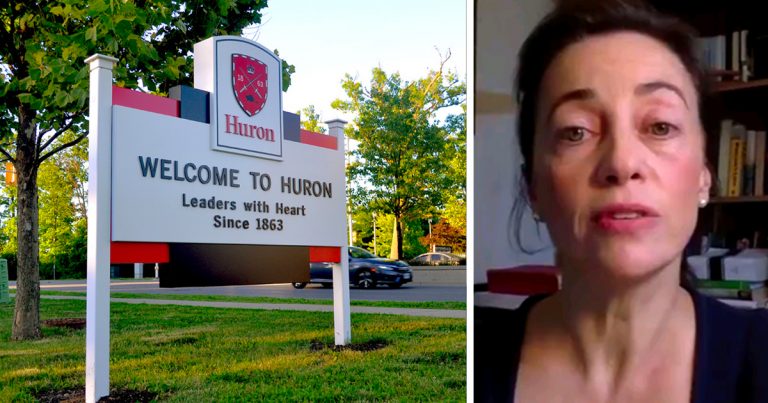
A professor who has taught at Ontario’s Huron University College for 20 years has been suddenly placed on leave and banned from accessing her campus because she does not want to get the COVID-19 vaccine – her university has a mandatory vaccination policy in place for all faculty, staff and students.
True North fellow Lindsay Shepherd discusses this case of coercion on campus.
Twenty years ago on this fateful day, the world was rocked by one of the evilest terror attacks perpetrated on Western soil.
September 11, 2001, began like any other ordinary morning in the heart of New York City.
Traffic was blaring through the busy streets of Lower Manhattan as throngs of people rushed to work and school children boarded their school buses.
Unbeknownst to them, a dozen kilometres above ground, 19 al-Qaeda terrorists were in the midst of hijacking four commercial airliners with the single goal of killing as many innocent Americans as possible.
Their intended targets were picked with the purpose of causing mass casualties and hitting the US where it hurt – the heart of its financial district, the World Trade Centre.
Nearly 3,000 innocent men, women and children including 24 Canadians lost their lives at the hands of Islamist terrorists that day.
At approximately 8:46 a.m. American Airlines Flight 11 crashed into the World Trade Centre’s North Tower, killing everyone on board. Nearly 15 minutes later at 9:03 a.m. United Airlines Flight 175 dealt another devastating blow to South Tower.
On the ground, emergency services struggled to contain the situation and evacuate the remaining civilians from the two buildings as it was becoming clear to the world that America was under attack.
Tragic scenes broadcast on television depicted desperate people climbing out of windows to escape the inferno inside while others took the heart-wrenching decision to jump to their deaths below.
“Today, our fellow citizens, our way of live, our very freedom came under attack in a series of deliberate and deadly terrorist acts,” Bush told the nation that evening.
Within less than two hours, structural damage and fires weakened both buildings causing them to collapse which also triggered the 7 World Trade Center building to give way.
Immediately, Canadians jumped into action.
Operation Yellow Ribbon commenced at Gander International Airport, allowing 38 different flights to divert their route and land in Newfoundland, Canada, with the intention of clearing US air space from any further threats.
The Canadian Armed Forces also launched Operation SUPPORT, housing and feeding stranded travellers at numerous bases located across Canada.
Meanwhile, Canadian pilots joined up with NORAD to provide emergency preparedness support to American pilots.
Despite the horrible destruction caused by the actions of a handful of terrorists, the full force of human compassion and charity blossomed after 9/11. Canadians, Americans and the international community arose from the ashes of that day with a bond that was greater than any that had gone before.
The National Police Federation (NPF) is calling on the next federal government to increase funding for the RCMP after years of flatlining resources.
According to the NPF, which represents 20,000 RCMP officers across Canada, demand for police services has grown 20% since 2017, however, federal government support has failed to meet demands.
Despite the increasing pressure to meet expectations with limited funds, the RCMP has been able to curb rural crime in Alberta’s remote communities.
“When governments and the RCMP work together on local issues and resources, such as hiring more officers as was the case for the Crime Reduction Strategy, it creates a measurable improvement,” said NPA President Brian Sauvé.
“It all goes back to resources. The measures already in place were just a stepping stone. More investment is needed to address resource issues. Oftentimes Members are serving massive areas. For example, it can be a three-hour drive to respond to an emergency incident. Response times decrease with added resources.”
“One of the issues driving this proposed change is the notion that rural crime can be fixed with a better community model, but what’s needed is more resources. Improvements from the rural Crime Reduction Strategy makes that clear,” Sauvé added.
While on the campaign trail, the Conservatives have blasted the Trudeau government for failing to properly equip police with needed resources and ignoring issues important to voters in rural communities who are disproportionately impacted by crime.
“I asked the prime minister a question on rural crime and I got an answer that was a nothing answer. I challenged (Public Safety Minister) Bill Blair on rural crime… I’ve sent letters recently to the minister of agriculture on the drought conditions and the challenges to the ranchers,” said Conservative Candidate Gary Vidal in an August interview on the matter.
The Liberals have claimed that under the former conservative government police were underfunded and had to close investigations as a result of cuts.
Most recently, Liberal candidate Bill Blair falsely claimed that due to cuts, the RCMP had to close hundreds of organized crime investigations. A True North fact check found Blair’s statements to be untrue.
In reality, Public Safety Canada noted in 2013 that it had exceeded and met performance targets for that year and that crime rates actually fell under the Conservatives.
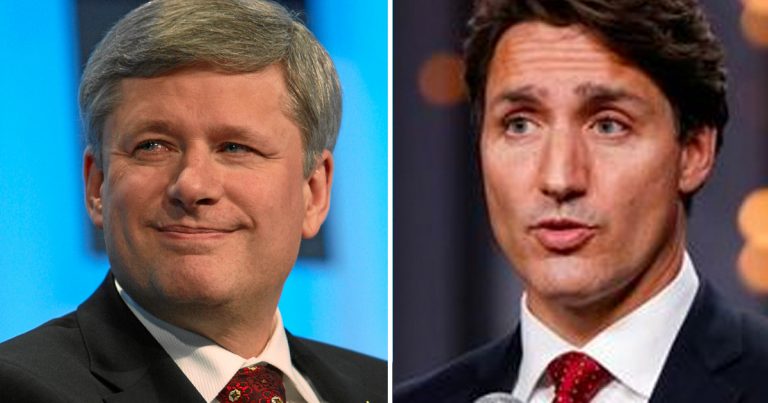
Liberal Party Leader Justin Trudeau couldn’t help but take multiple jabs at former prime minister Stephen Harper during Thursday night’s English-language Leaders Debate.
On three occasions, Trudeau blamed the Harper government for various issues including his government’s inability to free the two Michaels imprisoned in China, his failure to reduce carbon emissions and the Winnipeg National Microbiology Laboratory controversy.
Harper has not been in power since Trudeau was first-elected prime minister in 2015.
After being accused of letting the two Michaels down by Conservative Party Leader Erin O’Toole, Trudeau deflected by claiming Harper’s strategy on China was unsuccessful.
“If you want to get the Michaels home, you do not simply lob tomatoes across the Pacific, that is what Mr. Harper tried for a number of years and didn’t get anywhere,” said Trudeau.
When asked about the Liberal government’s poor performance on reducing pollution over the last six years by debate moderators, Trudeau lashed out at Harper who he accused of not believing in the fight against climate change.
“We inherited a government from a Conservative that did not believe in the fight against climate change and we had a lot of catching up to do but what we were able to do in 6 years was to bring a national price on pollution, ban single-use plastics, move forward in protecting more of our coasts, oceans and rivers than any government in history, ” said Trudeau.
Later on, while he was fielding questions from reporters, Trudeau also hinted that responsibility for his own failures lied with the former Conservative government.
In response to a question on why his government refused to disclose top secret files on the firing of two federal scientists at the National Microbiology Laboratory in Winnipeg believed to have shared classified information with China, Trudeau also suggested that he was dealt a bad hand by the Harper government.
“As a commitment we made in 2015, we moved forward something that the Conservatives had always resisted, oversight by parliamentarians over our national security agencies,” said Trudeau.
“And the National Security Committee of Parliamentarians actually works and we granted them full access to all of the highly secure documents.”
This is not the first time that Trudeau has evoked the memory of the Harper government to avoid answering simple questions.
While on the campaign trail, Trudeau referenced Harper on at least four different occasions ranging from topics on climate change, Afghanistan and the Liberal government’s inaction on lifting the gay blood ban.
The Federal Leaders Debate was a colossal waste of time. It was heavy on leftist pet causes and light on any economic or COVID-related issues. In other words, it was typical insider Ottawa terribleness that turns Canadians away from engaging in politics.
Plus, CBC’s fact-check bends itself into a pretzel to defend Trudeau’s spin and the Canadian Press highlights “undecided voters” — all fringe leftists who hate conservatives.
It’s Fake News Friday on The Candice Malcolm show!
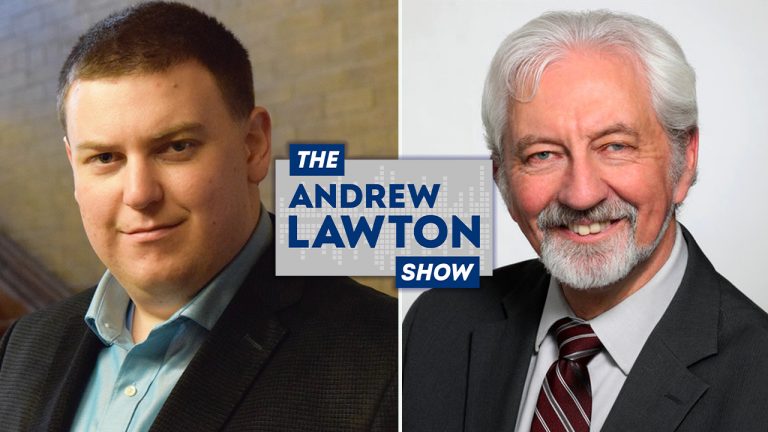
There is only one pro-life party in Canada and it’s the Christian Heritage Party, leader Rod Taylor says. He joined the Andrew Lawton Show to explain why he thinks Christian values are needed in Canadian politics.