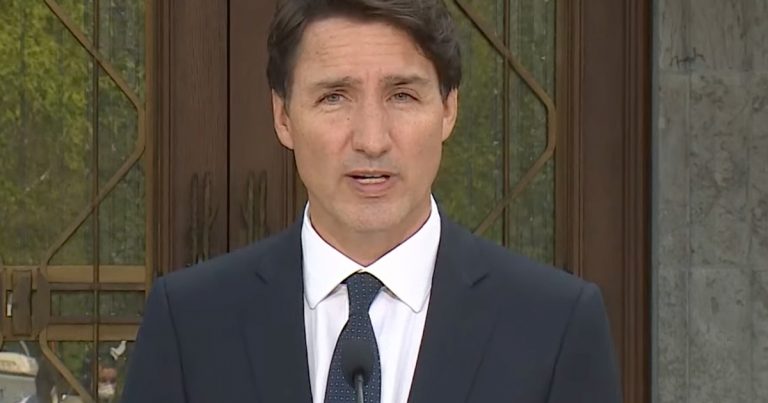
Prime Minister Justin Trudeau has officially asked Governor General Mary Simon to dissolve Parliament and formally launch the 2021 federal election.
Trudeau made the announcement on Sunday, stating that Canadians can expect to head to the polls by September 20.
“I have just had a talk with our Governor General and she has accepted my request to dissolve Parliament. Canadians will therefore vote on September 20th,” Trudeau said at a press conference at Rideau Hall.
“After making it through 17 months of nothing like we’ve ever experienced, Canadians deserve to choose what the next 17 months and 17 years and beyond will look like.”
While parliament was still in session, Trudeau insisted on several occasions that he was not interested in holding an election during the COVID-19 pandemic and suggested that opposition parties like the Conservatives would force his hand.
“Our priority as a government is going to be helping people get through this pandemic and I hope the different opposition parties will help us … it’s not in our interests to have an election, people want us to work together to help them,” said Trudeau in February.
Additionally, Trudeau stated in a year-end interview with CBC’s Rosemary Barton that he was “not eager for an election” and that winning another mandate was “not our focus right now.”
In reality, having survived several votes of non-confidence this year, the decision to force Canadians to the poll was the prime minister’s alone.
Canadians can expect COVID-19 management and the state of Canada’s finances to be some of the top issues during the 2021 election.
Debates around the path to economic recovery and the Liberal government’s recent attacks on free speech like the anti-internet legislations, Bill C-10 and Bill C-36, will also likely rear their head in the next few weeks.
To date, the Liberals have been leading the polls ahead of the Conservatives but some signs point towards voter dissatisfaction with the prime minister’s performance.
One recent poll by Leger found that Canadians were divided on their approval of Trudeau. In total, 49% of Canadians said that they were either dissatisfied or very dissatisfied with the prime minister, while 46% of Canadians said they were satisfied or very satisfied with him.
It goes without saying that Prime Minister Justin Trudeau has had a controversial two years while heading a minority government, most of it during the COVID pandemic.
He was the subject of a third ethics probe related to the WE charity scandal.
The first two probes – following a vacation on the Aga Khan’s private island in the Exumas and the SNC Lavalin scandals – both found him in conflict of interest.
His pick for governor-general, Julie Pyette, resigned amid findings from a workplace review that she ran a toxic and verbally abusive office.
That is all aside from his widely criticized mishandling of the COVID pandemic.
The missteps are too many to list but one of the key mistakes that opponents of the Prime Minister are likely to cite was his government’s botched the acquisition of COVID vaccines – an indefensible failure given that vulnerable Canadians were made to wait precious weeks to get protected.
Early in 2021, while the United States and other countries such as Israel had vaccinated a significant portion of their population with at least the first dose of the leading Moderna or Pfizer vaccines, Canada was still scrambling to obtain supply.
This was mostly due to the Trudeau government’s obsession with a deal with a China manufacturer, which fell through – leaving Canadians in the lurch.
When supply finally trickled in, the provinces were forced initially to book the second dose a risky four months after the first to ensure more people got their first shot.
Now would-be travellers – who mixed vaccine brands, due to urging from the Trudeau government – are finding they may not be permitted to enter certain countries.
The government’s expensive and highly inefficient hotel quarantine – which in large part punished snowbirds and already vaccinated travellers – came one year too late. It was put into place in February of this year after hundreds of planeloads entered Canada from international destinations with infected passengers.
The federal deficit for 2020 topped a shocking $380-billion bringing the debt to an obscene $1-trillion – after the Trudeau government spent with impunity on the pandemic, including the unaccountable CERB program.
But is it a case of how quickly voters forget?
Are some Canadians far too entitled and want the government to take care of them from cradle to grave, no matter the cost implications?
Or is it that the opposition has struggled to find a leader who resonates with swing voters, largely in the country’s urban centres?
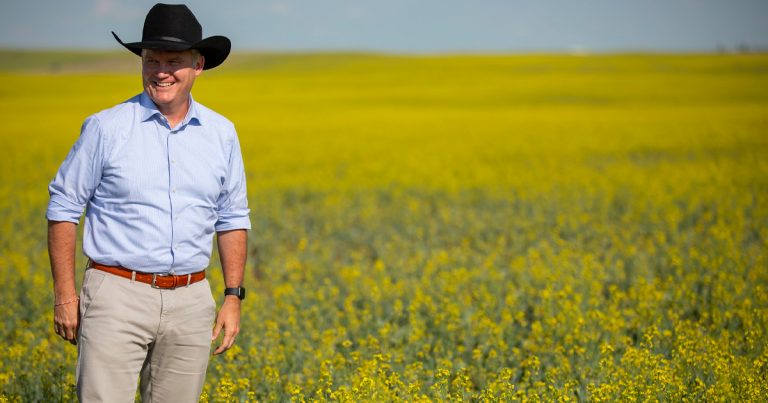
First there was Conservative leader Andrew Scheer and now there’s Erin O’Toole, still a relative unknown across Canada.
They are both perfectly nice articulate men, though on the bland side, and certainly don’t display the overt narcissism of our current leader.
But I would bet that many voters – outside of the political junkies – have no clue what O’Toole stands for and why he’d make a better PM, mostly because he hasn’t yet articulated why.
I suspect O’Toole would not embarrass Canadians on the world stage as Trudeau has.
I have to believe he’d keep a far tighter rein on spending too.
But like Scheer, O’Toole didn’t effectively play the role of a hard-nosed opposition leader, most especially during the pandemic.
Trudeau gave him plenty of fodder – the vaccine botch-up alone – to make himself known and to prove that he’d do things differently. Never mind the fact that Trudeau’s reliance on China for the vaccine cost lives.
What I, and others, remember is his childish port-a-potty video in February, when he should really have been absolutely indignant about the vaccine issue. That video was cringeworthy.
What Canada needs right now is a leader who is not afraid to stick to the core values of ordinary Canadians – whether it be tackling our outrageous deficit, not being governed by special interests or proving to us that accountability and free speech is really important.
But when O’Toole introduced a carbon tax, or is over-the-top in his efforts to prove he’s pro-LGBTQ, or is busy jettisoning preferred candidates into ridings (despite insisting nominations are open and fair), Canadians can’t help but think he stands for very little except for being a nicer alternative to the current Prime Minister.
True, the legacy media, as always, have a shameless double standard with Conservative leaders, ignoring many stories that would make them look like leaders while giving endless airtime to and lobbing softball questions at Trudeau.
Perhaps it is as many say, that O’Toole is getting bad advice.
Still, I am left wondering why Conservatives always return to Plan A – a safe leader who doesn’t inspire and who feels he has to virtually sacrifice his principles to be winnable.
This week, arbitrarily detained Canadian Michael Spavor was sentenced by a Chinese court to 11 years in prison. How will Canada deal with the Chinese regime moving forward? Will Michael Spavor and Michael Kovrig ever return to Canada safely?
In order to deal with China, Canada needs to understand what its starting points are.
Anthony Furey goes over the importance of China’s notorious Document 9.
The federal bureaucracy is running a $2.2 million ad campaign promoting the Trudeau Liberals’ firearms record, True North has learned.
An official with Public Safety Canada, the department responsible for the 30-second “Taking on Gun Violence” commercial, said its purpose was to “raise awareness of the rise of gun violence in Canada, as well as highlight actions being taken to help address the issue.”
The ad has been placed on radio and television stations across the country, as well as digital platforms.
The $2.2 million campaign budget includes only the ad buy and not the cost to produce the spot.
“Gun violence has risen in recent years across Canada,” the commercial’s narrator says. “Shootings have become more common. Many Canadians feel threatened in their own communities. The Government of Canada is taking action to help keep Canadians safe by banning assault-style firearms, strengthening gun control laws, and targeting gang violence and illegal firearms trafficking. By working together, we can reduce gun violence.”
The claim of banning “assault-style firearms” is a reference to the order-in-council signed by the government in May of last year, prohibiting more than 1,500 firearm variants, including AR-15 models. Prime Minister Justin Trudeau said the affected firearms serve only to “kill the largest amount of people in the shortest amount of time,” though the ban has targeted collectors, sport shooters, and licensed firearm retailers.
Genuine assault rifles – those capable of automatic fire – have been prohibited since 1977. The government advertisement adopts the Liberal messaging used to promote the order-in-council.
The Public Safety Canada spokesperson said the commercial is educational, not partisan.
“The marketing campaign seeks to reach all Canadians on firearms issues, not just firearm owners; address misconceptions; provide easy access to firearm-related information; and strengthen the understanding that we can all be part of the solution,” he said.
The spokesperson added that the commercial will be suspended the day the next election campaign commences, as required by government advertising rules.
It is impossible to separate the political agenda from this form of government advertising, one taxpayer advocate says.
“The government shouldn’t be spending a tonne of our tax dollars in the lead up to an election trying to sell taxpayers on an ineffective and expensive policy,” said Canadian Taxpayers Federation federal director Franco Terrazzano. “The government has already spent millions of dollars on its buyback scheme without buying a single firearm. Prime Minister Justin Trudeau’s gun buyback is showing all the signs of a taxpayer boondoggle.”
In 2015, Justin Trudeau’s Liberals criticized then-prime minister Stephen Harper’s government over ad spending.
Should Prime Minister Justin Trudeau call an early election as is expected in the coming days, taxpayers will likely have to dish out an estimated $610 million so they can head to the polls.
The hefty price tag of a pandemic election will mean that 2021 will be the most expensive election held in all of Canadian history.
Estimates by Elections Canada were first reported by CityNews.
In comparison, the 2021 election will be approximately $100 million more than the 2019 election, which took place shortly before the COVID-19 pandemic began.
For months, Trudeau has insisted that his government was not interested in having an election. However, recent reports indicate that Trudeau will likely announce a snap election this Sunday.
Opposition leader Erin O’Toole has repeatedly spoken out against holding an election during the pandemic.
“My biggest concern right now is the potential fourth wave of COVID-19,” O’Toole said.
“We shouldn’t be rushing to an election. Mr. Trudeau always seems to put his own self-interest ahead of the interest of Canadians.”
The hefty pandemic costs of an election will push Canadian taxpayers even further into the red. Under Trudeau’s watch, Canada’s federal debt has surpassed $1 trillion dollars.
Additionally, according to the Parliamentary Budget Officer, the federal government’s deficit will likely not be paid off until 2070 due to the extensive spending programs brought on by the Liberal government during COVID-19.
“Overall, it paints a picture of unsustainability for finances, both federal and provincial combined,” Parliamentary Budget Officer Yves Giroux said.
“And that is the big elephant in the room that nobody seems to be worried about or wanting to address.”
Days before the 2021 election campaign is set to begin, the Liberals are banking on Canadians supporting efforts to mandate vaccination in more and more spaces, such as in federally-regulated workplaces, and on planes and trains. The Conservatives can’t be afraid of this issue and must clearly stand up against it, True North’s Andrew Lawton says.
Also, prominent social conservative Pierre Lemieux has been barred from running for the Conservatives, and Jonas Smith, the Conservative party’s candidate in Yukon, has been disqualified for opposing vaccine mandates. Plus, a look at the NDP’s cliched “tax the rich” platform.
Quebec Premier François Legault is refusing to have an open democratic debate about vaccine passports in the province’s legislature because he claims it would expose Canadians to “conspiracy theories.”
Legault mentioned a “certain” group of people, whom he refused to name, as the reasons behind his fears.
“I don’t want certain people – whom I won’t name – to come explain that there’s a conspiracy, it’s not good to be vaccinated, that in the end, we’re putting a microchip in people’s arms to follow what they’re doing, stories like that. I don’t think we need that in Quebec,” said Legault without giving any examples.
This week, Legault announced a sweeping vaccine passport program that would bar unvaccinated Canadians from accessing so-called “non-essential services” like sporting events, restaurants and bars.
Legault also pointed to support for vaccine passports among opposition parties including Quebec solidaire and the Parti Quebecois as a motivating factor.
“For the past 18 months, Francois Legault has been governing by decree and refusing to collaborate with the opposition,” said Quebec solidaire spokesman Gabriel Nadeau-Dubois.
“Today, he is pushing the envelope to the point of preventing the elected representatives of the Quebec people from debating a measure as sweeping as a vaccine passport.”
Additionally, Legault claims that Quebec’s population “agrees” with his vaccine passport system. As proof, Legault pointed to the rate Quebec citizens have been getting vaccinated.
Critics of the vaccine passport program in Quebec have claimed that it will be very difficult to enforce and could unnecessarily burden businesses that are already suffering.
Quebec’s vaccine passport decree has already faced some hurdles since first being announced in August.
Reports have indicated that numerous fraudsters attempting to sell fake COVID-19 passports and vaccination certificates are already taking advantage of the system in order to profit.
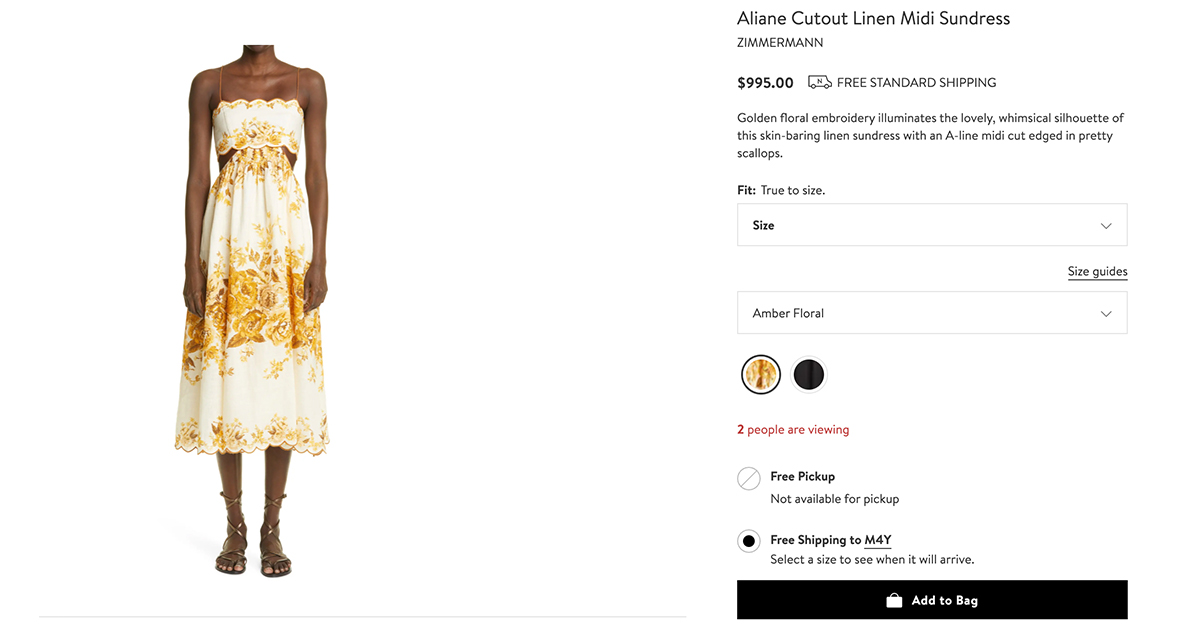
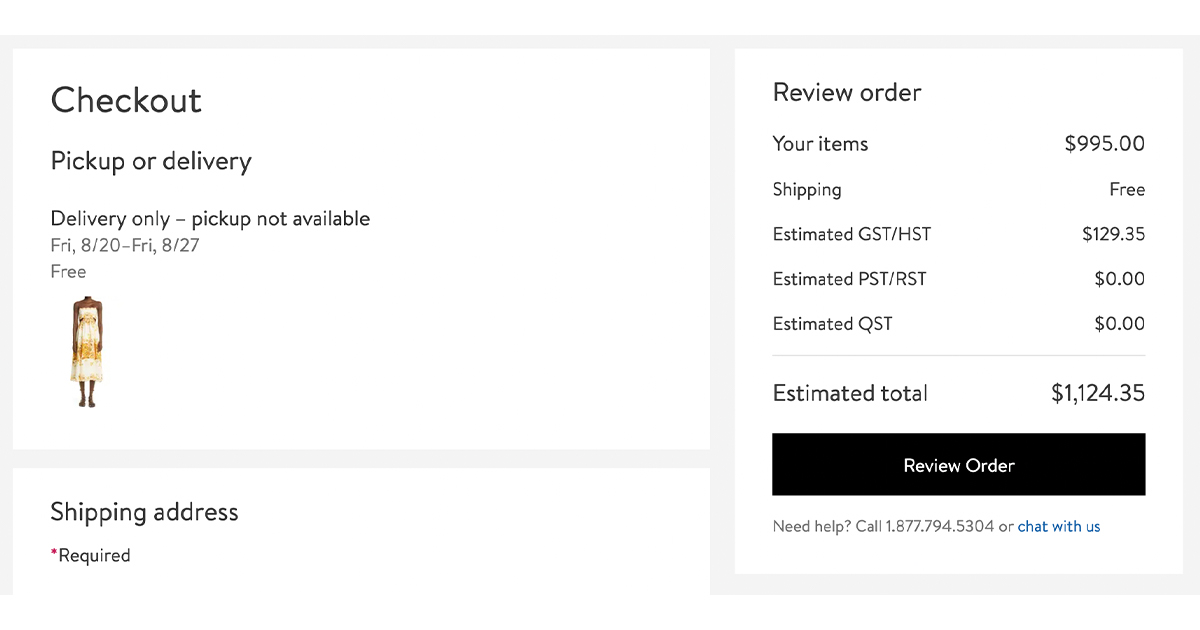
As Jagmeet Singh’s NDP unveiled their plan to tax ‘luxury goods’ last night, Singh’s wife, fashion designer Gurkiran Kaur Sidhu, was wearing a $1,124 dress in the couple’s baby announcement photos posted on social media.
The dress, made by designer luxury brand Zimmermann, is available online at Nordstrom Canada and retails for $995 — $1,124 including taxes.
Zimmermann is a luxury Australian fashion brand founded in 1991 by sisters Nicky and Simone Zimmermann. It is popular among wealthy American celebrities and billionaires, including Kendall Jenner, Beyoncé, Chrissy Teigen, Jessica Alba and Paris Jackson, who have all been spotted wearing Zimmermann dresses.
Zimmermann dresses typically sell for anywhere between $500 to $2650.
The photo was shared on social media just hours before the NDP released its election platform — which included several references to raising taxes on the rich and imposing new taxes on luxury items.
The platform, which is uncosted, proposes sweeping new changes to the tax system and focuses primarily on hiking taxes for “super-rich” Canadians.
Notably, the NDP wants to impose a new tax on “luxury items.”
“A New Democrat government will also boost the top marginal tax rate two points, put in place a luxury goods tax on things like yachts and private jets, and ask the very richest multi-millionaires to pay a bit more,” the platform states.
In February 2018 Toronto Life wrote a profile on Singh, celebrating his expensive shopping habits and collection of luxury items.
The article talks about his lavish lifestyle and his own treasure trove of luxury items, including a BMW, multiple Rolex watches, expensive designer suits and an “absurd” collection of bikes.
“He wears bespoke suits in the slim British style—his favourite is a brown tweed with cobalt-blue stripes, designed by a tailor in New Delhi, which he often pairs with a millennial-pink turban. He owns two Rolex watches, an Oyster Perpetual Datejust and a Submariner (both were gifts); a crimson BMW coupe; and six designer bicycles.”
True North reached out to the NDP to see if the Zimmermann dress or Singh’s Rolex watches would be taxed under a proposed NDP luxury tax regime, but did not receive a response in time for publication.
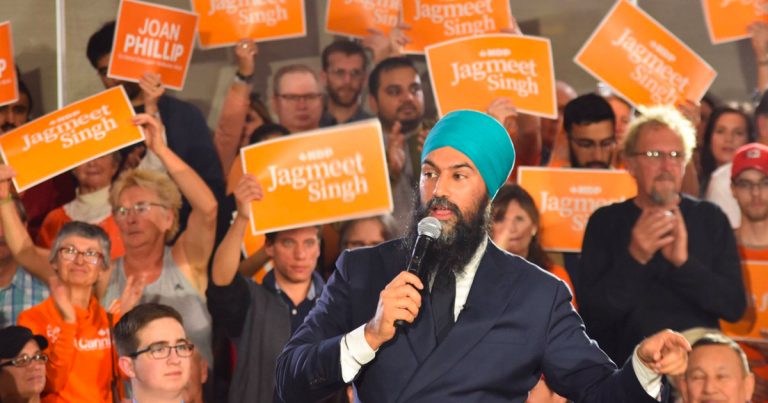
NDP leader Jagmeet Singh unveiled his party’s platform on Thursday ahead of an expected election call this weekend.
While the NDP platform promises billions in new spending, the platform is uncosted.
Jampacked in the 115-page platform, which shares many similarities with the party’s 2019 promises, are a wealth tax, a promise to lower the voting age to 16 and pledges to fight “systemic racism.”
“For the highest income individuals in Canada (those making over $210,000), we will increase the top marginal tax rate by two points to 35 percent. Those at the very top – super-rich multi-millionaires with over $10 million in wealth – will be asked to pay more towards our shared services with a 1% wealth tax,” the platform reads.
The party claims that such a tax would generate “$10 billion” in revenue to redistribute towards the NDP’s costly programs.
Additionally, the NDP wants to introduce an “excess profit tax” to tax large Canadian companies who profited during the pandemic.
“That’s the vision that we have for Canada: Making the ultra-rich pay their fair share, so we can invest in people,” said Singh.
Additionally, Singh promised free access to mental health services for uninsured Canadians which would be further expanded. The NDP platform also promises student debt forgiveness up to $20,000 and a national childcare, pharmacare and dental care program.
Estimates by Fraser Institute show that a national pharmacare program could cost taxpayers anywhere between $15 billion and $32.7 billion to achieve.
On top of that, the research institute Cardus estimated that a national childcare policy could cost an additional $36.3 billion on the upper end.
In their platform the NDP also pledged to combat “online hate” and other forms of discrimination.
“It’s time for the federal government to tackle white supremacism, terrorism and the growing threat of hate crimes targeting communities in Canada. We will begin work immediately to ensure that all major cities have dedicated hate crime units within local police forces, and to convene a national working group to counter online hate,” the NDP platform reads.
A report from the United Nations’ Intergovernmental Panel on Climate Change signals “code red for humanity,” the UN Secretary General says. But it’s filled with the same projections and models that have been wrong time and time again, ClimateDepot.com publisher Marc Morano says on The Andrew Lawton Show. The real threats are the policies alarmist governments use reports like these to impose.