69% of Canadians think country is “broken”

0

In the midst of a national crisis, more than two-thirds of Canadians think the country is broken right now.

This is from a new poll by DART & Maru/Blue commissioned by the National Post. In Alberta, the number is even higher with 83% agreeing that “Canada is broken.”

These findings come as Canada struggles to overcome the crisis sparked by nation-wide illegal blockades, support for Prime Minister Justin Trudeau and his government has been steadily declining.

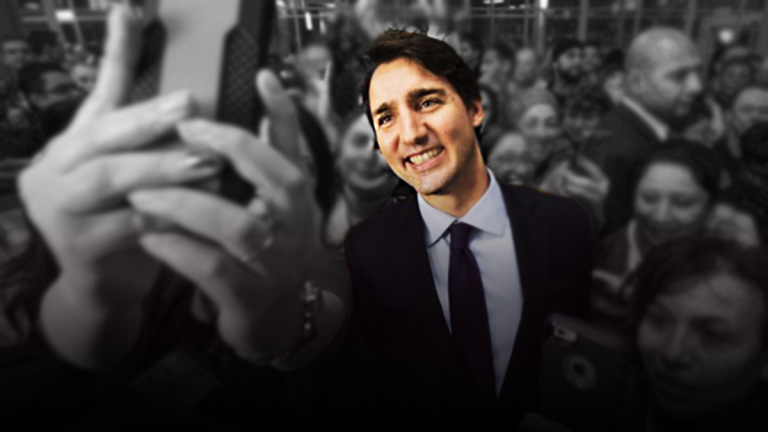
In the same poll 63% of Canadians said Justin Trudeau is not governing well, while only 37% approve of his job performance.

Provincial governments fared better in popularity compared to the federal government, with only 55% of people thinking that their respective provinces were headed in the wrong direction, while 45% thought they were headed in the right direction. 

DART pollster John Wright said that he was “astonished” by the results of the poll.

“This is one of the few polls that I just looked at — and I’ve been doing this for 30 years, so I did polling around the Oka Crisis — I was astonished when I saw some of these numbers, but I’m not surprised,” said Wright.

With regard to Trudeau’s handling of the blockades, only 27% of Canadians thought he was doing a good job dealing with the situation. On the other hand, 45% of people approved of the way their premiers have responded.

Rail companies, the provincial police and the RCMP received the most support from Canadians in their handling of the situation. 67% of people said the rail companies were doing a good job, another 57% approved of the provincial police’s performance, while 55% believed the same about the RCMP.

Canadians overwhelmingly support swift action for the illegal rail blockades. Of those polled, 69% support consequences for “any group that blocks rail services.”

More people also blame the Liberal government for the situation than any other group. 42% of Canadians think that Ottawa is the most responsible, followed by 27% who believe the blame squarely lies on the shoulder of Wet’suwet’en hereditary chiefs, and another 11% who blame environmental protesters.

“People are truly frustrated with the inability of their leadership to come together and recognize that human beings are being affected by their decisions and that they’re not simply voters,” said Wright.
KNIGHT: RCMP Commissioner misses the point of her job

0

We are witnessing a period of lawlessness in Canada and increasingly, police forces who are declining to do their duty. 

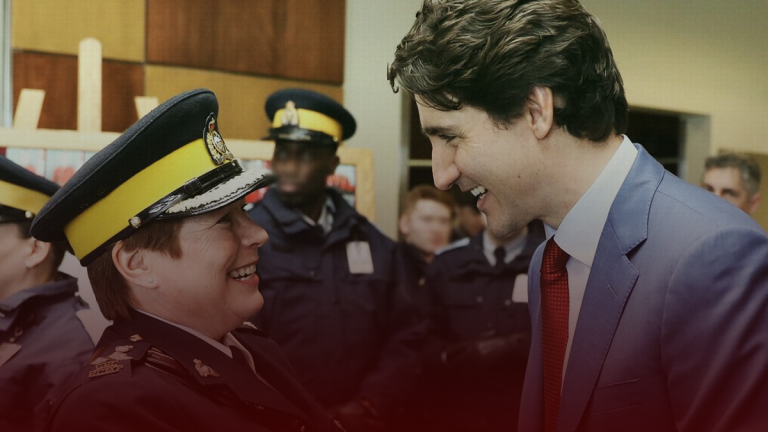
I don’t blame the men and women in uniform at the sharp end of things, but given the comments of the Commissioner of the RCMP Brenda Lucki who said this week that “When dealing with indigenous protests, enforcement is the last option for the police.” 

Um, what? 

Firstly, why should indigenous protests be treated any differently than any other protest? 

Secondly, the bulk of these protests and blockades are not indigenous. 

Thirdly, they are called law enforcement officers for a reason. 

Let’s see if we can break this down for the Commissioner. Parliament enacts laws and the police enforce those laws. It really is pretty simple.  Or at least it should be. 

It took the OPP nearly a week after serving the Tyendinaga blockaders a court injunction to actually do their job and enforce it. Since then, we have seen pockets of so-called protesters committing acts of domestic terrorism against trains passing through that area – which I should add is not First Nations territory. 

Throwing things at moving trains is beyond stupid, but it is also criminal. Setting fires on or alongside the train tracks is also illegal. To watch a video of OPP officers standing on an overpass watching the illegal activity and doing nothing is absolutely offensive and should offend every Canadian. 

Then, to hear the Commissioner say what she did is stunning. What in the world does she think is the job of the RCMP? Apparently, she and the Commissioner of the OPP are in alignment in keeping their members muzzled snd neutered. 

While it’s fair to say that the job of a police officer has changed over time since I carried a badge and a gun, the salient raison d’être for a police officer has not changed. They exist to enforce the law and it is not a last resort, it is the primary focus of every police officer. 

In my opinion, Commissioner Lucki was an affirmative action appointment by an incredibly weak Prime Minister. She doesn’t have the resume to be a leader of a modern policing organization and she proves it every day. 

She is the subject of at least two complaints of obstruction of justice by one retired member and one serving member. The complaints are being investigated by an Assistant Commissioner named Stubbs who undoubtedly will have to tread very carefully to navigate the rough political waters that come with investigating a criminal complaint against one’s boss. 

But, and the salient point is that A/Comm. Stubbs is investigating to take enforcement action. Why? Because that is his job and the job of every police officer despite the nonsense spouted by Commissioner Lucki. 

As we go through the so-called Wet’suwet’en support protests across the nation and blockades spring up and there is some limited enforcement action, the Commissioner of the national Police Force needs to be on the same page with the folks like the chief of the Vancouver Police Department, Adam Palmer. Palmer has not tolerated breaking the law over the past three weeks of blockades and protests.

Commissioner Lucki could and should learn a lesson from Chief Palmer about what her job is and why she gets a paycheque.

Government predicts “climate refugees” will be coming to Canada

0

An internal government report has predicted that Canada will have to deal with surge of “climate refugees” in the near future.

First reported by Blacklock’s Reporter, the 2019 “Report Diagnostic: Technology, Creativity And The Economy” says Canada will need to quickly adapt as climate change forces people around the world to migrate.

“Over the next decade the world will face significant social, political, economic and environmental transformations that will have a profound impact on Canadians,” the report reads.

“The world is changing and we must consider changing how we operate. Nimble, experimental options are needed, but we know that change takes time.”

A “climate refugee” is a hypothetical term created by activists to describe someone who may have to leave their home due to the negative effects purportedly attributed to climate change.

Currently, no one in the world holds the status of climate refugee, and the United Nations has said the term climate refugee “does not exist in international law.”

Nevertheless, the Canadian government is already planning on accepting several in the coming years.

Policy Horizons Canada, federal government-run think tank, wrote a report in 2016 predicting that climate change will have disastrous effects across the world by the end of the decade.

“Extreme drought, rising food insecurity and water scarcity in some regions of the world may have important impacts over the next ten to fifteen years including regional conflicts, spread of disease and viruses, and rising commodity prices,” the report reads.

Policy Horizons Canada wrote that Canada would have a lot to gain from accepting climate refugees.

“Even companies are evaluating their exposure to the rise in extreme weather events and are searching for climate-proof regions for their production facilities,” the report said.

“Canada has the opportunity to become a preferred destination for climate refugees as well as companies trying to reduce their supply chain exposure to the risks of climate change. Canada may also have an opportunity to become an important producer of water-intensive goods in the future.”

Despite claiming there would be significant benefits to Canada through opening its borders to climate refugees in the report, Policy Horizons later admitted it did not research what exactly those benefits would be.

“We have not explored the types of economic opportunities that could be harnessed from climate refugees that come to Canada, so unfortunately cannot comment on that at this stage,” spokesperson Isabelle Perrault said.

“Our purpose is not to predict the future but to identify emerging issues.”

“Conservatives are afraid of the CBC”: 22 Minutes host

0

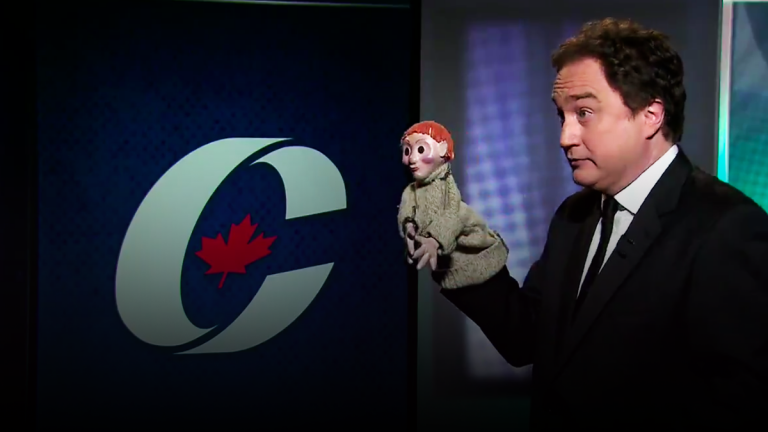
The CBC program This Hour Has 22 Minutes aired a segment claiming that “Conservatives are afraid of the CBC.” 

During the segment, TV personality Mark Critch ridiculed Conservative leadership candidate Erin O’Toole’s policy plan to privatize parts of Canada’s public broadcaster. 

On February 14, O’Toole released a video on Twitter detailing his plan to defund CBC digital and slash funding for CBC’s English TV and CBC News. 

“Erin wants to get rid of the CBC, but why?” said Critch. “Could it be that some Conservatives are afraid of the CBC?” 

Critch then refers to an incident where a CBC reporter was barred by security guards from reporting on the recent Ontario PC Party policy convention in Niagara Falls. 

However, the TV program fails to mention the numerous times that the Liberals have prevented journalists, including True North fellow Andrew Lawton, from covering their events over fears of bad publicity.  

To justify the claim that a majority of Canadians “support” subsidizing the CBC with taxpayer dollars, he points to a poll commissioned by the pro-CBC lobby Friends of Canadian Broadcasting.

The Nanos poll in question claims that 1 in 5 Canadians want CBC funding decreased. Each year the CBC receives $1.2 billion in taxpayer funds from the federal government despite unprofitability and steadily declining viewership. 

Earlier this year, a report by Blacklock’s Reporter revealed that only 0.8% of Canadians tuned into the broadcaster’s local evening news programs. 

In the last five years, ad revenue for the CBC has also steadily declined by 53%. 

Despite the CBC’s poor performance, the Liberal government has suggested it will increase the broadcaster’s funding. According to Minister of Canadian Heritage Steven Guilbeault, the CBC could receive additional funds to increase local news coverage.

The CBC is currently suing the Conservative Party of Canada over the party’s use of news material in an online election advertisement.

“Indigenous” BC blockade leader exposed as American

0

An “indigenous” protester organizing blockades in British Columbia was exposed as an American by Global News. 

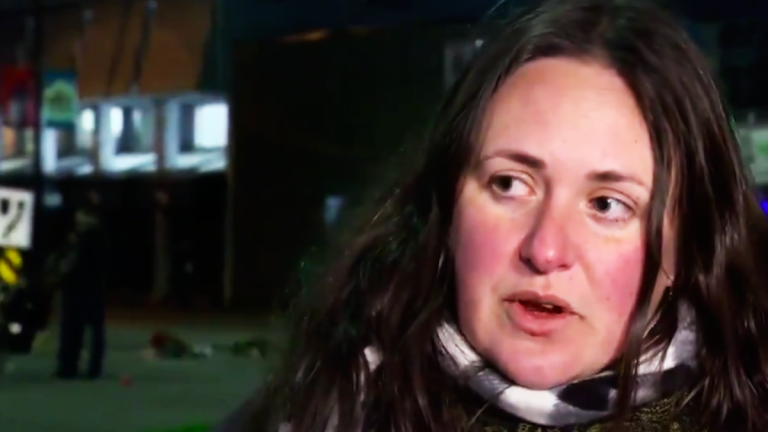
US-born Natalie Knight was a lead organizer in staging a blockade of BC Attorney General David Eby’s office on February 13. 

“We are indigenous people, we have lived on this land for a very long time,” Knight proclaimed.

But a few weeks later at another blockade, Knight told reporters that she was not, in fact, a member of any Canadian First Nation, and had only resided in Canada for 8 years. 

“I’m Yurok from Northern California and Navajo from New Mexico,” Knight told Global News.

Knight claims to have come to Canada to attend school, and since graduated with a PhD from Simon Fraser University’s Faculty of Arts and Social Sciences. Her dissertation was titled “Dispossessed Indigeneity: Literary Excavations of Internalized Colonialism,” and touched on the fields of “Marxism, feminism, settler colonialism, and critical Indigenous studies.”

When asked whether she was a Canadian citizen, Knight refused to respond.

“I don’t think I need to share my status with you,” said Knight. 

Knight is not the only American involved in the ongoing illegal blockades that have crippled the Canadian economy. 

As exclusively reported on by True North, the American organization Stand.earth has been advertising to hire a full-time “Senior Oil & Gas Campaigner” to disrupt the BC LNG pipeline project. 

The San Francisco-based company will be paying a professional activist between $70,000 and $85,000 to work in Canada. 

“Stand.earth is seeking a passionate and experienced campaigner to develop and implement strategies to raise awareness and build power to stop the expansion of the oil and gas sector,” reads the job advertisement.

In the coming months, we will expand the scope of our work to include working to stop the growth of fracking and LNG in British Columbia.”

Kangaroo Courts, Grooming Gang Coverups and American Socialism (feat. Michael Steele)

SUBSCRIBE TO THE SHOW!

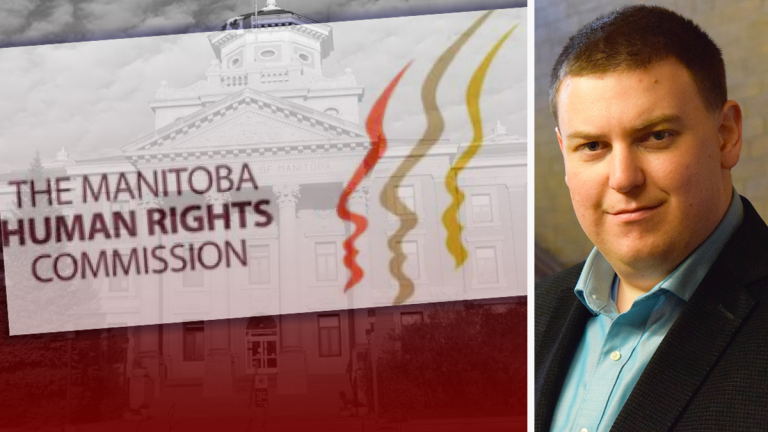
The Manitoba Human Rights Commission says you can’t discriminate against someone for being a convicted pedophile and the British government is hiding a report on Muslim grooming gangs, despite previously promising to not let “cultural sensitivities” get in the way of justice.

True North’s Andrew Lawton talks about these stories and also sits down with former Republican National Committee chairman Michael Steele to discuss the Democratic primary and how a popular vote election could help conservatives.

Fan of the show? Help us stay on the air by joining The Andrew Lawton Show Club: https://tnc.news/lawton-heritage-club/

FUREY: The illegal blockade protesters legitimately think their actions are justified

0

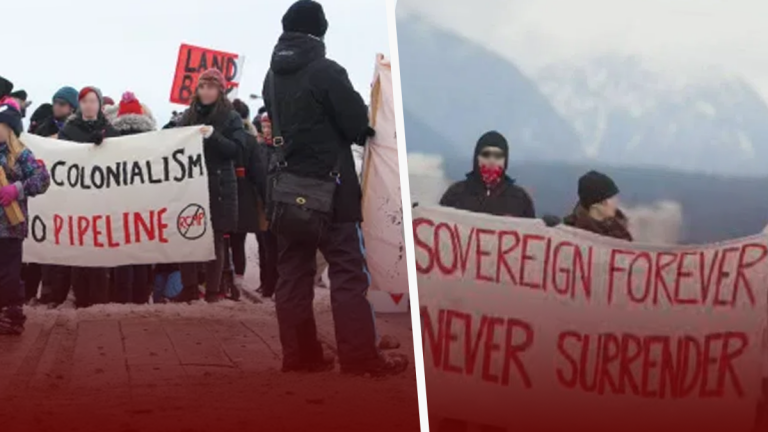
Radical climate activists and a small group of Indigenous people have managed to halt the Canadian economy. And they think their actions are completely justified.

The climate alarmists legitimately think the world is going to end and the small group of Indigenous people think they don’t need to follow Canadian law.

True North’s Anthony Furey spoke with some of the protesters and says the power of strong ideology should never be underestimated.

Fan of True North? Support independent media: http://www.tnc.news/donate/

Canadians have been footing Prince Harry and Meghan’s security bill since November

0

Canadians have been paying for security for the Duke and Duchess of Sussex since November – but will be stopping in the “coming weeks,” according to Public Safety Minister Bill Blair. 

“As the Duke and Duchess are currently recognized as Internationally Protected Persons, Canada has an obligation to provide security assistance on an as-needed basis,” said a statement from Public Safety Minister Bill Blair’s office. 

“At the request of the Metropolitan Police, the RCMP has been providing assistance to the Met since the arrival of the Duke and Duchess to Canada intermittently since November 2019. The assistance will cease in the coming weeks, in keeping with their change in status.”

The Internationally Protected Persons program is intended to cover security for visiting dignitaries, not Canadian residents.

When Prime Minister Justin Trudeau was pressed on the issue of security costs shortly after the couple announced they would move to Canada, he told reporters that there were “lots of discussions” to be had on the issue.

Experts have estimated that the couple’s security costs could range from $10 million to $30 million per year.

“I think most Canadians are very supportive of having royals be here, but how that looks and what kind of costs are involved, there are still lots of discussions to have,” said Trudeau.

When polled, a majority of Canadians said that we shouldn’t be expected to foot the royal’s security bills while they live in Canada. 

The Angus Reid poll found that 73% of people said Canadians should not pay and that the royals should cover the expense. Just under one-fifth of Canadians were willing to pay some of the security bill while only 3% were willing to pay the entire cost. 

The federal government didn’t reveal exactly how much Canadians have paid in the last few months since Harry and Meghan left the UK.

The couple and their son Archie have been living in North Saanich on Vancouver Island since stepping back from royal duties. 

The two announced on their social media accounts that they were seeking to live a more “financially independent” and “progressive” lives together. 

Since the announcement, the couple is expected to terminate their royal duties and drop their royal titles by March 31 according to officials from the royal family. 

3.2 million Canadians living in poverty: StatCan

0

A new study by Statistics Canada says that 3.2 million Canadians are living in poverty, including 566,000 children.

The study analyzed 2018 tax data and found a slight decrease in the national poverty rate, and no change in the child poverty rate.

“About 3.2 million Canadians, or 8.7% of the population, lived below Canada’s Official Poverty Line in 2018, down from 9.5% in 2017,” stated Statistics Canada.

“For children under 18 years of age, the poverty rate was 8.2% in 2018, little changed from 2017.”

Statistics Canada used the market basket measure (MBM) to determine the official poverty line. According to the MBM system, an impoverished family is one who makes less than the amount needed to purchase a specific basket of goods and services in their community.

The Liberal government has a goal of cutting poverty rates to half of the 2015 level of 12.1% by 2030.

“We want to make sure our policies and our measures are removing more and more people out of poverty, which is what we are doing,” said Social Development Minister Ahmed Hussen.

While the government has reported a decrease in poverty, some have argued that the government does not use an accurate measure of poverty, and real poverty in Canada is much higher.

A recent report by the anti-poverty group Campaign 2000 called “Child and Family Poverty 30 Years Later,” found that 18.6% of children in Canada live in poverty.

Campaign 2000, which argues that MBM is not applicable to Indigenous groups or the territories, claims the child poverty rate within First Nations reservations is at a shocking 53%.

Debt is another concern for impoverished Canadians. According to a recent study, half of Canadians believe they are on the brink of bankruptcy.

On average, Canadians owe $1.76 for every dollar they earn.

Manitoba human rights commission decision protects pedophile fired by university

0

The Manitoba Human Rights Commission has rejected the University of Manitoba’s application to dismiss a discrimination complaint filed by a former employee who is a convicted pedophile. 

The man, identified as A.B., claims the university “discriminated” against him by firing him after discovering he has a criminal record for sexually abusing two children and producing child pornography in 2007. 

A.B. was jailed and received a lifetime ban from having contact with kids under the age of 14 or being in a public place where young children would be present. 

Lawyers representing the university claimed that because a criminal record is not a protected identity under the Human Rights Code, his complaint should be thrown out. 

In its submission to the commission, the university also stated that it took issue with the nature of A.B.’s offences and that thousands of children are on university grounds every day. 

However, adjudicator Michael D. Werier ruled in a precedent-setting decision that criminal records should be afforded the same protection from discrimination as other protected identities such as religion, sex, or race. 

“It is an indicator that a person with a criminal record is considered to be part of a disadvantaged group, subject to stereotyping and who has had barriers to employment and services,” wrote Werier in his decision. 

“I accept that there is a difference between a criminal record and gender (for example) in this context. However, a restrictive interpretation overlooks that many individuals in Canada with criminal records are individuals who come from certain backgrounds and/or suffer from addiction or mental disabilities and can be subject to stereotyping and discrimination for the rest of their life.” 

Werier noted in the decision that the ruling is not a decision on the specific nature of A.B.’s complaints but rather that it opens up room for tackling discrimination based on past criminal records.